Alexander Glazunov

Classical
Classical Crossover
 Viberate Rank: 143144
 Viberate Rank: 143144
 Monthly ListenersFollowers
 Subscribers
 Followers
 Followers
 FansTop Spotify Songs
| Track | 7-Day Streams | |
|---|---|---|
1 | 14.03K | |
2 | 10.42K | |
3 | 9.87K | |
4 | 9.87K | |
5 | 7.98K |
Top YouTube VideosMonthly ListenersFeatured in Playlists| Playlist | Followers | |
|---|---|---|
1 |  Classical Essentials Spotify | 3.82M |
2 |  royalcore Spotify | 550.60K |
3 |  Mellow Cello Spotify | 452.40K |
4 |  Música Clásica Que Sí Es Clásica José Gonzales | 339.76K |
5 |  Relaxing Classical Filtr UK | 292.01K |
Audience| City | Monthly Listeners | |
|---|---|---|
1 |  | 2.77K |
2 |  | 2.57K |
3 |  | 2.29K |
4 |  | 2.19K |
5 | | 1.69K |
See full performance history, audience data, playlist activity, rankings, comparisons, and more in Viberate music analytics. Start with a free trial, then continue with a paid plan.
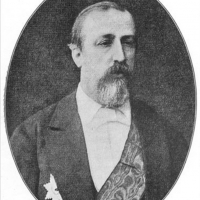
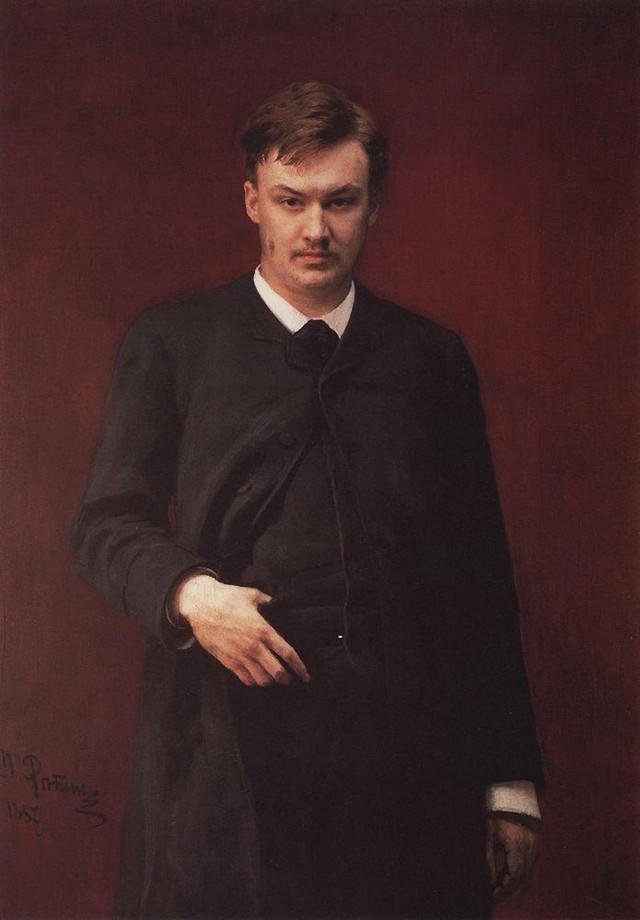
Alexander Glazunov’s Spotify BioGlazunov was a leading Russian composer of the generation after Tchaikovsky. Doubtless owing to his exceptional mastery of and attentiveness to form, exemplified by his exceptional grasp of counterpoint, he has been described as a Romantic Classicist and, therefore, compared to Brahms. Furthermore, since he remained faithful to a traditional 19th century musical idiom, while some of his contemporaries pursued varieties of Modernism, critics have described Glazunov's music as academic and formal. But his oeuvre, which includes a wide range of genres, cannot be easily reduced to mere critical formulas. At heart, he was a Romantic composer, and the spirit of his music comes to the fore in his Violin Concerto in A Minor, a richly melodic work in which the expressive potential of the violin is fully realized.
Born in 1865 in St. Petersburg, Glazunov displayed an immense musical talent as a child. He started studying with Rimsky-Korsakov at the age of 15. Glazunov's progress was indeed… astonishing, for he completed his Symphony No. 1 at 16. In fact, his symphony, premiered by Balakirev in 1882, established, practically overnight, Glazunov's reputation as a great Russian composer. In 1884, the rich merchant and publisher Belyayev took Glazunov to Weimar, where the young composer met Liszt. Although absorbing many musical influences, particularly those of Liszt and Wagner, Glazunov eventually crafted an individual style, composing symphonies, ballets, and concertos for various instruments. Owing to his growing international fame as a symphonist, Glazunov was invited to conduct his works in Paris in 1889; an invitation from London came in 1896. During the 1890s, he composed some of his most successful works, including the fourth, fifth, and sixth symphonies, and the ballet Raymonda.
In 1899, Glazunov became an instructor in composition and orchestration at the St. Petersburg Conservatory. He resigned his post in the politically turbulent year of 1905, incensed by the government's politically motivated dismissal of Rimsky-Korsakov from his teaching position. However, when things returned to a semblance of normalcy, Glazunov was named head of the Conservatory. While his output may have diminished in terms of sheer quantity after 1905, he continued composing until the end of his life. After the Revolution of 1917, Glazunov, as director of a major national music school, worked hard, and with varying success, to protect his students from interference by a government that viewed music as an instrument of political propaganda. In addition, he felt isolated in a culture that rejected established musical traditions, and a general feeling of alienation finally prompted him to leave the Soviet Union in 1928.
Glazunov's life in exile, which included an unsuccessful tour of the United States, was difficult but did not suppress his creative energy. He traveled around the world for several years, eventually settling in Paris. Music composed during this period includes the Concerto-Ballata for cello and orchestra and the Concerto for Alto Saxophone and Strings, now a standard work of the saxophone repertoire. Passionately interested in the distinctive characteristics of the instruments he composed for, Glazunov learned to play a variety of instruments, including -- in addition to the obligatory piano -- violin, cello, trumpet, trombone, French horn, and clarinet, as well as several percussion instruments. Consequently, each of his concertos reflects a deep understanding of the instrument's nature and technical capabilities. Critics have reproached Glazunov for being too Western and insufficiently Russian. True, there are few traces in his music of Russian folk influences. However, while Glazunov's music certainly fits into the cosmopolitan culture of his time, it also embodies the unmistakable emotional and spiritual qualities that the attentive listener will recognize as Russian. Obviously Russians did, as they reinterred his remains with honor in 1972 in Leningrad, 36 years after his death in France. ~ Zoran Minderovic, Rovi
Viberate is a music analytics platform built for A&Rs, artist managers, labels, booking agents, marketers, and artists.
It helps music professionals track artist growth, analyze audience data, monitor playlist activity, compare artists, follow song performance, and identify opportunities across the music market.
Public artist pages provide a free preview of selected artist data. Paid plans provide access to deeper analytics, historical data, charts, comparisons, playlist tools, exports, alerts, reports, and additional professional features.
Yes. Public Viberate artist pages provide selected artist analytics and music data for free.
Viberate also offers a 7-day free trial of the full platform. A credit card is required to start the trial. The trial includes access to the complete product so users can test deeper artist analytics, historical views, playlist insights, comparisons, charts, exports, alerts, and reporting features before choosing a paid plan.
Viberate provides artist analytics across streaming, playlists, social media, video, radio airplay, songs, and audience markets.
Users can analyze Spotify performance, Spotify and Apple Music playlists, YouTube activity, TikTok and Instagram growth, radio spins, song performance, audience locations, demographics, rankings, and overall artist momentum.
Artist profiles also connect to music charts, similar artists, and comparison tools, helping users benchmark performance and evaluate artists in context.
Viberate updates key artist and track data daily.
For followed artists and tracks, selected data is refreshed multiple times per day. This helps teams monitor playlist changes, streaming movement, audience growth, releases, and campaign performance with more current data.
Update frequency can vary depending on the metric and data source.
Yes. Viberate lets users compare up to five artists side by side across streaming, social media, audience, and engagement metrics.
Users can compare fanbase growth, audience demographics, locations, Spotify performance, social metrics, and other artist data over selected time periods.
Artist comparison can be used for A&R scouting, benchmarking, booking decisions, campaign planning, and evaluating artists with similar audiences or market positions.