MJG

Hip Hop
Contemporary Hip Hop
 Viberate Rank: 28902
 Viberate Rank: 28902
 Monthly ListenersFollowers
 Subscribers
 Followers
 Followers
 FansTop Spotify Songs
| Track | 7-Day Streams | |
|---|---|---|
1 | 995.79K | |
2 | 36.45K | |
3 | 26.13K | |
4 | 26.13K | |
5 | 26.13K |
Top YouTube VideosMonthly ListenersFeatured in Playlists| Playlist | Followers | |
|---|---|---|
1 |  2000s HITS Y2K THROWBACKS Filtr US | 1.57M |
2 |  This Is Outkast Spotify | 170.24K |
3 | 2000’s Rap Bangers Blake | 92.50K |
4 |  2000s Hip Hop And Rap Filtr US | 78.05K |
5 |  Old School Memphis Rap Niels Verheul | 49.08K |
Audience| City | Monthly Listeners | |
|---|---|---|
1 | | 6.90K |
2 | | 6.43K |
3 | | 6.08K |
4 | | 3.24K |
5 | | 2.60K |
See full performance history, audience data, playlist activity, rankings, comparisons, and more in Viberate music analytics. Start with a free trial, then continue with a paid plan.
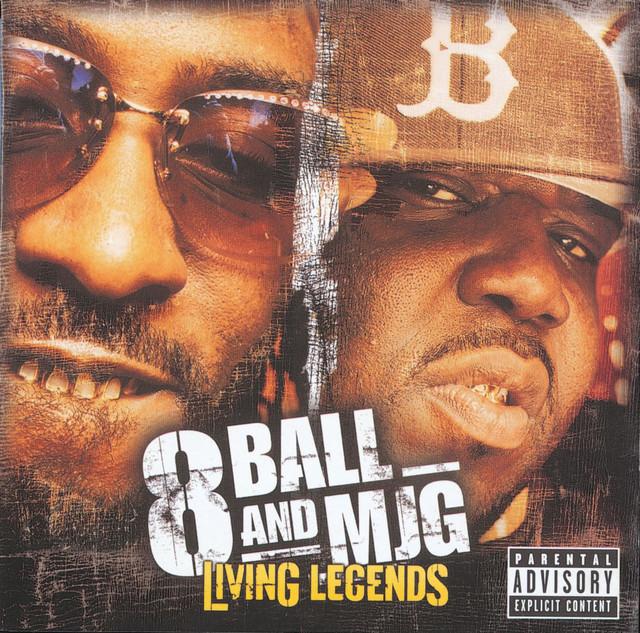
MJG’s Spotify BioMJG, half of the pioneering Southern rap duo 8Ball & MJG, rarely branched out for solo albums (e.g., No More Glory, 1997), yet his work with 8Ball proved influential, earning him a reputation as a living legend. Born Marlon Jermaine Goodwin, MJG grew up in the Orange Mound area of Memphis, TN, where he met 8Ball at Ridgeway Junior High School in 1984. The two shared a passion for hip-hop, which hadn't yet made a strong impact in the South, and formed their own rap duo, 8Ball & MJG. They made their recording debut in 1991 with a three-track single, Listen to the Lyrics, released on cassette and 12" vinyl by On the Strength Records, an independent label. (These early recordings for On the Strength would later be reissued in 1997 as Lyrics of a Pimp and also in 2000 as Memphis Under World.) 8Ball & MJG subsequently signed a deal with Suave Records (aka Suave House), a Houston, TX-based label run by Tony Draper. 8Ball & MJG's debut full-length, Comin' Out Hard (1993), produced partly by… MJG, was the inaugural release by Suave, which would grow to become one of the premier Southern rap labels of the decade. Now considered a milestone, Comin' Out Hard was among the first Southern rap albums to get widespread recognition, opening the door for other pioneers such as Three 6 Mafia, Master P, and Cash Money Records.
8Ball & MJG recorded a few additional albums for Tony Draper throughout the remainder of the decade -- On the Outside Looking In (1994), On Top of the World (1995), In Our Lifetime, Vol. 1 (1999) -- and did much to foster the growth of Suave, regularly being featured as guests on the label's other releases. Plus, 8Ball and MJG each branched out for solo projects, Lost (1998) and No More Glory (1997), respectively, both released by Suave. In 2000, 8Ball & MJG left Suave and switched to JCOR Entertainment, a short-lived rap label founded by Jay Faires, for the release of Space Age 4 Eva. The album, which notably featured production by Swizz Beatz and DJ Quik, was a departure for 8Ball & MJG, who heretofore had worked more or less exclusively with regional producers. The album spawned a pair of minor hits, "Pimp Hard" and "Buck Bounce," the duo's first to first to get national, opposed to regional, airplay. In 2001, JCOR released a pair of 8Ball albums -- The Slab, a various-artists compilation, and Almost Famous, a proper solo album -- but the label then ran into trouble and went out of business, leaving 8Ball & MJG without a recording contract.
After a couple years in limbo, Bad Boy Records, helmed by Diddy, picked up 8Ball & MJG and released Living Legends (2004), the duo's most star-studded album to date. "You Don't Want Drama," the lead single, became 8Ball & MJG's biggest hit ever, reaching number 30 on Billboard's Hot R&B/Hip-Hop Singles chart, while Living Legends itself likewise became the duo's best-selling, debuting at number three on the Top 200 album chart and topping 500,000 in sales. 8Ball & MJG's second Bad Boy album, Ridin High (2007), was less successful, though, despite debuting well at number eight and spawning a strong lead single, "Relax and Take Notes." ~ Jason Birchmeier
Viberate is a music analytics platform built for A&Rs, artist managers, labels, booking agents, marketers, and artists.
It helps music professionals track artist growth, analyze audience data, monitor playlist activity, compare artists, follow song performance, and identify opportunities across the music market.
Public artist pages provide a free preview of selected artist data. Paid plans provide access to deeper analytics, historical data, charts, comparisons, playlist tools, exports, alerts, reports, and additional professional features.
Yes. Public Viberate artist pages provide selected artist analytics and music data for free.
Viberate also offers a 7-day free trial of the full platform. A credit card is required to start the trial. The trial includes access to the complete product so users can test deeper artist analytics, historical views, playlist insights, comparisons, charts, exports, alerts, and reporting features before choosing a paid plan.
Viberate provides artist analytics across streaming, playlists, social media, video, radio airplay, songs, and audience markets.
Users can analyze Spotify performance, Spotify and Apple Music playlists, YouTube activity, TikTok and Instagram growth, radio spins, song performance, audience locations, demographics, rankings, and overall artist momentum.
Artist profiles also connect to music charts, similar artists, and comparison tools, helping users benchmark performance and evaluate artists in context.
Viberate updates key artist and track data daily.
For followed artists and tracks, selected data is refreshed multiple times per day. This helps teams monitor playlist changes, streaming movement, audience growth, releases, and campaign performance with more current data.
Update frequency can vary depending on the metric and data source.
Yes. Viberate lets users compare up to five artists side by side across streaming, social media, audience, and engagement metrics.
Users can compare fanbase growth, audience demographics, locations, Spotify performance, social metrics, and other artist data over selected time periods.
Artist comparison can be used for A&R scouting, benchmarking, booking decisions, campaign planning, and evaluating artists with similar audiences or market positions.