Mike Batt

Classical
Orchestral
Mainstream Pop
Pop Rock
 Viberate Rank: 84691
 Viberate Rank: 84691
 Monthly ListenersFollowers
 Subscribers
 Followers
 Followers
 FansTop Spotify Songs
| Track | 7-Day Streams | |
|---|---|---|
1 | 22.25K | |
2 | 12.06K | |
3 | 11.43K | |
4 | 5.92K | |
5 | 4.46K |
Top YouTube VideosMonthly ListenersFeatured in Playlists| Playlist | Followers | |
|---|---|---|
1 |  Piano Love Songs 🎹 Curativ Music | 59.13K |
2 |  VIOLINO INSTRUMENTAL Vieira Edvaldo | 34.80K |
3 |  Piano Pop: For The World Music Lab Collective | 31.27K |
4 |  Audiophile Reference (High Resolution Audio Playlist for HiFi) yq | 27.02K |
5 |  Seventies Hits 1970-1979 Victor Legerstee | 22.46K |
Audience| City | Monthly Listeners | |
|---|---|---|
1 |  | 1.70K |
2 |  | 1.53K |
3 | | 1.37K |
4 | | 1.27K |
5 | | 1.10K |
See full performance history, audience data, playlist activity, rankings, comparisons, and more in Viberate music analytics. Start with a free trial, then continue with a paid plan.
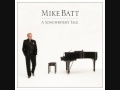
Mike Batt’s Spotify BioBritish singer/songwriter, producer, and composer Mike Batt is a journeyman artist with a long track record of successful productions that cross from film and television to musical theater and pop music. Born in 1949 in Southampton, Hampshire, England, Batt was signed to Liberty/United Artists Records at age 18 and left after two years to form his own publishing company. Beginning in 1974, Batt began writing and recording music for the children's television show and bubblegum pop group the Wombles, and ultimately scored eight hit singles with the group. He then went on to write successfully for a bevy of artists including Steeleye Span, Linda Lewis, Elkie Brooks, Barbara Dickinson, the Kursaal Flyers, and Art Garfunkel, with whom he won his second Ivor Novello Award for 1979's "Bright Eyes" from the animated film Watership Down.
Batt continued as a solo artist in the '70s, releasing several albums including 1977's Schizophonia and the 1979 concept album Tarot Suite. However, it was as a… writer that he found his niche, and in 1983 he scored several Top Ten hits for Cliff Richard, David Essex, and Alvin Stardust. A year later, Batt made his debut as a conductor at the Barbican with the London Symphony Orchestra. Also in 1984, Batt embarked on the first of his musical theater-inspired endeavors with the album Snark (also referred to as The Hunting of the Snark). An all-star cast recording based on the nonsensical poetry of Lewis Carroll, the album featured John Hurt, Sir John Gielgud, Roger Daltrey, Julian Lennon, Stéphane Grappelli, George Harrison, and others. Snark would be a continuing project for Batt as he would return to the material with a live stage version in 1991.
During the '90s, Batt continued his work in both the classical and pop worlds by collaborating with several high-profile artists and ensembles including the London Philharmonic Orchestra, Finbar Wright, Vanessa-Mae, XTC, and others. In 1994, he released the solo album Arabesque. The following year, he received a royal commission to compose the music for the inauguration of the Channel Tunnel. Also during this time, he composed the music for the film A Merry War and even re-launched the Wombles. Batt continued to hone his niche as a man behind the scenes, developing and guiding the careers of several acts including the classical-crossover groups Bond and the Planets, whose 2002 album Classical Graffiti spent three months at number one on the classical charts. Batt also helped guide and launch the career of vocalist Katie Melua, whom he discovered in 2003 while she was attending the BRIT School for the Performing Arts & Technology. Beginning with 2003's Call Off the Search, Batt wrote, co-wrote, and produced three of Melua's albums, and although he was not the main producer, he did contribute to Melua's 2010 effort, The House. ~ Matt Collar, Rovi
Viberate is a music analytics platform built for A&Rs, artist managers, labels, booking agents, marketers, and artists.
It helps music professionals track artist growth, analyze audience data, monitor playlist activity, compare artists, follow song performance, and identify opportunities across the music market.
Public artist pages provide a free preview of selected artist data. Paid plans provide access to deeper analytics, historical data, charts, comparisons, playlist tools, exports, alerts, reports, and additional professional features.
Yes. Public Viberate artist pages provide selected artist analytics and music data for free.
Viberate also offers a 7-day free trial of the full platform. A credit card is required to start the trial. The trial includes access to the complete product so users can test deeper artist analytics, historical views, playlist insights, comparisons, charts, exports, alerts, and reporting features before choosing a paid plan.
Viberate provides artist analytics across streaming, playlists, social media, video, radio airplay, songs, and audience markets.
Users can analyze Spotify performance, Spotify and Apple Music playlists, YouTube activity, TikTok and Instagram growth, radio spins, song performance, audience locations, demographics, rankings, and overall artist momentum.
Artist profiles also connect to music charts, similar artists, and comparison tools, helping users benchmark performance and evaluate artists in context.
Viberate updates key artist and track data daily.
For followed artists and tracks, selected data is refreshed multiple times per day. This helps teams monitor playlist changes, streaming movement, audience growth, releases, and campaign performance with more current data.
Update frequency can vary depending on the metric and data source.
Yes. Viberate lets users compare up to five artists side by side across streaming, social media, audience, and engagement metrics.
Users can compare fanbase growth, audience demographics, locations, Spotify performance, social metrics, and other artist data over selected time periods.
Artist comparison can be used for A&R scouting, benchmarking, booking decisions, campaign planning, and evaluating artists with similar audiences or market positions.