Michael Gees

Classical
Classical Crossover
 Viberate Rank: 411215
 Viberate Rank: 411215
 Monthly ListenersFollowers
 Subscribers
 Followers
 Followers
 FansTop Spotify Songs
| Track | 7-Day Streams | |
|---|---|---|
1 | 740 | |
2 | 740 | |
3 | 725 | |
4 | 511 | |
5 | 96 |
Top YouTube VideosMonthly ListenersFeatured in Playlists| Playlist | Followers | |
|---|---|---|
1 |  NPR Classical NPR Music | 14.43K |
2 |  Kalm met Klassiek NPO Klassiek | 4.96K |
3 | Franz Schubert - Complete Chronological Catalogue D. 1 - 998 Ulysses' Classical | 2.85K |
4 | SCHUBERT Lieders Songs Bolitadenacar | 1.52K |
5 | Lullabies from Around the World marzipan18 | 1.06K |
Audience| City | Monthly Listeners | |
|---|---|---|
1 | | 186 |
2 | | 118 |
3 | | 85 |
4 |  | 82 |
5 | | 79 |
See full performance history, audience data, playlist activity, rankings, comparisons, and more in Viberate music analytics. Start with a free trial, then continue with a paid plan.
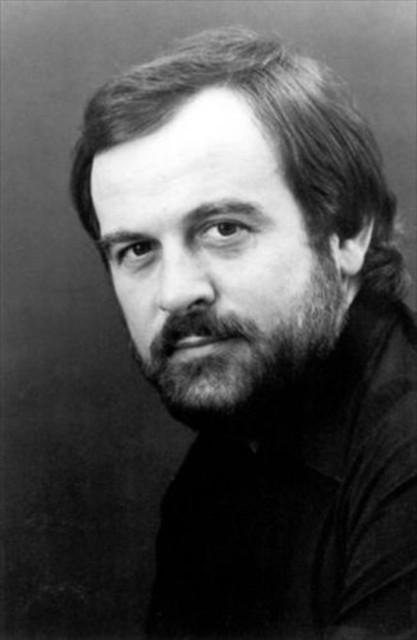
Michael Gees’ Spotify BioOnce billed as the Westphalian Mozart, German pianist Michael Gees was a genuine child prodigy, although one who shunned the role for a time. His success has extended into middle age and into the less spotlighted role of accompanist as well as those of solo recitalist and concerto player. He has also composed and performed an unusual amount of original music. Gees was born October 9, 1953 in Bielefeld; indeed, in the state of North Rhine-Westphalia. Both his parents were singers, and by age three he had shown a strong predisposition toward the piano. He started lessons at five, won a Hamburg contest sponsored by the Steinway piano maker at eight, and began studies at the Mozarteum in Salzburg, Austria on a scholarship. He took further lessons at conservatories in Vienna and in Detmold, Germany, and by age 15, he already had a substantial track record of concertizing. Restless and anxious to explore the world of composition, he dropped out at that point and worked for several years at… odd jobs: as an archaeological assistant and, for two years, as a sailor. He returned to school, almost by chance, at the Hochschule für Musik und Theater in Hannover, immersing himself in composition and jazz at first rather than in piano performance. Finally, on his own, he rebuilt his technique from scratch and returned to concertizing, giving solo concerts in New York, Paris, London, and Tokyo. He began a long career as a lied accompanist with the tenor Christoph Prégardien. Gees has continued to create unusual cross-genre projects, both in his own concerts and with the "forum kunstvereint," which he founded in his adopted hometown of Gelsenkirchen, and the Consol Theater, which has nurtured the music, dance, and theatrical careers of young artists. Gees made his recording debut in 1996 and has recorded for Haenssler, Carus, and most recently Challenge Classics, often offering programs that treat lieder and other works in unusual improvisational ways. In 2017 he released Bach, Mendelssohn: Metamorphosis, the aim of which he described this way: "How can a musical idea develop over and above what has been written down? What would Bach have thought about Mendelssohn? What would have happened had they been able to encourage each other to extemporise on their compositions?"
Viberate is a music analytics platform built for A&Rs, artist managers, labels, booking agents, marketers, and artists.
It helps music professionals track artist growth, analyze audience data, monitor playlist activity, compare artists, follow song performance, and identify opportunities across the music market.
Public artist pages provide a free preview of selected artist data. Paid plans provide access to deeper analytics, historical data, charts, comparisons, playlist tools, exports, alerts, reports, and additional professional features.
Yes. Public Viberate artist pages provide selected artist analytics and music data for free.
Viberate also offers a 7-day free trial of the full platform. A credit card is required to start the trial. The trial includes access to the complete product so users can test deeper artist analytics, historical views, playlist insights, comparisons, charts, exports, alerts, and reporting features before choosing a paid plan.
Viberate provides artist analytics across streaming, playlists, social media, video, radio airplay, songs, and audience markets.
Users can analyze Spotify performance, Spotify and Apple Music playlists, YouTube activity, TikTok and Instagram growth, radio spins, song performance, audience locations, demographics, rankings, and overall artist momentum.
Artist profiles also connect to music charts, similar artists, and comparison tools, helping users benchmark performance and evaluate artists in context.
Viberate updates key artist and track data daily.
For followed artists and tracks, selected data is refreshed multiple times per day. This helps teams monitor playlist changes, streaming movement, audience growth, releases, and campaign performance with more current data.
Update frequency can vary depending on the metric and data source.
Yes. Viberate lets users compare up to five artists side by side across streaming, social media, audience, and engagement metrics.
Users can compare fanbase growth, audience demographics, locations, Spotify performance, social metrics, and other artist data over selected time periods.
Artist comparison can be used for A&R scouting, benchmarking, booking decisions, campaign planning, and evaluating artists with similar audiences or market positions.