Mekong Delta

Metal
Thrash Metal
Progressive Metal
 Viberate Rank: 214893
 Viberate Rank: 214893
 Monthly ListenersFollowers
 Subscribers
 Followers
 Followers
 FansTop Spotify Songs
| Track | 7-Day Streams | |
|---|---|---|
1 | 495 | |
2 | 484 | |
3 | 203 | |
4 | 170 | |
5 | 112 |
Top YouTube Videos| Video | 7-Day Views | |
|---|---|---|
1 | 52 |
Monthly ListenersFeatured in Playlists| Playlist | Followers | |
|---|---|---|
1 |  Heavy Metal Instrumentals 🎸 JaviFlames | 13.79K |
2 | Instrumental Metal! \m/ Chris Fay | 9.89K |
3 | Robert | 9.86K |
4 |  Thrash Metal Classics @MansenSankari | 7.13K |
5 |  Thrash Metal & Crossover classic 80s&90s David | 5.58K |
Audience| City | Monthly Listeners | |
|---|---|---|
1 |  | 62 |
2 |  | 40 |
3 |  | 30 |
4 | | 30 |
5 |  | 28 |
See full performance history, audience data, playlist activity, rankings, comparisons, and more in Viberate music analytics. Start with a free trial, then continue with a paid plan.
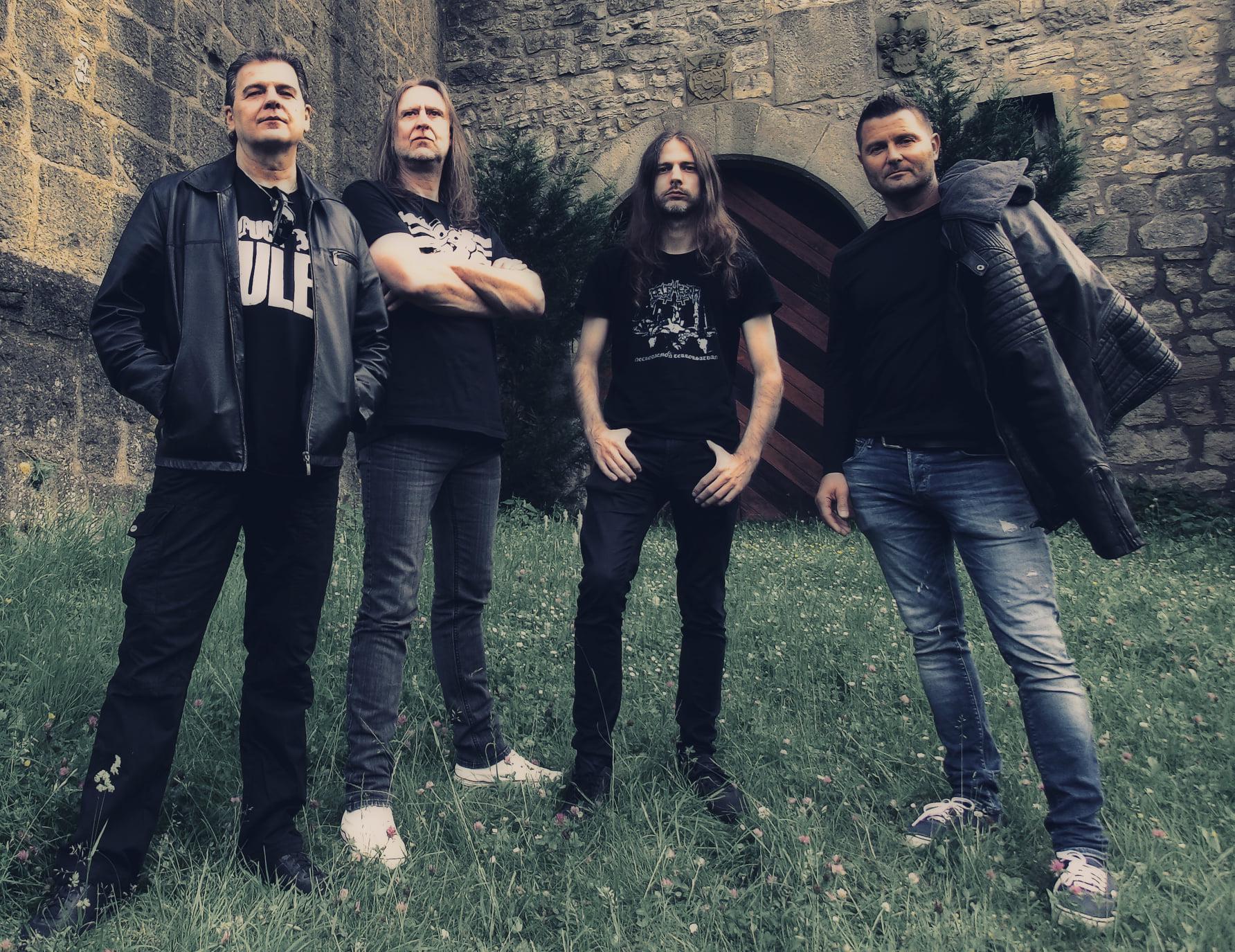
Mekong Delta’s Spotify BioA riddle wrapped in an enigma dressed up in leather and studs, Germany's Mekong Delta perplexed the heavy metal world both by playing an unconventional brand of progressive thrash and by keeping the identities of the bandmembers secret for the first five years of a career starting in 1987. The reality was far more mundane than the rumors, as it turned out, since it was later revealed that the group had originally been masterminded by Aaarrg Records owner Ralph Hubert, who wished to pair up members of existing bands like Rage and Living Death without incurring the wrath of the labels they were signed to. Hubert didn't even intend to participate in the whole charade at first, but took on the role of bass player and the pseudonym of Björn Eklund when Rage's Peavy Wagner bowed out early on, then completed the initial Mekong Delta lineup with vocalist Kell (real name Wolfgang Borgmann), guitarists Rolf Stein and Vincent St. John (actually Living Death members Frank Fricke and Reiner Kelch),… and drummer Gordon Perkins (in reality future journeyman Jörg Michael, then also a member of Rage).
This was the quintet responsible for 1987's conceptually unified Mekong Delta debut, which not surprisingly delved into the Vietnam War, as well as 1988's The Gnome EP and H.P. Lovecraft-inspired The Music of Erich Zann LP -- all of which drew much critical acclaim and saw the band sometimes described as a Teutonic response to Canadian prog-thrashers Voivod. Membership changes began to take place behind the scenes with Uwe Baltrusch's replacement of Kelch for 1989's The Principle of Doubt album (which was loosely based on Stephen R. Donaldson's dark fantasy trilogy, The Chronicles of Thomas Covenant, the Unbeliever), and by the release of 1990's Dances of Death, Fricke too was gone, Doug Lee had replaced Borgmann, and all of the fake names had finally been dropped, save for Jörg Michael's, since he remained under contract elsewhere. Still, although their secrets had largely been exposed, Mekong Delta's music continued to surprise and astound, thanks to the steady infusion of classical music elements into their ever-adventurous prog-thrash.
Though these elements had already featured to some degree on all of Mekong Delta's prior releases, it was 1991's Live at an Exhibition in-concert document that first hinted at a particularly strong fixation on the works of Russian composer Modest Mussorgsky, which the band later explored in full with an orchestra-backed recording of Pictures at an Exhibition in 1997. In between, drummer Peter Haas had joined the group for albums like 1992's Kaleidoscope and 1994's Visions Fugitives, but after the release of the aforementioned orchestral project, Mekong Delta went into an extended hibernation, as sporadic rumors swirled concerning the supposed exile and/or death of prime mover Ralph Hubert. In keeping with the band's past history, however, all of this speculation proved to be just that and, come 2007, Hubert convened a brand-new Mekong Delta featuring singer Leszek Szpigiel, guitarist Peter Lake, and drummer Uli Kusch for new album Lurking Fear, which by all accounts proved as reliably quirky and unpredictable as anything that fans might have expected from this mysterious group. ~ Eduardo Rivadavia, Rovi
Viberate is a music analytics platform built for A&Rs, artist managers, labels, booking agents, marketers, and artists.
It helps music professionals track artist growth, analyze audience data, monitor playlist activity, compare artists, follow song performance, and identify opportunities across the music market.
Public artist pages provide a free preview of selected artist data. Paid plans provide access to deeper analytics, historical data, charts, comparisons, playlist tools, exports, alerts, reports, and additional professional features.
Yes. Public Viberate artist pages provide selected artist analytics and music data for free.
Viberate also offers a 7-day free trial of the full platform. A credit card is required to start the trial. The trial includes access to the complete product so users can test deeper artist analytics, historical views, playlist insights, comparisons, charts, exports, alerts, and reporting features before choosing a paid plan.
Viberate provides artist analytics across streaming, playlists, social media, video, radio airplay, songs, and audience markets.
Users can analyze Spotify performance, Spotify and Apple Music playlists, YouTube activity, TikTok and Instagram growth, radio spins, song performance, audience locations, demographics, rankings, and overall artist momentum.
Artist profiles also connect to music charts, similar artists, and comparison tools, helping users benchmark performance and evaluate artists in context.
Viberate updates key artist and track data daily.
For followed artists and tracks, selected data is refreshed multiple times per day. This helps teams monitor playlist changes, streaming movement, audience growth, releases, and campaign performance with more current data.
Update frequency can vary depending on the metric and data source.
Yes. Viberate lets users compare up to five artists side by side across streaming, social media, audience, and engagement metrics.
Users can compare fanbase growth, audience demographics, locations, Spotify performance, social metrics, and other artist data over selected time periods.
Artist comparison can be used for A&R scouting, benchmarking, booking decisions, campaign planning, and evaluating artists with similar audiences or market positions.