Matthew Locke

Classical
Opera
Classical Crossover
 Viberate Rank: 472746
 Viberate Rank: 472746
 Monthly ListenersFollowers
 Subscribers
 Followers
 Followers
 FansTop Spotify SongsTop YouTube VideosMonthly ListenersFeatured in Playlists
| Playlist | Followers | |
|---|---|---|
1 |  Baroque Classics Sony Classical & Jazz Sweden | 131.09K |
2 |  Renaissance Classics Spotify | 74.13K |
3 |  The Sound of Everything The Sounds of Spotify | 53.82K |
4 |  baroque bangers jackson ellis | 11.43K |
5 |  Kalm met Klassiek NPO Klassiek | 4.96K |
Audience| City | Monthly Listeners | |
|---|---|---|
1 |  | 172 |
2 |  | 153 |
3 |  | 117 |
4 |  | 116 |
5 | | 113 |
See full performance history, audience data, playlist activity, rankings, comparisons, and more in Viberate music analytics. Start with a free trial, then continue with a paid plan.
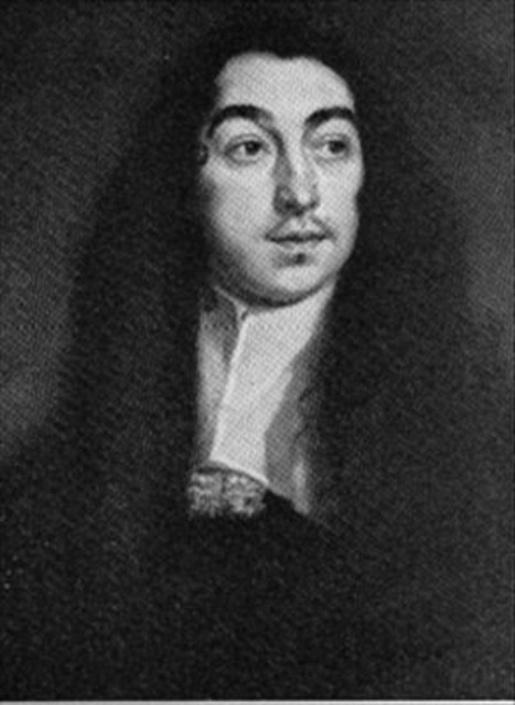
Matthew Locke’s Spotify BioA composer central to the musical life of turbulent mid-seventeenth century England, Matthew Locke learned music as a choirboy at Exeter. A 1648 manuscript that Locke subtitled When I was in the Low Countreys has been cited as evidence he was employed by the court of Prince Charles, who was then living in exile as a refugee from the English Civil War. By the time Locke is known to have returned to England in 1651, he had probably adopted the Catholic faith favored by Charles himself.
By 1653, Locke had begun to establish himself as a force on the English stage. That year he may have collaborated with Christopher Gibbons on the music for John Shirley's masque Cupid and Death. In 1656, Locke joined forces with playwright William Davenant and several others in compiling what might be regarded as the first English opera, The Siege of Rhodes. Locke also contributed music for revivals of Shakespeare's plays, including The Tempest, Henry VIII, and Macbeth. During this time, Locke began to… cultivate a reputation for composing instrumental music; he was a close associate of composer John Playford, contributing to the latter's publications Courtly Masquing Ayres and The Dancing Master.
In 1660, Charles II was restored to the English throne after eleven years of Commonwealth. Locke was then named private composer-in-ordinary to the King. Among his tasks was to supervise a consort of eight string players which, in emulation of French court practice, was expanded into a mini-orchestra of 24 violins in 1662. That year Charles II married Catherine of Braganza, and Locke was appointed her private organist. Locke played both in the chapels where Catherine worshipped and in her apartment, sometimes with a small band of chamber players. During the 1660s Locke continued to write music for the London stage, although he moved, along with the entire court, to Oxford in 1665 in order to escape the Black Death, then raging in the city. Thus began an association with Oxford and its university music school that produced the best of Locke's sacred vocal music, most of which survives in manuscripts copied by Edward Lowe, then head of Oxford's music department. Locke's work at Oxford continued happily until 1672, when he became embroiled in an ugly and very public dispute with composer and Trinity College graduate Thomas Salmon, most of which was played out in the press.
In 1673, Locke published Melothesia, a volume of keyboard music which contains a detailed method of figured-bass continuo playing, the first such treatise written in English. Locke died at the age of about 56 in the summer of 1677; his tasks with the court band of Four and Twenty were taken over by the teenaged Henry Purcell. Purcell composed a fine ode in Locke's memory, and was made the gift of a large manuscript volume containing the chamber music that Locke had seen fit to preserve.
Much of Locke's music is highly chromatic and dissonant; he was stubbornly committed to his conception of what constituted English style, and once commented that "I never yet saw any Forain Instrumental Composition worthy an English mans Transcribing." He favored long phrases of irregular length, and there are many harmonically unstable and wandering passages in which Locke seems openly to defy stylistic preconceptions of the early Baroque. Locke's instrumental music, in particular that for broken consort, is some of the most important orchestral music written in the seventeenth century. His vocal and theater music is less known, but all of Locke's work is significant, and his topsy-turvy music provides a splendid counterpoint to the constant upheavals of the England of his day.
Viberate is a music analytics platform built for A&Rs, artist managers, labels, booking agents, marketers, and artists.
It helps music professionals track artist growth, analyze audience data, monitor playlist activity, compare artists, follow song performance, and identify opportunities across the music market.
Public artist pages provide a free preview of selected artist data. Paid plans provide access to deeper analytics, historical data, charts, comparisons, playlist tools, exports, alerts, reports, and additional professional features.
Yes. Public Viberate artist pages provide selected artist analytics and music data for free.
Viberate also offers a 7-day free trial of the full platform. A credit card is required to start the trial. The trial includes access to the complete product so users can test deeper artist analytics, historical views, playlist insights, comparisons, charts, exports, alerts, and reporting features before choosing a paid plan.
Viberate provides artist analytics across streaming, playlists, social media, video, radio airplay, songs, and audience markets.
Users can analyze Spotify performance, Spotify and Apple Music playlists, YouTube activity, TikTok and Instagram growth, radio spins, song performance, audience locations, demographics, rankings, and overall artist momentum.
Artist profiles also connect to music charts, similar artists, and comparison tools, helping users benchmark performance and evaluate artists in context.
Viberate updates key artist and track data daily.
For followed artists and tracks, selected data is refreshed multiple times per day. This helps teams monitor playlist changes, streaming movement, audience growth, releases, and campaign performance with more current data.
Update frequency can vary depending on the metric and data source.
Yes. Viberate lets users compare up to five artists side by side across streaming, social media, audience, and engagement metrics.
Users can compare fanbase growth, audience demographics, locations, Spotify performance, social metrics, and other artist data over selected time periods.
Artist comparison can be used for A&R scouting, benchmarking, booking decisions, campaign planning, and evaluating artists with similar audiences or market positions.