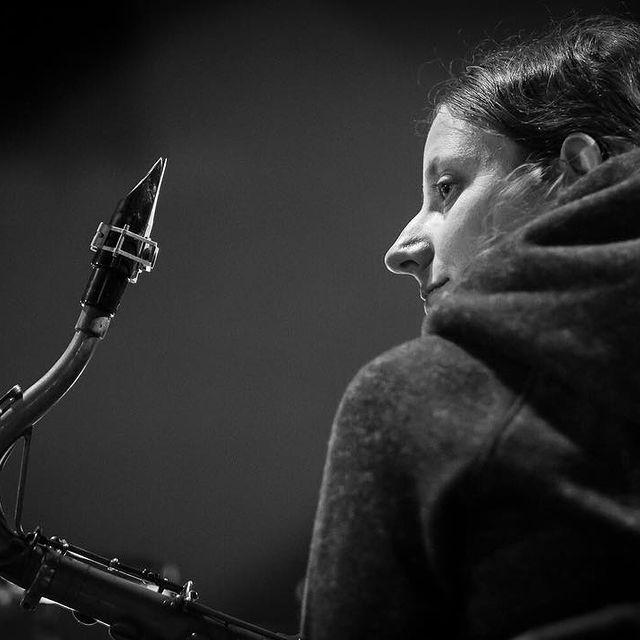
Mat Maneri

Jazz
Free Jazz
Chamber Music
Classical Crossover
 Viberate Rank: 528109
 Viberate Rank: 528109
 Monthly ListenersFollowers
 Subscribers
 Followers
 Followers
 FansTop Spotify Songs
| Track | 7-Day Streams | |
|---|---|---|
1 | 42 | |
2 | 28 | |
3 | 28 | |
4 | 22 | |
5 | 21 |
Top YouTube VideosMonthly ListenersFeatured in Playlists| Playlist | Followers | |
|---|---|---|
1 |  NPR Classical NPR Music | 14.43K |
2 |  The Sound of Free Jazz The Sounds of Spotify | 10.46K |
3 |  ECM New & Forthcoming ECM Records | 9.44K |
4 |  WWOZ 90.7 FM (New Orleans Radio) Bryson Whitney | 6.48K |
5 |  ECM Records: 1001 - 1999 Ulysses' Classical | 6.46K |
Audience| City | Monthly Listeners | |
|---|---|---|
1 |  | 16 |
2 | | 15 |
3 |  | 15 |
4 |  | 15 |
5 | | 13 |
See full performance history, audience data, playlist activity, rankings, comparisons, and more in Viberate music analytics. Start with a free trial, then continue with a paid plan.
Mat Maneri’s Spotify BioOne of the leading violists of his generation, Mat Maneri is an individualistic soloist and composer, known for his forward-thinking approach to modern creative jazz, free improvisation, and avant-garde music. Maneri first gained attention in the early '90s playing alongside his father, saxophonist Joe Maneri, and has worked over the years with such like-minded artists as Matthew Shipp, Joe Morris, and Craig Taborn, among others. As a leader, he has also issued his own small-group albums like 1999's So What, 2000's Blue Decco, and 2003's For Consequence. He has also collaborated on numerous projects including 2017's Sounding Tears with Lucian Ban and Evan Parker, and 2018's Strings 1 with saxophonist Ivo Perelman.
The son of microtonal saxophonist and clarinetist Joe Maneri, Mat Maneri was born in 1968 in Brooklyn, and began playing the violin at age five. A skilled player by his teens, Maneri excelled at Walnut Hills High School and New England Conservatory, before leaving school early… to focus on music. Privately, he studied Baroque classical music with Juilliard String Quartet founding member Robert Koff, and took lessons with noted jazz bassist Miroslav Vitous. He made his recorded debut in the late '80s playing on trio albums with his father like 1989's Kalavinka with percussionist Masashi Harada, and the 1995 ECM date Three Men Walking with guitarist Joe Morris. There were also early projects with pianist Matthew Shipp, the Indian-fusion ensemble Natraj, pianist Pandelis Karayorgis, and others.
In 1998, he made his debut as leader on the quintet session Acceptance, which featured an appearance from his father, as well as trombonist Gary Valente, guitarist John Dirac, bassist Ed Schuller, and drummer Randy Peterson. He also began leading his own trio with pianist Shipp, and issuing albums like 1998's So What, 1999's Fifty-One Sorrows. It was during this period that he adopted the viola as his primary instrument of choice; although he still plays a number of instruments including the violin, the electric violin, and the baritone violin.
In 2000, he paired with pianist Craig Taborn, bassist William Parker, and drummer Gerald Cleaver for Blue Decco. Trinity followed in 2001. That same year, he joined Shipp and drummer Whit Dickey in Nommonsemble for Life Cycle, followed a year later by his own quartet album, Sustain. Over the next several years, Maneri stayed busy, appearing on albums with Josh Roseman, David S. Ware, Craig Taborn, and others. He then paired with his father and bassist Barre Phillips for 2004's Angles of Repose on ECM and drew inspiration from Miles Davis' Bitches Brew on 2005's Pentagon. Maneri next joined Club d'Elf for a handful of albums, including 2006's Now I Understand, after which he contributed to albums by Manuel Valera, Jacob Sacks, Paul Motian, and others.
In 2011 he joined Matthew Shipp and guitarist Joe Morris for Duos, followed in 2013 by A Violent Dose of Anything with Shipp and saxophonist Ivo Perelman. Perelman was also on board for Maneri's next several outings, 2014's Two Men Walking, 2015's Counterpoint, and 2016's Breaking Point. In 2017, Maneri reunited with Shipp and Dickey for the trio session Vessel in Orbit. Also that year, he paired with Lucian Ban and Evan Parker on Sounding Tears. Strings 1 arrived in 2018 and found the violinist once again collaborating with Perelman. The duo followed with a second volume in the series, 2018's Strings 2, with Mark Feldman and Jason Hwang. Two more volumes arrived in 2019 with Strings 3 featuring trumpeter Nate Wooley, and Strings 4 with Wooley and pianist Shipp. ~ Matt collar, Rovi
Viberate is a music analytics platform built for A&Rs, artist managers, labels, booking agents, marketers, and artists.
It helps music professionals track artist growth, analyze audience data, monitor playlist activity, compare artists, follow song performance, and identify opportunities across the music market.
Public artist pages provide a free preview of selected artist data. Paid plans provide access to deeper analytics, historical data, charts, comparisons, playlist tools, exports, alerts, reports, and additional professional features.
Yes. Public Viberate artist pages provide selected artist analytics and music data for free.
Viberate also offers a 7-day free trial of the full platform. A credit card is required to start the trial. The trial includes access to the complete product so users can test deeper artist analytics, historical views, playlist insights, comparisons, charts, exports, alerts, and reporting features before choosing a paid plan.
Viberate provides artist analytics across streaming, playlists, social media, video, radio airplay, songs, and audience markets.
Users can analyze Spotify performance, Spotify and Apple Music playlists, YouTube activity, TikTok and Instagram growth, radio spins, song performance, audience locations, demographics, rankings, and overall artist momentum.
Artist profiles also connect to music charts, similar artists, and comparison tools, helping users benchmark performance and evaluate artists in context.
Viberate updates key artist and track data daily.
For followed artists and tracks, selected data is refreshed multiple times per day. This helps teams monitor playlist changes, streaming movement, audience growth, releases, and campaign performance with more current data.
Update frequency can vary depending on the metric and data source.
Yes. Viberate lets users compare up to five artists side by side across streaming, social media, audience, and engagement metrics.
Users can compare fanbase growth, audience demographics, locations, Spotify performance, social metrics, and other artist data over selected time periods.
Artist comparison can be used for A&R scouting, benchmarking, booking decisions, campaign planning, and evaluating artists with similar audiences or market positions.