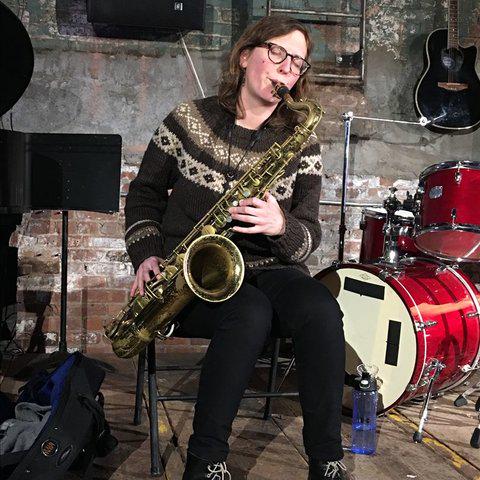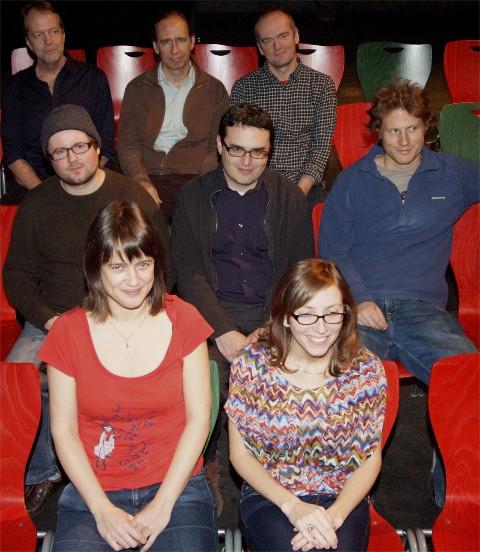
Ingrid Laubrock

Jazz
Avant-garde Jazz
Free Jazz
 Viberate Rank: 417630
 Viberate Rank: 417630
 Monthly ListenersFollowers
 Subscribers
 Followers
 Followers
 FansTop Spotify Songs
| Track | 7-Day Streams | |
|---|---|---|
1 | 75 | |
2 | 34 | |
3 | 28 | |
4 | 23 | |
5 | 21 |
Top YouTube VideosMonthly ListenersFeatured in Playlists| Playlist | Followers | |
|---|---|---|
1 |  Avant-Jazz Spotify | 70.76K |
2 | The Morning Spring 2023 Playlist nytimes | 30.66K |
3 |  The Sound of Free Jazz The Sounds of Spotify | 10.46K |
4 |  The Sound of Avant-Garde Jazz The Sounds of Spotify | 4.05K |
5 |  JAZZ morrisonhaze | 3.11K |
Audience| City | Monthly Listeners | |
|---|---|---|
1 | | 26 |
2 |  | 19 |
3 | | 18 |
4 | | 13 |
5 | | 13 |
See full performance history, audience data, playlist activity, rankings, comparisons, and more in Viberate music analytics. Start with a free trial, then continue with a paid plan.
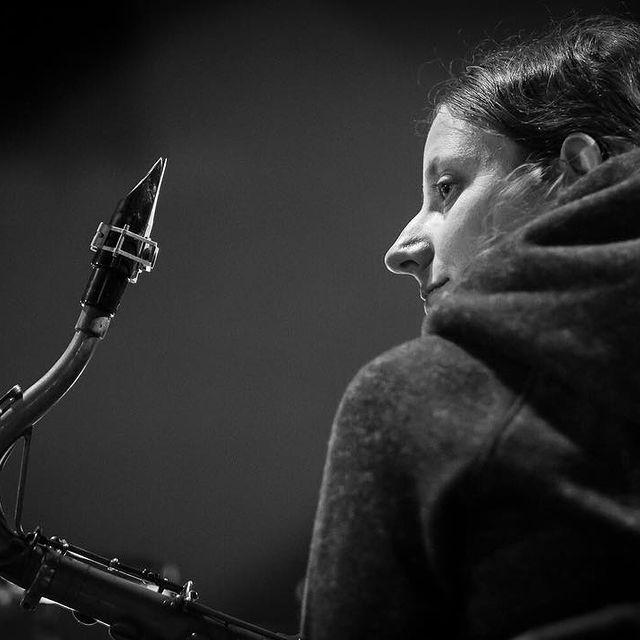
Ingrid Laubrock’s Spotify BioA saxophonist who has garnered international acclaim particularly in avant-jazz circles, German-born Ingrid Laubrock has seemingly heeded a call to travel west, first gathering notice for her work in London's vibrant creative jazz community before jumping the pond and making a name for herself in the cutting-edge improvised music scene of 21st century Brooklyn. With her own albums, she has moved from engaging small group work, such as 2011's Madness of Crowds, to ambitious large groups, as on 2018's orchestral Ingrid Laubrock: Contemporary Chaos Practices.
Born in Stadtlohn, Germany in 1970, Laubrock was attracted to jazz from an early age, particularly European free jazz, and spent several of her teenage years soaking up the music from radio, recordings, and attending live performances. Not enamored of small-town life, she moved to Berlin immediately after finishing school, and in 1989 crossed the Channel to England and settled in London. Without any formal training, she began busking… on alto saxophone in the London Underground with her guitarist boyfriend, but decided to take the plunge into formal lessons with tenor and soprano saxophonist Jean Toussaint in 1993. Continuing on the path toward the life of a professional jazz saxophonist, she took master classes with Dave Liebman in the U.S. during 1998 and 1999, and then threw herself into rigorous practice back home in Germany before returning to London, where she also completed a post-graduate jazz course at the Guildhall School of Music and Drama.
In 1993 Laubrock met two Brazilian musicians living in London, singer Mônica Vasconcelos and guitarist Ife Tolentino, and she made her first recorded appearance on the 1994 Vasconcelos recording Nóis, which also featured Tolentino among the musicians. In addition, Laubrock and Vasconcelos co-founded As Meninas (The Girls) as an outlet for their exploration of Brazilian jazz; the group became a quartet with the addition of Tolentino and drummer/percussionist Chris Wells, and later underwent a name change to Nóis 4.
When the time came for Laubrock to record her first album as a leader, she tapped Tolentino as guitarist for her own band, along with British keyboardist/accordionist Kim Burton, Italian bassist Davide Mantovani, and Mozambican percussionist Helder Pack. Released by the Candid label in 1998, Who Is It? immediately established the saxophonist as an artist with an international perspective. Two years later, Laubrock appeared as part of a large ensemble supporting Vasconcelos on the singer's second album, Nóis Dois, and in 2000 she joined Vasconcelos, Tolentino, and Wells on the As Meninas disc Bom Dia. Laubrock's sophomore album as a leader, 2001's Some Times (also on Candid), found her on soprano, alto, and tenor saxophone leading a much larger ensemble than her debut, featuring Tolentino, bassist Larry Bartley, drummer Tom Skinner, saxophonist/clarinetist Julian Siegel, trombonist Mark Bassey, trumpeter/flügelhornist Bryon Wallen, and pianists Karim Merchant and Nikki Isles -- some of these musicians, along with Laubrock, would join the F-IRE Collective (Fellowship for Integrated Rhythmic Expression), an aggregation of London-based artists who originally met to investigate West African dance music.
Over the next two years, Laubrock would appear on recordings by Vasconcelos, Bartley, and trumpeter/flügelhornist Tom Arthurs, while moving in a more avant-gardist, exploratory direction as a F-IRE Collective participant. Laubrock drew from the Collective -- which received a BBC Jazz Award for Innovation in 2004 -- to derive the lineup of her third album, Forensic, which featured bassist Bartley, drummer Skinner, pianist Merchant, and cellist Ben Davis in addition to the leader on soprano, alto, tenor, and baritone saxophones. Released in 2005, the same year that Laubrock received a Rising Star nomination from the BBC Jazz Awards, Forensic was lauded as a creative leap forward for Laubrock, combining diverse improvisational and jazz-based idioms into an adventurous meld.
During this time period, Laubrock also recorded in collaborative or sidewoman settings with Nóis 4 (Gente, 2004, Candid), Brigitte Beraha (Prelude to a Kiss, 2004, FMR), Polar Bear (the Mercury Music Prize-nominated Held on the Tips of Fingers, 2005, Babel), and Barry Green (Introducing, 2005, Tentoten) before teaming with pianist Liam Noble for the duo recording Let's Call This... (2006, Babel), featuring original pieces interspersed amidst the music of Monk, Mingus, Ellington, and Konitz. Laubrock and Noble were introducing their duo to creative jazz listeners at roughly the same time that Noble was also performing and recording with his Anglo-American quartet featuring British guitarist Phil Robson and the American bass-drums team Drew Gress and Tom Rainey (the quartet appears on Noble's 2005 Basho label album Romance Among the Fishes).
Noble served as a catalyst of sorts for the next phase of Laubrock's life in music, as Laubrock met Rainey for the first time at the 2006 Cheltenham Jazz Festival when Rainey was performing with the pianist at the event. Learning that Laubrock was an improvising saxophonist, Rainey listened to, and was mightily impressed by, her Forensic album; Rainey invited her to improvise with him, and the musical connection was immediate. In September 2007, Rainey joined Laubrock and Noble in London to record the eponymous debut album by Laubrock's new trio, Sleepthief, released on the Swiss Intakt label the following year. (A second Sleepthief album, Madness of Crowds, arrived on Intakt in 2011.) In 2008 Laubrock was drawn to Brooklyn, crossing the Atlantic to live there with Rainey and begin a new phase in her life as a key contributor to Brooklyn-based creative jazz.
Laubrock's first New York band would be a collaborative trio, Paradoxical Frog, which emerged from a session at pianist Kris Davis' house with drummer Tyshawn Sorey. Laubrock, Davis, and Sorey all contributed compositions to the ensemble, which released two albums on the Clean Feed label, an eponymous debut in 2010 and Union in 2012. After linking up with Davis and Sorey in Paradoxical Frog, Laubrock met guitarist Mary Halvorson, and the saxophonist's invitation for Halvorson to play a session with her and Rainey ultimately resulted in formation of the Tom Rainey Trio, Rainey's first group under his own name after decades of major contributions to creative jazz and improvised music projects by collaborative outfits or led by others. The trio's debut album, Pool School, was released by Clean Feed in 2010 -- the same year that Laubrock and Rainey were married -- and a sophomore Tom Rainey Trio outing, Camino Cielo Echo, arrived on Intakt in 2012.
With the Tom Rainey Trio serving as a vehicle for Laubrock in purely improvisational mode and Paradoxical Frog moving forward as a leaderless collaborative threesome, Laubrock decided the time was right to lead her own New York-based ensemble that would provide an outlet for her compositional side. She invited bassist John Hébert to join her new group Anti-House, also featuring Rainey and Halvorson. The band's eponymous debut album -- with pianist Davis a featured guest -- was released by Intakt in 2010. By 2013 Anti-House had solidified into a quintet with Davis a full-fledged member on the group's sophomore Intakt album, Strong Place. The group's third Intakt album, 2015's Roulette of the Cradle, featured clarinetist Oscar Noriega on two tracks.
As the 2010s progressed, Laubrock remained extremely busy in settings as a leader, collaborator, or sidewoman. In 2011 she was commissioned by German public broadcasting corporation SWR to compose and perform new music for that year's edition of the venerable New Jazz Meeting (founded in 1966); for the occasion, she assembled an octet comprising musicians from both sides of the Atlantic, with herself on tenor and soprano saxophone joined by Rainey, Halvorson, bassist Gress, pianist Noble, trumpeter Arthurs, cellist Ben Davis, and accordionist Ted Reichman. She also performed and recorded in groups including a trio with pianist Veryan Weston and cellist Hannah Marshall, playing soprano and tenor on the album Haste (2012, Emanem); Catatumbo with bassist Olie Brice and drummer Javier Carmona, playing tenor on the trio's eponymous album (2012, Babel); pianist Kris Davis' quintet with Rainey, violist Mat Maneri, and bassist Trevor Dunn, appearing on Capricorn Climber (2013, Clean Feed); LARK with Rainey, Kris Davis, and trumpeter Ralph Alessi, featured on soprano and tenor on the quartet's eponymous debut (2013, Skirl); Lily's Déjà Vu with guitarist Guillermo Celano, bassist Jasper Stadhouders, and drummer Marcos Baggiani, appearing on Music from Another Ass (2013, Trytone); and the Mary Halvorson Septet with Halvorson, bassist Hébert, trumpeter Jonathan Finlayson, alto saxophonist Jon Irabagon, trombonist Jacob Garchik, and drummer Ches Smith, playing tenor on Illusionary Sea (2013, Firehouse 12).
In May 2014, Intakt released Zürich Concert, a recording of the Ingrid Laubrock Octet's performance at the 2011 SWR New Jazz Meeting. Laubrock also appeared that year on the eponymous debut album (also released by Intakt) by a new Tom Rainey ensemble, Obbligato, also featuring Gress, Alessi, and Kris Davis, with the quintet improvising on standards by the likes of Ellington, Monk, Kern, and Styne, and embarked on a U.S. tour in support of And Other Desert Towns, an album of ten improvisations by the duo of Laubrock and Rainey released by Relative Pitch Records. The Laubrock-Rainey duo tour came close on the heels of Laubrock's appearance, also during May 2014, at the Onassis Cultural Centre in Athens, Greece as a member of 2014 NEA Jazz Master Anthony Braxton's Diamond Curtain Wall Quartet, also including Halvorson and trumpeter/cornetist Taylor Ho Bynum. The following year, she issued Ubatuba with Rainey and Tim Berne. She then joined pianist Cory Smythe and bassist Stephan Crump for 2016's Planktonic Finales. In 2018, she released Ingrid Laubrock: Contemporary Chaos Practices, which showcased her orchestral works featuring soloists Mary Halvorson, Kris Davis, and Nate Wooley. Kasumi, a duo recording with pianist Aki Takase, arrived in November 2019. ~ Dave Lynch, Rovi
Viberate is a music analytics platform built for A&Rs, artist managers, labels, booking agents, marketers, and artists.
It helps music professionals track artist growth, analyze audience data, monitor playlist activity, compare artists, follow song performance, and identify opportunities across the music market.
Public artist pages provide a free preview of selected artist data. Paid plans provide access to deeper analytics, historical data, charts, comparisons, playlist tools, exports, alerts, reports, and additional professional features.
Yes. Public Viberate artist pages provide selected artist analytics and music data for free.
Viberate also offers a 7-day free trial of the full platform. A credit card is required to start the trial. The trial includes access to the complete product so users can test deeper artist analytics, historical views, playlist insights, comparisons, charts, exports, alerts, and reporting features before choosing a paid plan.
Viberate provides artist analytics across streaming, playlists, social media, video, radio airplay, songs, and audience markets.
Users can analyze Spotify performance, Spotify and Apple Music playlists, YouTube activity, TikTok and Instagram growth, radio spins, song performance, audience locations, demographics, rankings, and overall artist momentum.
Artist profiles also connect to music charts, similar artists, and comparison tools, helping users benchmark performance and evaluate artists in context.
Viberate updates key artist and track data daily.
For followed artists and tracks, selected data is refreshed multiple times per day. This helps teams monitor playlist changes, streaming movement, audience growth, releases, and campaign performance with more current data.
Update frequency can vary depending on the metric and data source.
Yes. Viberate lets users compare up to five artists side by side across streaming, social media, audience, and engagement metrics.
Users can compare fanbase growth, audience demographics, locations, Spotify performance, social metrics, and other artist data over selected time periods.
Artist comparison can be used for A&R scouting, benchmarking, booking decisions, campaign planning, and evaluating artists with similar audiences or market positions.