Marty Friedman

Metal
Heavy Metal
Neoclassical
Speed Metal
 Viberate Rank: 28395
 Viberate Rank: 28395
 Monthly ListenersFollowers
 Subscribers
 Followers
 Followers
 FansTop Spotify Songs
| Track | 7-Day Streams | |
|---|---|---|
1 | 22.48K | |
2 | 14.22K | |
3 | 14.22K | |
4 | 13.33K | |
5 | 9.53K |
Top YouTube Videos| Video | 7-Day Views | |
|---|---|---|
1 | 707 | |
2 | 634 | |
3 | 616 | |
4 | 527 | |
5 | 422 |
Monthly ListenersFeatured in Playlists| Playlist | Followers | |
|---|---|---|
1 |  String Theory Spotify | 166.86K |
2 |  THE FIRST TAKE Spotify | 103.78K |
3 |  Anime Music | Top 100 Openings and Endings 2026 💥 🎹 | 97.19K |
4 | BEST GUITAR SOLOS OF ALL TIME t.riccardo | 95.19K |
5 |  FROM THE FIRST TAKE THE FIRST TAKE | 81.89K |
Audience| City | Monthly Listeners | |
|---|---|---|
1 |  | 2.12K |
2 |  | 2.06K |
3 |  | 1.72K |
4 |  | 1.60K |
5 |  | 1.11K |
See full performance history, audience data, playlist activity, rankings, comparisons, and more in Viberate music analytics. Start with a free trial, then continue with a paid plan.
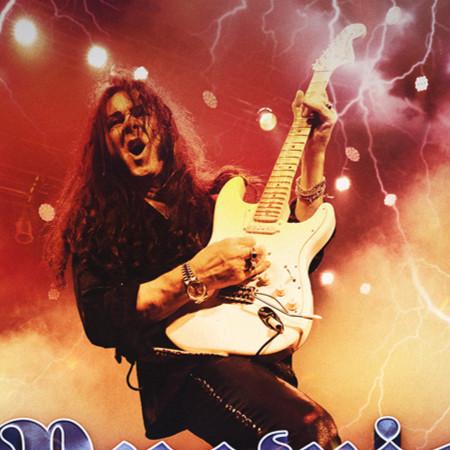
Marty Friedman’s Spotify BioOne of the ultimate guitar shredders, Marty Friedman first made his name with the speed-burning virtuoso outfit Cacophony, but landed his most widely renowned gig as the lead guitarist of Megadeth during the thrash legends' greatest period of popularity. Friedman was born in 1962 and grew up in the Baltimore area; he began playing guitar at age 15 in a band called Deuce, shortly before his family moved to Hawaii. While in Hawaii, Friedman hooked up with a local band (which changed names and personnel fairly often) and recorded with them on three different albums. Friedman studied guitar in earnest, going so far as to explore ethnic music (particularly Asian and Middle Eastern) in search of new, exotic scales to incorporate into his lead playing. He initially connected with the shred-guitar label Shrapnel in 1981, but it wasn't until 1987 that he, along with friend Jason Becker, made an impact on the larger guitar community. The twin-guitar heroics of their debut album as Cacophony,… Speed Metal Symphony, made an instant splash, and both took the opportunity to record the solo albums they'd been working on individually prior to the genesis of Cacophony. Friedman's solo debut, Dragon's Kiss, was released on Shrapnel in 1988, and it was stylistically similar to his Cacophony material. After one further Cacophony album, 1989's Go Off!, Friedman and Becker went their separate ways. Friedman joined Megadeth in late 1990, becoming their third lead guitarist in four albums; however, he managed to bring some stability to the position, remaining with the band for ten years. His debut with the band, Rust in Peace, demonstrated his immediate impact on the rest of the group, still standing as one of the most technically accomplished albums in all of thrash metal. His second album with Megadeth, Countdown to Extinction, was the band's popular breakthrough, making them one of the biggest heavy metal groups in the world. In 1992, Friedman capitalized on the group's popularity as an opportunity to do something different: he stunned metal fans by hooking up with new age star Kitaro for a reflective, Asian-tinged instrumental album titled Scenes, which also appeared on Shrapnel. Pleased with the results, Friedman continued in that vein with his second contemporary instrumental album, 1994's Introduction, which boasted an even stronger Japanese flavor. Friedman continued to pursue his solo career as an outlet for less aggressive sounds, releasing True Obsession in 1996. Friedman left Megadeth in 2000, about a year after the release of their Risk album. He released Music for Speeding in 2003, followed by an instructional video called 99 Secret Lead Guitar Phrases in 2006. Loudspeaker and Future Addict arrived in early 2006 and 2008, respectively, and in 2009 he dropped a collection of Japanese covers, the aptly named Tokyo Jukebox. A second set of covers, Tokyo Jukebox 2, arrived in 2011, followed by an all-new set of originals, Inferno, in 2014. 2017's Wall of Sound saw Friedman joined by a host of guests, including Jinxx from Black Veil Brides, Shiv Mehra from Deafheaven, and Jørgen Munkeby from Shining. ~ Steve Huey, Rovi
Viberate is a music analytics platform built for A&Rs, artist managers, labels, booking agents, marketers, and artists.
It helps music professionals track artist growth, analyze audience data, monitor playlist activity, compare artists, follow song performance, and identify opportunities across the music market.
Public artist pages provide a free preview of selected artist data. Paid plans provide access to deeper analytics, historical data, charts, comparisons, playlist tools, exports, alerts, reports, and additional professional features.
Yes. Public Viberate artist pages provide selected artist analytics and music data for free.
Viberate also offers a 7-day free trial of the full platform. A credit card is required to start the trial. The trial includes access to the complete product so users can test deeper artist analytics, historical views, playlist insights, comparisons, charts, exports, alerts, and reporting features before choosing a paid plan.
Viberate provides artist analytics across streaming, playlists, social media, video, radio airplay, songs, and audience markets.
Users can analyze Spotify performance, Spotify and Apple Music playlists, YouTube activity, TikTok and Instagram growth, radio spins, song performance, audience locations, demographics, rankings, and overall artist momentum.
Artist profiles also connect to music charts, similar artists, and comparison tools, helping users benchmark performance and evaluate artists in context.
Viberate updates key artist and track data daily.
For followed artists and tracks, selected data is refreshed multiple times per day. This helps teams monitor playlist changes, streaming movement, audience growth, releases, and campaign performance with more current data.
Update frequency can vary depending on the metric and data source.
Yes. Viberate lets users compare up to five artists side by side across streaming, social media, audience, and engagement metrics.
Users can compare fanbase growth, audience demographics, locations, Spotify performance, social metrics, and other artist data over selected time periods.
Artist comparison can be used for A&R scouting, benchmarking, booking decisions, campaign planning, and evaluating artists with similar audiences or market positions.