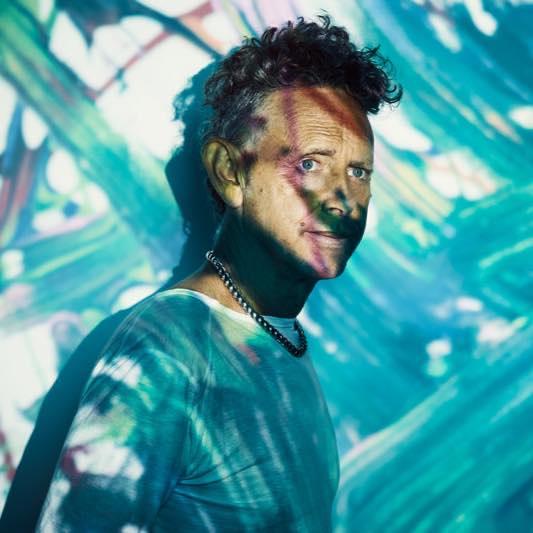
Martin Gore

Electronic
Minimal Techno
Synthpop
 Viberate Rank: 69390
 Viberate Rank: 69390
 Monthly ListenersFollowers
 Subscribers
 Followers
 Followers
 FansTop Spotify Songs
| Track | 7-Day Streams | |
|---|---|---|
1 | 17.61K | |
2 | 10.68K | |
3 | 7.43K | |
4 | 7.05K | |
5 | 4.79K |
Top YouTube VideosMonthly ListenersFeatured in Playlists| Playlist | Followers | |
|---|---|---|
1 |  Pop Goes Classical Spotify | 1.03M |
2 |  songs that vampires dance to at goth clubs dee but with 13 e’s | 112.45K |
3 |  INSTRUMENTAL MUSIC TO WORK TO: Chill, Ambient, Electronic Instrumental Mix Keats Handwriting | 51.84K |
4 | New Wave 80's lakers1980 | 41.51K |
5 | Berghain Music Roman Wäger | 39.72K |
Audience| City | Monthly Listeners | |
|---|---|---|
1 |  | 3.55K |
2 |  | 2.41K |
3 |  | 1.86K |
4 | | 1.20K |
5 |  | 1.19K |
See full performance history, audience data, playlist activity, rankings, comparisons, and more in Viberate music analytics. Start with a free trial, then continue with a paid plan.
Martin Gore’s Spotify BioEnglish composer and musician Martin Gore is the driving creative force behind the groundbreaking synth pop group Depeche Mode. A founding member of the band, he became the primary songwriter after Vince Clarke left in 1981, and he helped shift their sound into a darker, more serious direction, with lyrics focusing on topics such as religion, politics, sex, and loneliness. Highly acclaimed as well as massively successful, Depeche Mode have sold over 100 million records worldwide, and were eventually inducted into the Rock and Roll Hall of Fame in 2020. Additionally, Gore received the Ivor Novello Award for International Achievement from the British Academy of Songwriters, Composers and Authors in 1999. Outside of his work in Depeche Mode, Gore has sporadically issued solo efforts, including two Counterfeit releases consisting of covers (a 1989 EP and a 2003 full-length) and experimental techno recordings such as 2021's The Third Chimpanzee.
Martin Gore was born in London, England, on… July 23, 1961. As a teen he joined French Look, a duo featuring schoolmate Vince Clarke; with the subsequent additions of keyboardist Andrew Fletcher and singer David Gahan, the group re-christened itself Depeche Mode, soon jettisoning all instruments excluding their synthesizers and honing a slick, techno-based sound to showcase Clarke's catchy melodies. Depeche Mode's 1981 debut LP Speak and Spell was a major British hit, its success spurred by the smash single "Just Can't Get Enough," but following the album's release principal songwriter Clarke abruptly exited to form Yazoo with singer Alison Moyet, leaving the group's future in grave doubt.
In Clarke's absence, Gore grabbed the songwriting reins, and while 1982's A Broken Frame deviated only slightly from Depeche Mode's earlier work, his ominous songs grew more assured and sophisticated by the time of 1983's Construction Time Again. Some Great Reward, issued the following year, was Depeche Mode's artistic and commercial breakthrough, as Gore's dark, kinky preoccupations with spiritual doubt ("Blasphemous Rumours") and psycho-sexual manipulation ("Master and Servant") came to the fore. The egalitarian single "People Are People" was a major hit on both sides of the Atlantic, and typified the music's turn toward more industrial textures. 1986's atmospheric Black Celebration continued the trend toward grim melancholy, and further established the group as a major commercial force.
In 1989, Gore issued the solo EP Counterfeit, a collection of covers. The following year saw the release of Depeche Mode's Violator, a Top Ten smash which spawned the hits "Enjoy the Silence," "Policy of Truth," and "Personal Jesus." Although 1993's Songs of Faith & Devotion entered the charts in the number one slot, internal conflicts resulted in a four-year wait for the follow-up, Ultra. Exciter, produced by LFO's Mark Bell, arrived in 2001. In 2003, Gore released his first solo full-length, Counterfeit², another collection of covers; the same year, Gahan released his solo debut, Paper Monsters. Depeche Mode's Playing the Angel surfaced in 2005, followed by Sounds of the Universe in 2009.
In 2011, Gore reunited with Clarke for the first time since 1981, forming minimal techno project VCMG. The duo released three EPs, followed by the full-length SSSS in 2012. Depeche Mode's 13th studio album, Delta Machine, their first for Columbia, appeared in 2013. In 2015, Gore released a self-titled instrumental electronic solo album under the alias MG; while it retained some of the techno elements of the VCMG project, it was largely more downtempo and cinematic. A remix EP followed, and Depeche Mode released their politically charged Spirit in 2017. After the band were inducted into the Rock and Roll Hall of Fame in 2020, Gore returned with another experimental electronic release, 2021's The Third Chimpanzee EP. ~ Jason Ankeny, Rovi
Viberate is a music analytics platform built for A&Rs, artist managers, labels, booking agents, marketers, and artists.
It helps music professionals track artist growth, analyze audience data, monitor playlist activity, compare artists, follow song performance, and identify opportunities across the music market.
Public artist pages provide a free preview of selected artist data. Paid plans provide access to deeper analytics, historical data, charts, comparisons, playlist tools, exports, alerts, reports, and additional professional features.
Yes. Public Viberate artist pages provide selected artist analytics and music data for free.
Viberate also offers a 7-day free trial of the full platform. A credit card is required to start the trial. The trial includes access to the complete product so users can test deeper artist analytics, historical views, playlist insights, comparisons, charts, exports, alerts, and reporting features before choosing a paid plan.
Viberate provides artist analytics across streaming, playlists, social media, video, radio airplay, songs, and audience markets.
Users can analyze Spotify performance, Spotify and Apple Music playlists, YouTube activity, TikTok and Instagram growth, radio spins, song performance, audience locations, demographics, rankings, and overall artist momentum.
Artist profiles also connect to music charts, similar artists, and comparison tools, helping users benchmark performance and evaluate artists in context.
Viberate updates key artist and track data daily.
For followed artists and tracks, selected data is refreshed multiple times per day. This helps teams monitor playlist changes, streaming movement, audience growth, releases, and campaign performance with more current data.
Update frequency can vary depending on the metric and data source.
Yes. Viberate lets users compare up to five artists side by side across streaming, social media, audience, and engagement metrics.
Users can compare fanbase growth, audience demographics, locations, Spotify performance, social metrics, and other artist data over selected time periods.
Artist comparison can be used for A&R scouting, benchmarking, booking decisions, campaign planning, and evaluating artists with similar audiences or market positions.