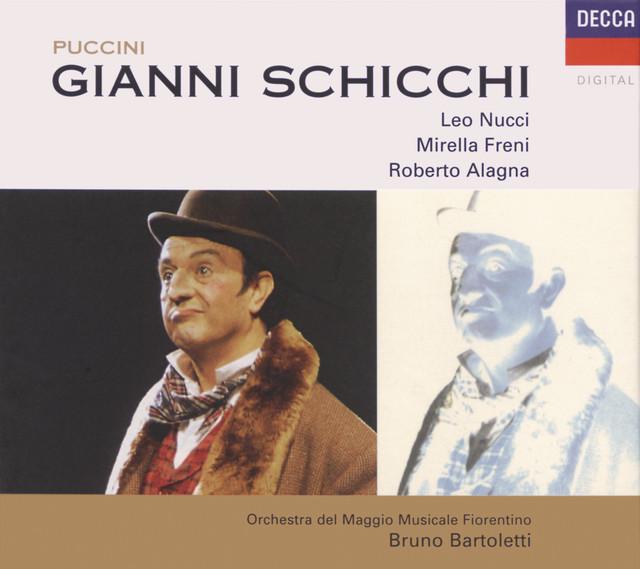
Bruno Bartoletti

Classical
Opera
Chamber Music
 Viberate Rank: 308325
 Viberate Rank: 308325
 Monthly ListenersFollowers
 Subscribers
 Followers
 Followers
 FansTop Spotify Songs
| Track | 7-Day Streams | |
|---|---|---|
1 | 562 | |
2 | 417 | |
3 | 417 | |
4 | 368 | |
5 | 294 |
Top YouTube VideosMonthly ListenersFeatured in Playlists| Playlist | Followers | |
|---|---|---|
1 |  Opera Classics Decca Records US | 376.27K |
2 |  The Sound of Everything The Sounds of Spotify | 53.82K |
3 |  This Is Rossini Spotify | 43.35K |
4 |  Unbelievable Classical Voices EMITHA | 22.52K |
5 |  Pavarotti: The Duets Luciano Pavarotti | 8.33K |
Audience| City | Monthly Listeners | |
|---|---|---|
1 |  | 501 |
2 |  | 476 |
3 |  | 433 |
4 |  | 362 |
5 | | 295 |
See full performance history, audience data, playlist activity, rankings, comparisons, and more in Viberate music analytics. Start with a free trial, then continue with a paid plan.
Bruno Bartoletti’s Spotify BioBruno Bartoletti and Ardis Kranik were one of the foremost teams in opera administration, Kranik leading the Chicago Lyric Opera into financial stability and Bartoletti keeping it at an international-quality level. However, his greatest mark on the musical world stemmed from his passionate championing of contemporary music, both European and American. He studied music at the Conservatory of his native Florence and after graduating, was employed by the Teatro Communale, where he worked as a pianist at the Teatro's center for training young singers. There, he worked with the leading conductors of the day, including Mitropoulos and Serafin, and his own conducting debut was in 1953, when he led the orchestra in a production of Rigoletto. As his career developed, he led several world premieres, including Malipiero's Il figliuol prodigo, Mortari's La scuola delle moglie, and Ginastera's Don Rodrigo. Among European premieres, he conducted Luciano Berio's Opera, Hans Werner Henze's The Stag… King, and Shostakovich's The Nose. His United States debut was in 1956, at the Lyric, in Verdi's Il Trovatore (as a last-minute substitute recommended by Tito Gobbi) and in 1964, he took on the dual role of artistic director and principal conductor. He remained active in Italy, as well, most notably as artistic director of the Maggio Musicale from 1986 to 1991. As the Lyric became fiscally stronger, he and Kranik were able to become more adventurous in repertoire, eventually beginning the "Towards the twentieth century" initiative, in which a contemporary opera, often a world premiere, appeared in every season. He retired in 1999.
Viberate is a music analytics platform built for A&Rs, artist managers, labels, booking agents, marketers, and artists.
It helps music professionals track artist growth, analyze audience data, monitor playlist activity, compare artists, follow song performance, and identify opportunities across the music market.
Public artist pages provide a free preview of selected artist data. Paid plans provide access to deeper analytics, historical data, charts, comparisons, playlist tools, exports, alerts, reports, and additional professional features.
Yes. Public Viberate artist pages provide selected artist analytics and music data for free.
Viberate also offers a 7-day free trial of the full platform. A credit card is required to start the trial. The trial includes access to the complete product so users can test deeper artist analytics, historical views, playlist insights, comparisons, charts, exports, alerts, and reporting features before choosing a paid plan.
Viberate provides artist analytics across streaming, playlists, social media, video, radio airplay, songs, and audience markets.
Users can analyze Spotify performance, Spotify and Apple Music playlists, YouTube activity, TikTok and Instagram growth, radio spins, song performance, audience locations, demographics, rankings, and overall artist momentum.
Artist profiles also connect to music charts, similar artists, and comparison tools, helping users benchmark performance and evaluate artists in context.
Viberate updates key artist and track data daily.
For followed artists and tracks, selected data is refreshed multiple times per day. This helps teams monitor playlist changes, streaming movement, audience growth, releases, and campaign performance with more current data.
Update frequency can vary depending on the metric and data source.
Yes. Viberate lets users compare up to five artists side by side across streaming, social media, audience, and engagement metrics.
Users can compare fanbase growth, audience demographics, locations, Spotify performance, social metrics, and other artist data over selected time periods.
Artist comparison can be used for A&R scouting, benchmarking, booking decisions, campaign planning, and evaluating artists with similar audiences or market positions.