Makoto Ozone

Jazz
Nu Jazz
Smooth Jazz
 Viberate Rank: 162365
 Viberate Rank: 162365
 Monthly ListenersFollowers
 Subscribers
 Followers
 Followers
 FansTop Spotify Songs
| Track | 7-Day Streams | |
|---|---|---|
1 | 1.06K | |
2 | 1.06K | |
3 | 1.04K | |
4 | 1.01K | |
5 | 900 |
Top YouTube VideosMonthly ListenersFeatured in Playlists| Playlist | Followers | |
|---|---|---|
1 |  Modern Jazz Japan Spotify | 51.79K |
2 | Quiet Night Jazz Tova | 25.59K |
3 |  Japanese Coffee Jazz Chris Grit | 19.57K |
4 |  JAZZ FUSION FUNK AND SOUL Jazz Fusion Funk&Soul | 11.91K |
5 |  New Jazz 2026 hen.ry | 11.09K |
Audience| City | Monthly Listeners | |
|---|---|---|
1 | | 639 |
2 | | 316 |
3 | | 240 |
4 |  | 212 |
5 | | 192 |
See full performance history, audience data, playlist activity, rankings, comparisons, and more in Viberate music analytics. Start with a free trial, then continue with a paid plan.
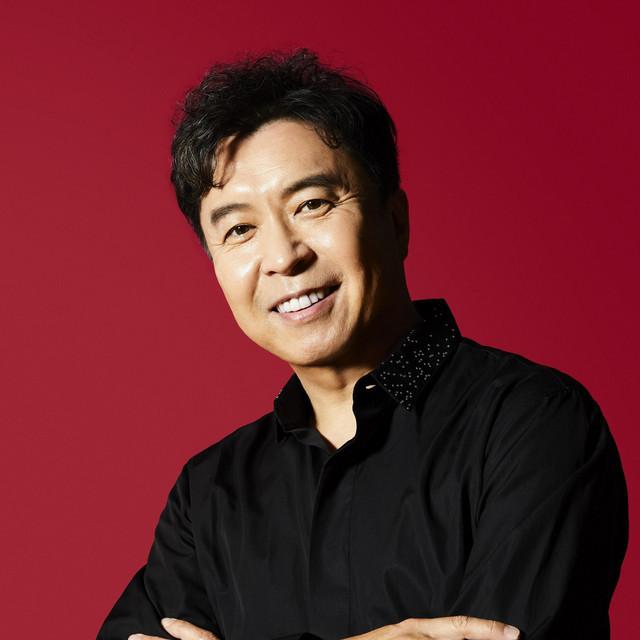
Makoto Ozone’s Spotify BioJapan's Makoto Ozone is a globally renowned, award-winning jazz and classical pianist. His self-titled 1984 debut for CBS registered in the jazz albums Top Ten, while 1987's trio outing Spring Is Here reached number two. After signing with Verve in 1994, he scored an international hit with the solo piano outing Breakout. A highly sought-after duo partner, he recorded several albums with vibist Gary Burton including 1995's acclaimed Face to Face. He founded the Japanese big-band No Name Horses, whose eponymously titled debut appeared in 2006. 2008's best-selling solo piano date Falling in Love Again led to his first classical outing, Road to Chopin in 2009. Haiku, a duo outing with Polish vocalist Anna Maria Jopek, appeared in 2011, as did No Name Horses' global best-seller Jungle. In 2017, he appeared as a soloist with the Scottish National Jazz Orchestra in a recording of Jeunehomme - Mozart: Piano Concerto; he reteamed with them for 2019's Peter and the Wolf. That same year, No Name… Horses released their globally charting Until We Vanish 15×15. In March 2021, Verve released the double-length Ozone 60. His first solo piano outing in 13 years; it contained both classical and jazz performances. In September, his 2019 live performance with Chick Corea was released as Resonance.
Ozone was born in Kobe, Japan in 1961. His father, a jazz organist, had him studying organ at the age of four. Before he was five, he was improvising the blues. After hearing an Oscar Peterson record at 12, he fell in love with jazz and took up the piano. At 19, he attended the Berklee College of Music to study composing and arranging. He was noticed by Gary Burton, who began to mentor him; he also joined Burton's band for a time. After graduation, he played a solo recital at the Carnegie Recital Hall in 1983 that set the jazz world on its head. He was signed to Columbia not long after. His 1984 self-titled debut recording featured Burton and bassist Eddie Gomez as his sidemen. The album was critically celebrated for Ozone's knowledge and mastery of the full jazz piano spectrum. He followed it with the 1986 quintet offering After (adding Billy Pierce and Tommy Campbell to his lineup), the 1987 solo piano Now You Know, and a trio album of jazz standards, Spring Is Here, with drummer Roy Haynes and bassist George Mraz. It marked his final album for the label. Besides touring with his own bands, Ozone found time to play on a number of very diverse jazz recordings by Paquito D'Rivera, Marc Johnson, Chuck Loeb, and Burton.
In 1989, he began a series of one-off albums for different labels including Starlight (JVC, 1990), Breakout (Verve, 1994), a duet offering with Burton entitled Face to Face (GRP, 1995), and Nature Boys, with drummer Peter Erskine and bassist John Patitucci. He had played the North Sea and Montreux Jazz Festivals several times by this juncture, and in 1997 issued the concert recording At Montreux Jazz Festival with vocalist Kimiko Itoh and the studio effort Trio (with bassist Kiyoshi Kitagawa and drummer Clarence Penn), both in 1997. The latter won the Best Jazz of Japan award from Swing Journal. The band's chemistry was so incisive and forward-thinking that Ozone enlisted the pair for two more dates, a collection of originals entitled Three Wishes, and Dear Oscar, dedicated to Peterson. The latter album went on to win Best Jazz of Japan Award 1998.
Ozone relocated to New York City in 1999 and immediately released No Strings Attached with the same trio. The group took on club and festival dates as well as backing the occasional soloist or vocalist. The same year, he also composed a piano concerto, performed by his trio together with a 70-piece orchestra that premiered in Mexico. Ozone also found time to collaborate with Kazumi Watanabe on the guitarist's album Dandyism, with two more trio dates -- Pandora and So Many Colors -- followed by another duet set in 2002 with Burton entitled Virtuosi. That same year he also issued the quintet set Treasure with bassist James Genus, Penn, additional pianist Chick Corea, saxophonist Michael Brecker, Burton, and vocalist Jon Hendricks. But Ozone was also in constant motion: He toured hard with his trio (with Genus), throughout Asia, Europe, and the United States, and recorded them on Reborn for Verve in 2003. The same year he received a commission from the famous playwright Hisashi Inoue to perform and conduct his own composition, a piano concerto titled Mogami. In 2006, he was invited to the Chopin and His Europe International Festival in Warsaw. In 2008, Ozone performed with the NDR Sinfonieorchester at the Schleswig-Holstein Festival. Back in 2004, he'd formed the No Name Horses big band to pursue a wider tonal, harmonic, and rhythmic palette. Their debut, No Name Horses, appeared that year followed by No Name Horses II in 2008. In 2009, they issued the album Jungle, that showcased an array of Latin jazz works that juxtaposed the past with progressive futurism. The group experiment was fruitful: They have been together since that time and have toured France, Austria, the U.S., the U.K., Singapore, and Japan, resulting in the album Alive!! Live at Blue Note Tokyo. In 2010, Ozone shifted gears again, this time with the remarkable Road to Chopin, dedicated to the 200th anniversary of Chopin's birth. He collaborated with Polish vocalist Anna Maria Jopek on the duo album Haiku in 2011. In 2012, his trio -- with bassist Christian McBride and Jeff "Tain" Watts -- toured Japan and released My Witch's Blue. In collaboration with Branford and Ellis Marsalis, he released Pure Pleasure for Piano. The following year, in commemoration of the 30th anniversary of his world debut, he toured Japan with Burton for a month. In 2014, he toured Asia with the New York Philharmonic under the baton of Alan Gilbert. 2013 proved just as busy: he and Burton released Time Thread, their third collaborative disc. Ozone also wrote a jazz arrangement of Mozart's piano concerto No. 9 Jeunehomme for the Scottish National Jazz Orchestra; they performed its world premiere in the U.K. Ozone also performed with the NDR Radiophilharmonic Orchestra and in July, gave special concerts with the San Francisco Symphony Orchestra. In September, the pianist toured Japan with No Name Horses, and issued their tenth anniversary album, Road. The pianist was also invited to play with the Sao Paulo Symphony Orchestra as a soloist in their October Subscription Concert. Since that time, he has been a regular guest at classical music festivals in Europe and Asia.
In 2015, Ozone was part of drummer Dave Weckl's quintet for Of the Same Mind and guitarist Lee Ritenour's A Twist of Rit. Two years later, he was soloist on the recording Jeunehomme - Mozart: Piano Concerto with the Scottish National Jazz Orchestra; he joined them again for 2019's Peter and the Wolf. That same year No Name Horses released Until We Vanish 15×15. To celebrate his 60th birthday, Verve released Ozone 60 in March 2021, it contained a disc each of solo classical and jazz works -- marking his first solo outing in 13 years. In September, Resonance, a live duo outing with pianist Chick Corea (who'd died the previous February) appeared from Universal Japan. The live document was recorded at Tokyo's Blue Note two years earlier. In addition to his performing and recording career, Ozone hosts a popular jazz music radio program and writes music for live theater and TV. ~ Thom Jurek, Rovi
Viberate is a music analytics platform built for A&Rs, artist managers, labels, booking agents, marketers, and artists.
It helps music professionals track artist growth, analyze audience data, monitor playlist activity, compare artists, follow song performance, and identify opportunities across the music market.
Public artist pages provide a free preview of selected artist data. Paid plans provide access to deeper analytics, historical data, charts, comparisons, playlist tools, exports, alerts, reports, and additional professional features.
Yes. Public Viberate artist pages provide selected artist analytics and music data for free.
Viberate also offers a 7-day free trial of the full platform. A credit card is required to start the trial. The trial includes access to the complete product so users can test deeper artist analytics, historical views, playlist insights, comparisons, charts, exports, alerts, and reporting features before choosing a paid plan.
Viberate provides artist analytics across streaming, playlists, social media, video, radio airplay, songs, and audience markets.
Users can analyze Spotify performance, Spotify and Apple Music playlists, YouTube activity, TikTok and Instagram growth, radio spins, song performance, audience locations, demographics, rankings, and overall artist momentum.
Artist profiles also connect to music charts, similar artists, and comparison tools, helping users benchmark performance and evaluate artists in context.
Viberate updates key artist and track data daily.
For followed artists and tracks, selected data is refreshed multiple times per day. This helps teams monitor playlist changes, streaming movement, audience growth, releases, and campaign performance with more current data.
Update frequency can vary depending on the metric and data source.
Yes. Viberate lets users compare up to five artists side by side across streaming, social media, audience, and engagement metrics.
Users can compare fanbase growth, audience demographics, locations, Spotify performance, social metrics, and other artist data over selected time periods.
Artist comparison can be used for A&R scouting, benchmarking, booking decisions, campaign planning, and evaluating artists with similar audiences or market positions.