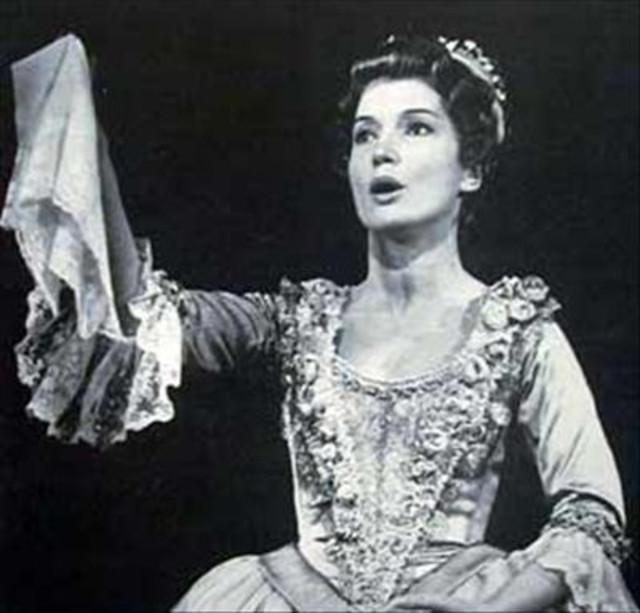
Mady Mesplé

Classical
Opera
 Viberate Rank: 186273
 Viberate Rank: 186273
 Monthly ListenersFollowers
 Subscribers
 Followers
 Followers
 FansTop Spotify SongsTop YouTube VideosMonthly ListenersFeatured in Playlists
| Playlist | Followers | |
|---|---|---|
1 | OPERAS FAMOSAS ❤️ bananaboba | 94.39K |
2 |  ÓPERAS FAMOSAS Opera Playlist | 63.70K |
3 |  This Is Rossini Spotify | 43.35K |
4 | The Blacklist (NBC) Soundtrack JessTumer | 26.29K |
5 | Best Opera songs and classical music selections Ira | 26.13K |
Audience| City | Monthly Listeners | |
|---|---|---|
1 |  | 7.49K |
2 |  | 4.47K |
3 |  | 4.01K |
4 |  | 3.84K |
5 |  | 3.29K |
See full performance history, audience data, playlist activity, rankings, comparisons, and more in Viberate music analytics. Start with a free trial, then continue with a paid plan.
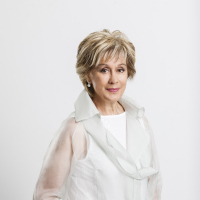
Mady Mesplé’s Spotify BioMady Mesplé was a fine French lyric coloratura soprano who was active from the late 1950s through the 1980s. Her operatic career was centered on the core coloratura roles, including Verdi's Rigoletto, Offenbach's Tales of Hoffmann, Rossini's The Barber of Seville, Donizetti's Lucia di Lammermoor, and Mozart's The Magic Flute, but she was best remembered for the title role in Delibes' Lakmé. Many consider her EMI recording of that signature role to be definitive. She also excelled in performances of new works, and as a recitalist.
Mesplé was born in Toulouse in 1931. She attended the local music academy, winning prizes in both singing and piano, and in 1953 she made her stage debut in Liège, as Lakmé. She then added Lucia and The Queen of the Night to her resumé with the Belgian National Opera, and in 1956 she joined the Opéra-Comique in Paris. 1958 marked her debut at the Opéra de Paris, where she sang Constance in Poulenc's Dialogue of the Carmelites, Oscar in Verdi's Un ballo in… Maschera, and multiple roles in Ravel's L'enfant et les sortileges.
During the 1960s Mesplé branched out into newer music. Charles Chaynes composed his Four Poems of Sappho for her, and in 1963 she premiered Gian Carlo Menotti's opera The Last Savage. She was also the first to sing the French version of Hans Werner Henze's Elegy for Young Lovers in 1965, and Pierre Boulez chose Mesplé for his performances of Schoenberg's Jacob's Ladder.
Mesplé's discography was split fairly equally between French operetta (especially Offenbach), opera, and recital literature. Although her Lakmé eclipsed her other operatic recordings in recognition and popularity, her Werther (with Georges Prêtre on EMI) and Guillaume Tell (with Lamberto Gardelli, also on EMI) are also worth a listen. Her most notable song recording is of the complete songs of Ravel with Dalton Baldwin, Gabriel Bacquier, and José van Dam. In the 1990s, Mesplé was diagnosed with Parkinson's disease, which ended her singing career. She died in her hometown of Toulouse on May 30, 2020 at the age of 89.
Viberate is a music analytics platform built for A&Rs, artist managers, labels, booking agents, marketers, and artists.
It helps music professionals track artist growth, analyze audience data, monitor playlist activity, compare artists, follow song performance, and identify opportunities across the music market.
Public artist pages provide a free preview of selected artist data. Paid plans provide access to deeper analytics, historical data, charts, comparisons, playlist tools, exports, alerts, reports, and additional professional features.
Yes. Public Viberate artist pages provide selected artist analytics and music data for free.
Viberate also offers a 7-day free trial of the full platform. A credit card is required to start the trial. The trial includes access to the complete product so users can test deeper artist analytics, historical views, playlist insights, comparisons, charts, exports, alerts, and reporting features before choosing a paid plan.
Viberate provides artist analytics across streaming, playlists, social media, video, radio airplay, songs, and audience markets.
Users can analyze Spotify performance, Spotify and Apple Music playlists, YouTube activity, TikTok and Instagram growth, radio spins, song performance, audience locations, demographics, rankings, and overall artist momentum.
Artist profiles also connect to music charts, similar artists, and comparison tools, helping users benchmark performance and evaluate artists in context.
Viberate updates key artist and track data daily.
For followed artists and tracks, selected data is refreshed multiple times per day. This helps teams monitor playlist changes, streaming movement, audience growth, releases, and campaign performance with more current data.
Update frequency can vary depending on the metric and data source.
Yes. Viberate lets users compare up to five artists side by side across streaming, social media, audience, and engagement metrics.
Users can compare fanbase growth, audience demographics, locations, Spotify performance, social metrics, and other artist data over selected time periods.
Artist comparison can be used for A&R scouting, benchmarking, booking decisions, campaign planning, and evaluating artists with similar audiences or market positions.