Alain Lombard

Classical
Opera
 Viberate Rank: 147575
 Viberate Rank: 147575
 Monthly ListenersFollowers
 Subscribers
 Followers
 Followers
 FansTop Spotify Songs
| Track | 7-Day Streams | |
|---|---|---|
1 | 85.84K | |
2 | 7.69K | |
3 | 7.69K | |
4 | 4.90K | |
5 | 4.28K |
Top YouTube VideosMonthly ListenersFeatured in Playlists| Playlist | Followers | |
|---|---|---|
1 |  As Músicas Clássicas mais Conhecidas cris.flessak | 104.86K |
2 | OPERAS FAMOSAS ❤️ bananaboba | 94.39K |
3 | Most Famous Opera Songs ElGuineo84 | 81.18K |
4 | dansecaribe | 50.80K |
5 |  Best Classical Music Of All Time Daniel P | 36.22K |
Audience| City | Monthly Listeners | |
|---|---|---|
1 |  | 7.70K |
2 |  | 5.02K |
3 |  | 4.63K |
4 |  | 4.57K |
5 |  | 3.43K |
See full performance history, audience data, playlist activity, rankings, comparisons, and more in Viberate music analytics. Start with a free trial, then continue with a paid plan.
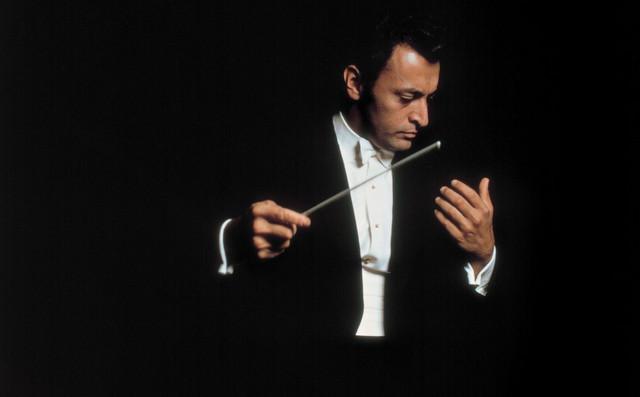
Alain Lombard’s Spotify BioAlain Lombard is among the leading French conductors from the latter half of the 20th century. He has held numerous prestigious positions both in the operatic and orchestral realms. Lombard is best known for his interpretations of French opera, particularly of Bizet's Carmen, Gounod's Faust and Romeo et Juliette, Delibes' Lakmé, and Massenet's Werther. He has also garnered notice for his Puccini and Verdi, as well as for instrumental works by Berlioz, Debussy, and Ravel. Lombard's repertory is hardly limited to French and Italian music, however, as it takes in chunks of Prokofiev, Mahler, Mendelssohn, Mozart, and many others. He has made numerous recordings since the 1960s for a range of labels, including EMI, Elektra, Erato, Forlane, and Valois.
Lombard was born in Paris on October 4, 1940. He was a prodigy, studying at the Paris Conservatory and receiving his first appointment before his 21st birthday, that of assistant conductor at the Lyons Opera in 1961. He was soon appointed… principal conductor there, but departed in 1965. The following year he won the Dimitri Mitropoulos International Conducting Competition in Athens and also accepted the post of conductor of the Greater Miami Symphony Orchestra, having earlier scored a notable success in the United States: his New York debut was at the American Opera Society in 1963 when he led a highly praised performance of Massenet's Hérodiade.
Lombard became an assistant to Leonard Bernstein and in 1967 debuted at the Metropolitan Opera with Gounod's Faust. From 1974 to 1980 Lombard served as director of the Opéra du Rhin, based in Strasbourg, but also performed in Colmar and Mulhouse. By 1980 Lombard had become a major force on both opera and concert stages.
In the 1980s he held a string of impressive posts: from 1981-1983 he was music director of the Opéra National de Paris, then served in the same capacity at the Paris-based Opéra-Comique (1983); and in 1988 he accepted the dual posts of music director of the Bordeaux Opéra and the Bordeaux Aquitaine Orchestra. In 1990 he was appointed director of the Bordeaux Grand Théâtre.
Lombard was also busy in the recording studio, especially throughout the 1990s and the new century, turning out recordings of Lakmé (1990; EMI), the Mahler Fifth Symphony with the Bordeaux Aquitaine Orchestra (1998; Forlane), and several of Carmen, including the 2004 DVD of the Franco Zeffirelli/Verona production on TDK.
Viberate is a music analytics platform built for A&Rs, artist managers, labels, booking agents, marketers, and artists.
It helps music professionals track artist growth, analyze audience data, monitor playlist activity, compare artists, follow song performance, and identify opportunities across the music market.
Public artist pages provide a free preview of selected artist data. Paid plans provide access to deeper analytics, historical data, charts, comparisons, playlist tools, exports, alerts, reports, and additional professional features.
Yes. Public Viberate artist pages provide selected artist analytics and music data for free.
Viberate also offers a 7-day free trial of the full platform. A credit card is required to start the trial. The trial includes access to the complete product so users can test deeper artist analytics, historical views, playlist insights, comparisons, charts, exports, alerts, and reporting features before choosing a paid plan.
Viberate provides artist analytics across streaming, playlists, social media, video, radio airplay, songs, and audience markets.
Users can analyze Spotify performance, Spotify and Apple Music playlists, YouTube activity, TikTok and Instagram growth, radio spins, song performance, audience locations, demographics, rankings, and overall artist momentum.
Artist profiles also connect to music charts, similar artists, and comparison tools, helping users benchmark performance and evaluate artists in context.
Viberate updates key artist and track data daily.
For followed artists and tracks, selected data is refreshed multiple times per day. This helps teams monitor playlist changes, streaming movement, audience growth, releases, and campaign performance with more current data.
Update frequency can vary depending on the metric and data source.
Yes. Viberate lets users compare up to five artists side by side across streaming, social media, audience, and engagement metrics.
Users can compare fanbase growth, audience demographics, locations, Spotify performance, social metrics, and other artist data over selected time periods.
Artist comparison can be used for A&R scouting, benchmarking, booking decisions, campaign planning, and evaluating artists with similar audiences or market positions.