Madam X


Electronic
Other Electronic Music
Glam Metal
 Viberate Rank: 152106
 Viberate Rank: 152106
 Monthly ListenersFollowers
 Subscribers
 Followers
 Followers
 FansTop Spotify Songs
| Track | 7-Day Streams | |
|---|---|---|
1 | 820 | |
2 | 302 | |
3 | 201 | |
4 | 155 | |
5 | 96 |
Top YouTube VideosMonthly ListenersFeatured in Playlists| Playlist | Followers | |
|---|---|---|
1 | Glam Rock Hits of the 8O's Mats Mazze Wallin | 62.24K |
2 |  80’s Hair Metal & Rock halun1 | 40.35K |
3 |  Hårdrock !! Markus Hårdis Andersson | 8.34K |
4 |  Eighties Heavy Metal Madi Danger | 3.90K |
5 |  80-tals Hårdrock 🤘 Filtr Legacy Sweden | 3.64K |
Audience| City | Monthly Listeners | |
|---|---|---|
1 |  | 84 |
2 |  | 73 |
3 | | 55 |
4 |  | 54 |
5 |  | 44 |
See full performance history, audience data, playlist activity, rankings, comparisons, and more in Viberate music analytics. Start with a free trial, then continue with a paid plan.
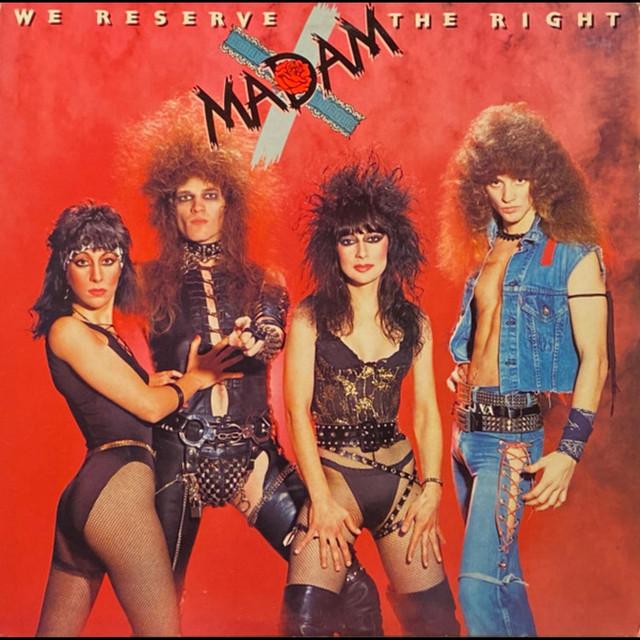
Madam X’s Spotify BioOne of Madam X’s more distinctive songs, ‘Come One, Come All’, contained the line ‘We’re bad, we’re good, that’s all we ever wanted’. Unfortunately for them, most people thought they belonged chiefly in the former category. The band was formed in New York in 1983 by sisters Maxine and Roxy Petrucci (b. 17 March 1962, Rochester, Michigan, USA) on guitar and drums, respectively, along with vocalist Bret Kaiser and bass player Christopher ‘Godzilla’ Doliber. They subsequently moved to Los Angeles where their brand of glam metal was more readily accepted. In February 1985 they released an anthemic single, ‘High In High School’, backed with a suitably grandiose video. The single was produced by Rick Derringer who also performed the same task on the album. Both, however, were very average affairs and live shows fell short of the expected excitement.
In 1986, Roxy Petrucci departed to join Vixen and Kaiser quit the scene with ego suitably deflated. Mark McConnell took over the drums while… vocal duties were handled by Sebastian Bach (b. Sebastian Philip Bierk, 3 April 1968, Freeport, Bahamas). Within the year the band disintegrated, with Doliber forming a wild and heavy band called Godzilla (which failed). Maxine remained in the shadow of her sister, but Bach found stardom with pop metallers Skid Row.
Viberate is a music analytics platform built for A&Rs, artist managers, labels, booking agents, marketers, and artists.
It helps music professionals track artist growth, analyze audience data, monitor playlist activity, compare artists, follow song performance, and identify opportunities across the music market.
Public artist pages provide a free preview of selected artist data. Paid plans provide access to deeper analytics, historical data, charts, comparisons, playlist tools, exports, alerts, reports, and additional professional features.
Yes. Public Viberate artist pages provide selected artist analytics and music data for free.
Viberate also offers a 7-day free trial of the full platform. A credit card is required to start the trial. The trial includes access to the complete product so users can test deeper artist analytics, historical views, playlist insights, comparisons, charts, exports, alerts, and reporting features before choosing a paid plan.
Viberate provides artist analytics across streaming, playlists, social media, video, radio airplay, songs, and audience markets.
Users can analyze Spotify performance, Spotify and Apple Music playlists, YouTube activity, TikTok and Instagram growth, radio spins, song performance, audience locations, demographics, rankings, and overall artist momentum.
Artist profiles also connect to music charts, similar artists, and comparison tools, helping users benchmark performance and evaluate artists in context.
Viberate updates key artist and track data daily.
For followed artists and tracks, selected data is refreshed multiple times per day. This helps teams monitor playlist changes, streaming movement, audience growth, releases, and campaign performance with more current data.
Update frequency can vary depending on the metric and data source.
Yes. Viberate lets users compare up to five artists side by side across streaming, social media, audience, and engagement metrics.
Users can compare fanbase growth, audience demographics, locations, Spotify performance, social metrics, and other artist data over selected time periods.
Artist comparison can be used for A&R scouting, benchmarking, booking decisions, campaign planning, and evaluating artists with similar audiences or market positions.