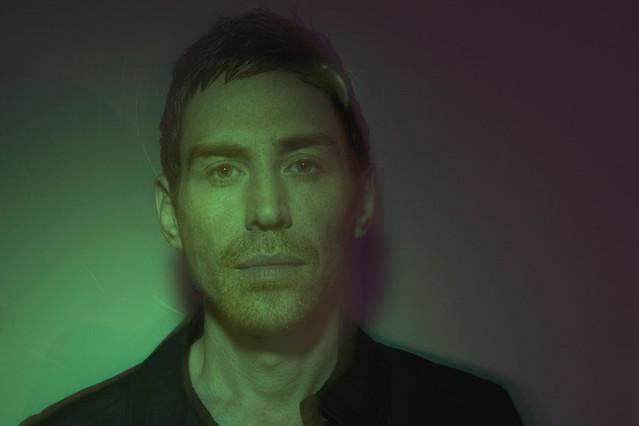
Luke Vibert

Electronic
Downtempo
Other Electronic Music
 Viberate Rank: 104172
 Viberate Rank: 104172
 Monthly ListenersFollowers
 Subscribers
 Followers
 Followers
 FansTop Spotify Songs
| Track | 7-Day Streams | |
|---|---|---|
1 | 10.17K | |
2 | 7.95K | |
3 | 6.96K | |
4 | 4.50K | |
5 | 1.83K |
Top YouTube VideosMonthly ListenersFeatured in Playlists| Playlist | Followers | |
|---|---|---|
1 |  audífonos con cable Spotify | 414.99K |
2 |  303 Classics Spotify | 154.73K |
3 |  MoogTube Spotify | 132.69K |
4 | Trip Hop // Beats Lapgan | 67.29K |
5 |  Trip Hop Classics (1991-2001) - Triphop Classics 90s (100+ tracks) oppositemarco | 44.69K |
Audience| City | Monthly Listeners | |
|---|---|---|
1 | | 2.95K |
2 |  | 1.44K |
3 |  | 1.30K |
4 | | 1.28K |
5 |  | 1.06K |
See full performance history, audience data, playlist activity, rankings, comparisons, and more in Viberate music analytics. Start with a free trial, then continue with a paid plan.
Luke Vibert’s Spotify BioBritish producer and DJ Luke Vibert has explored numerous styles of electronic music since the early 1990s, with constant factors being a mastery of groove construction, a whimsical sense of humor, and a sincere love for dance music's history. His lengthy, productive career has brought acclaimed releases on several esteemed labels, including Warp, Rephlex, Mo' Wax, and Ninja Tune. During the mid-'90s, his material as Wagon Christ (including 1995's Throbbing Pouch) redefined trip-hop's more abstract side, while his work as Plug (1996's Drum'n'Bass for Papa) pioneered the experimental jungle offshoot dubbed drill'n'bass. Vibert's subsequent releases under his own name ranged from chilled-out downtempo (including 2000's Stop the Panic, with B.J. Cole) to acid house homages (2003's YosepH), while his Kerrier District explored electro and disco, and he further subverted jungle as Amen Andrews. Keeping up his prolific pace several decades into his career, he issued a triptych of 2020 albums… each dedicated to a different style (Luke Vibert Presents... Amen Andrews, Modern Rave, and Rave Hop), in addition to the first Wagon Christ release in nine years (Recepticon). He continued releasing playful, acid-heavy efforts like 2023's Machine Funk.
The native of Redruth, Cornwall, England got into performing through a punk band, and then with a rap group. He became interested in producing hip-hop and electronic music during the late '80s. In 1993, he collaborated with Jeremy Simmonds for Weirs, an album of occasionally harsh IDM/neo-electro released on Rephlex, credited to Vibert/Simmonds. After he released influential material as both Wagon Christ and Plug, the first proper Luke Vibert album, a set of instrumental hip-hop titled Big Soup, followed for Mo' Wax in 1997.
Vibert's activity during the 2000s, including records on retro-futuristic post-disco outlet Kerrier District, played out like a series of diversions rather than as a linear, predictable run of releases. Much of the output released under his birth name, however, incorporated acid -- the liquid wriggles pioneered by Chicago house act Phuture's overdriven Roland TB-303 basslines. Stop the Panic (Astralwerks, 2000) was a collaboration with pedal steel guitarist B.J. Cole. Vibert selected two volumes of library music, Nuggets: Luke Vibert's Selection (2001) and Luke Vibert's Further Nuggets (2002), for the Lo label. The compilations seemingly informed the synthesis of '70s avant-electronics, electro, and acid heard on YosepH (Warp, 2003).
Lover's Acid (Planet Mu, 2005) applied acid to mostly downtempo productions; one of its track titles, "Analord," was used by Cornwall pal Richard James for an extensive series of like-minded AFX EPs. Chicago, Detroit, Redruth (Planet Mu, 2007) wasn't a total break from the previous release but roamed from alien, ambient soundscapes to Edwin Birdsong-sampling acid-rap fusions. For Moog Acid (Lo, 2007), he teamed with French musique concrète figure Jean-Jacques Perry. Rhythm (Soundofspeed, 2008) anthologized a series of sample-heavy instrumental hip-hop EPs. Vibert closed out the decade with the diverse and typically humor-laced We Hear You (Planet Mu, 2009).
During the early 2010s, Vibert kept Wagon Christ active and revived drum'n'bass alias Plug for a collection of previously unreleased material. A third Nuggets compilation was released on Lo in 2013. Armed once more with the TB-303, he recorded Ridmik. Credited to Luke Vibert, it was released on the Hypercolour label in 2014. The following year saw the release of the mischievous Vibert album Bizarster and Kerrier District 4 (his first full-length under that name in nine years). Two contributions to the I Love Acid series preceded Luke Vibert Presents UK Garave, Vol. 1, an homage to the heyday of U.K. garage and rave that arrived in 2017. A full-length on I Love Acid, Valvable, appeared in 2019. In 2020, Vibert returned to Hypercolour with three albums each dedicated to a specific style. Luke Vibert Presents... Amen Andrews was a return to his jungle alias, Modern Rave paid tribute to the early days of breakbeat hardcore, and Rave Hop focused on downtempo breakbeats. Capping off a prolific year, he returned to his Wagon Christ alias with Recepticon. In 2021, Vibert released an acid house EP on the We're Going Deep label. The bouncy, acidic full-length GRIT. was issued by Hypercolour in 2022, and Machine Funk appeared on De:tuned in 2023. ~ Andy Kellman & Paul Simpson, Rovi
Viberate is a music analytics platform built for A&Rs, artist managers, labels, booking agents, marketers, and artists.
It helps music professionals track artist growth, analyze audience data, monitor playlist activity, compare artists, follow song performance, and identify opportunities across the music market.
Public artist pages provide a free preview of selected artist data. Paid plans provide access to deeper analytics, historical data, charts, comparisons, playlist tools, exports, alerts, reports, and additional professional features.
Yes. Public Viberate artist pages provide selected artist analytics and music data for free.
Viberate also offers a 7-day free trial of the full platform. A credit card is required to start the trial. The trial includes access to the complete product so users can test deeper artist analytics, historical views, playlist insights, comparisons, charts, exports, alerts, and reporting features before choosing a paid plan.
Viberate provides artist analytics across streaming, playlists, social media, video, radio airplay, songs, and audience markets.
Users can analyze Spotify performance, Spotify and Apple Music playlists, YouTube activity, TikTok and Instagram growth, radio spins, song performance, audience locations, demographics, rankings, and overall artist momentum.
Artist profiles also connect to music charts, similar artists, and comparison tools, helping users benchmark performance and evaluate artists in context.
Viberate updates key artist and track data daily.
For followed artists and tracks, selected data is refreshed multiple times per day. This helps teams monitor playlist changes, streaming movement, audience growth, releases, and campaign performance with more current data.
Update frequency can vary depending on the metric and data source.
Yes. Viberate lets users compare up to five artists side by side across streaming, social media, audience, and engagement metrics.
Users can compare fanbase growth, audience demographics, locations, Spotify performance, social metrics, and other artist data over selected time periods.
Artist comparison can be used for A&R scouting, benchmarking, booking decisions, campaign planning, and evaluating artists with similar audiences or market positions.