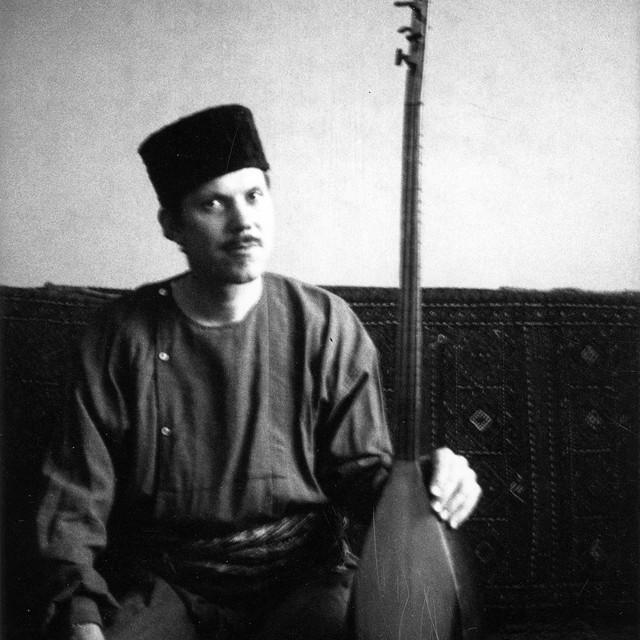
Lloyd Miller

Jazz
Free Jazz
 Viberate Rank: 291200
 Viberate Rank: 291200
 Monthly ListenersFollowers
 Subscribers
 Followers
 Followers
 FansTop Spotify Songs
| Track | 7-Day Streams | |
|---|---|---|
1 | 997 | |
2 | 930 | |
3 | 877 | |
4 | 280 | |
5 | 259 |
Top YouTube VideosMonthly ListenersFeatured in Playlists| Playlist | Followers | |
|---|---|---|
1 |  Now Again - Egon's Selections Egon | 14.10K |
2 |  Meditations - Matthew Halsall Gondwana Records | 12.17K |
3 |  Persian Jazz 🎺 | جز فارسی woody | 8.38K |
4 |  Psychedelic Jazz juridicus1 | 8.27K |
5 |  <-: Weval OST :-> Weval | 7.38K |
Audience| City | Monthly Listeners | |
|---|---|---|
1 |  | 241 |
2 |  | 180 |
3 | | 134 |
4 |  | 124 |
5 | | 112 |
See full performance history, audience data, playlist activity, rankings, comparisons, and more in Viberate music analytics. Start with a free trial, then continue with a paid plan.
Lloyd Miller’s Spotify BioDr. Lloyd Miller is an American musician, multi-instrumentalist, educator, and multi-linguist. He has been fusing jazz with international folk and classical forms since the early 1960s. He can play more than 100 instruments. Though he began his professional career playing internationally with Don Ellis and Eddie Harris during the '50s, his interest in jazz led him to pianist Jef Gilson's Paris-based studio group, and he was featured on 1961's Jef Gilson Septet avec Lloyd Miller. He issued the 1968 classic Oriental Jazz while studying for his doctorate at Brigham Young University. During the 1970s, he studied in Tehran and roamed the Middle East making field recordings and collecting instruments. He hosted a television show there, booking American jazz and traditional Persian musicians. Miller returned to recording with Etruscan Impressions in 1993. In 2010, Strut released Lloyd Miller & The Heliocentrics. 2020's At the Ends of the World, on Fountain AVM, was followed by a retrospective… of unissued material titled Orientations: 1960-2021.
Miller was born in Glendale, California in 1938. Beginning piano studies at three, he and neighbor Spencer Dryden (drummer for the Jefferson Airplane) began playing New Orleans and Dixieland jazz as the Smog City Syncopaters before he was in his teens. At 12 he declared his intention to make his living as a jazz musician, and by high school he'd begun experimenting, disavowing big-band swing's mechanical perfection while forcefully resisting his parents' insistent desire that he undergo formal training. That conflict became so stressful it resulted in a stay at a psychiatric hospital where he received electroshock treatments; after his release, he spent time with a foster family. Miller began playing jazz in L.A. clubs before reconciling with his parents and moving to Iran after his father accepted a job working for the Shah.
Stops in Hong Kong, Japan, and Pakistan on the way nurtured Miller's connection to cultures he'd first felt while listening to old world music compilations. After arriving in Tehran, Miller was completely taken with Iran as it intersected with other Middle Eastern and even African cultures.
In 1958, Miller traveled to Germany and played with a wide range of jazz musicians including Peter Trunk, Albert Mangelsdorf, Don Ellis, and Eddie Harris. From there he moved to Geneva where he studied several Eastern languages and played jazz with drummer Daniel Humair. He also sought out jazz artists in Sweden, playing with Lennart Jansson and Lars Fernlöf. Miller eventually made his way to Brussels and then Paris where he met and began playing and studying with composer and pianist Jef Gilson. Together they recorded the 10" LP Jef Gilson Septet avec Lloyd Miller in 1961. Miller's restlessness led him to undertake the study of several Middle Eastern instruments including santur, oud, and zarb in addition to the piano, clarinet, bass, and drums he had already mastered.
He despised musical modernity, especially rock & roll. He continued to collect and study various folk instruments and made the connection that all jazz and blues derive from the heartbeat of African music. In 1966 he recorded and released Near and Far East for East-West Records. He played most of the set's instruments including santur, oud, shamisen, dhol, and tabla, and was accompanied selectively by wife Marilyn on flute, and several vocalists from Asia and the Middle East, as well as tar drummer Manucher Paydar. Later that year he issued Middle East with some of the same musicians and Jan Otterstrom on guitar.
Miller returned to the U.S. in 1963 to study at Brigham Young University in Utah. He organized Eastern and jazz music ensembles and won the composer's trophy at the 1967 Intercollegiate Jazz Festival before earning his BA in Asian Studies and going on to University of Utah to work on an MA in Middle East Studies. Under sponsorship from the Middle East Center and the Music Department, Miller initiated and taught classes in the music of Persia, Afghanistan, and the Far East, while also teaching jazz classes.
In 1967 he released the beloved Jazz at the U. of U., followed in 1968 with his magnum opus, Oriental Jazz. The set was a split between his trio and the Press Quartet which he also led. The final three tracks featured Miller solo, playing all instruments. It has been reissued several times. The record, originally pressed in an edition of only 300 copies, sought to combine a cool, modal style with the array of instruments and styles he picked up while traveling. Miller included new versions of songs he'd cut with Gilson in Paris years before, as well as a solo piano piece that he recorded in one of the school's practice rooms.
Miller hoped Oriental Jazz would secure him a major-label recording contract, but the record failed to sell. Gigs were hard to come by for the adventurous music he was playing, and he returned to Tehran on a Fulbright scholarship in 1969. He remained there for seven years, mastering Persian and other Middle Eastern traditional and folk musics under the supervision of masters Dr. Daryush Safvat and Mahmud Karimi, among others. They recommended Miller's research work to his dissertation committee, who approved it.
In 1971, Dr. Miller -- also known as Kurosh Ali Khan, a name he used on TV after converting to Sufism while not forsaking his Mormon heritage -- hosted a prime-time variety television show in Tehran. He hosted traveling American jazz players as well as traditional Persian, Middle Eastern, and Indian musicians. The show was a hit and Miller became something of a personality. He didn’t record at all in the '70s, but continued learning to play instruments, study languages, and develop a theory about the connections between global musical traditions. Miller also served as an arts and culture critic and as a journalist for several years, frequently submitting articles under various names to an array of newspapers and magazines including Tehran Journal, Kayhan International, Ayendegan, Etela'at, and Sketch Magazine in Beirut. He attended the popular Shiraz Arts Festival and Tehran Film Festival several times as an official journalist and met and worked with many well-known artists from various countries. In early 1978, sensing the populace's discontent with the Shah, he left the country. A few months later, the revolution that turned the country into a fundamentalist Islamic state got underway.
Miller returned to Utah and spent the '80s teaching and studying at Brigham Young University. He mastered several dozen more instruments and few more languages and dialects. He also led jazz and Middle Eastern musical studies programs and ensembles. He returned to recording with 1993's acclaimed Etruscan Impressions which he recorded at Brigham Young's Art Museum. After becoming a tenured professor in 1996, Miller taught music, culture, and language classes at BYU. In 1997 he played a Belgian jazz festival with his Utah-based ensemble and released Pure New Orleans Jazz ('Doc' Miller at Bilzen Jazz Festival). He spent the rest of the century and the first decade of the 21st teaching, traveling, and playing informally.
In 2009, England's Jazzman label issued A Lifetime in Oriental Jazz, an officially licensed compilation of Miller's various recordings from 1961 to 2005, though most of its selections were drawn from early-'60s sources. Then age 71, Miller was suddenly a sensation with English and European jazz fans and musicians, and American music collectors, too. The following year, Strut paired its house band the Heliocentrics with Miller. They had already successfully collaborated with Ethio-jazz creator Mulatu Astatke for Inspiration Information, Vol. 3. While the sessions with Miller were prickly -- primarily because he detested modern music and technology -- the rough edges made for a deeply satisfying recording. Simply titled Lloyd Miller & The Heliocentrics, it won favorable critical notice across the globe. Miller did numerous interviews and returned to teaching and lecturing for several more years.
In 2018 East-West Records reissued Jazz at the University of Utah. The following year, Eothen Alapatt's Now-Again label officially licensed Oriental Jazz and issued a remastered definitive edition. In 2020, Miller released At the Ends of the World for Fountain AVM in collaboration with producer Adam Michael Terry and multi-instrumentalist Ian Camp. Camp had played with Miller for decades. The set drew glowing accolades from the U.S. and Europe to Asia, North Africa, and the Middle East.
In June 2022, Fountain AVM released Orientations a collection of 22 previously unheard recordings from 1960-2021 drawn from Miller's massive personal archive. The material -- all sourced from master tapes and sole existing personal copies -- documents performances on Iranian TV and later collaborations with students at BYU. ~ Thom Jurek, Rovi
Viberate is a music analytics platform built for A&Rs, artist managers, labels, booking agents, marketers, and artists.
It helps music professionals track artist growth, analyze audience data, monitor playlist activity, compare artists, follow song performance, and identify opportunities across the music market.
Public artist pages provide a free preview of selected artist data. Paid plans provide access to deeper analytics, historical data, charts, comparisons, playlist tools, exports, alerts, reports, and additional professional features.
Yes. Public Viberate artist pages provide selected artist analytics and music data for free.
Viberate also offers a 7-day free trial of the full platform. A credit card is required to start the trial. The trial includes access to the complete product so users can test deeper artist analytics, historical views, playlist insights, comparisons, charts, exports, alerts, and reporting features before choosing a paid plan.
Viberate provides artist analytics across streaming, playlists, social media, video, radio airplay, songs, and audience markets.
Users can analyze Spotify performance, Spotify and Apple Music playlists, YouTube activity, TikTok and Instagram growth, radio spins, song performance, audience locations, demographics, rankings, and overall artist momentum.
Artist profiles also connect to music charts, similar artists, and comparison tools, helping users benchmark performance and evaluate artists in context.
Viberate updates key artist and track data daily.
For followed artists and tracks, selected data is refreshed multiple times per day. This helps teams monitor playlist changes, streaming movement, audience growth, releases, and campaign performance with more current data.
Update frequency can vary depending on the metric and data source.
Yes. Viberate lets users compare up to five artists side by side across streaming, social media, audience, and engagement metrics.
Users can compare fanbase growth, audience demographics, locations, Spotify performance, social metrics, and other artist data over selected time periods.
Artist comparison can be used for A&R scouting, benchmarking, booking decisions, campaign planning, and evaluating artists with similar audiences or market positions.