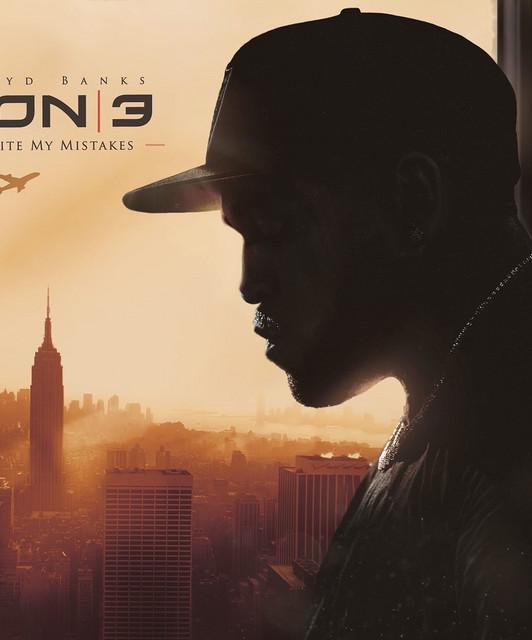
Lloyd Banks

Hip Hop
Contemporary Hip Hop
Alternative Hip Hop
 Viberate Rank: 4334
 Viberate Rank: 4334
 Monthly ListenersFollowers
 Subscribers
 Followers
 Followers
 FansTop Spotify Songs
| Track | 7-Day Streams | |
|---|---|---|
1 | 864.31K | |
2 | 497.02K | |
3 | 266.20K | |
4 | 215.46K | |
5 | 211.49K |
Top YouTube Videos| Video | 7-Day Views | |
|---|---|---|
1 | 483.88K | |
2 | 99.67K | |
3 | 40.26K | |
4 | 37.59K | |
5 | 37.14K |
Monthly ListenersFeatured in Playlists| Playlist | Followers | |
|---|---|---|
1 |  BEST OF EMINEM Eminem | 2.02M |
2 |  This Is 2Pac Spotify | 1.24M |
3 |  clubbing like it's the 2000's kass !! | 981.58K |
4 |  This Is 50 Cent Spotify | 711.90K |
5 |  Hip Hop 90's & 2000's - Classics Bruno Braga | 452.75K |
Audience| City | Monthly Listeners | |
|---|---|---|
1 |  | 58.05K |
2 |  | 51.00K |
3 |  | 44.35K |
4 | | 41.05K |
5 | | 37.56K |
See full performance history, audience data, playlist activity, rankings, comparisons, and more in Viberate music analytics. Start with a free trial, then continue with a paid plan.
Lloyd Banks’ Spotify BioQueens emcee and G-Unit co-founder Lloyd Banks was part of the wave of rappers who found mainstream success with hard-nosed, street-ready rap styles in the early 2000s. Along with other G-Unit cohorts, Banks enjoyed charting hits and platinum album sales, both as a part of the crew and with solo albums like his 2004 debut, The Hunger for More. After a string of high-profile releases, Banks focused on mixtapes and stand-alone tracks for most of the 2010s. After parting ways with G-Unit, he cracked the Top 100 of the Billboard 200 with 2021's The Course of the Inevitable, which he followed with 2022's The Course of the Inevitable 2 and 2023's The Course of the Inevitable III: Pieces of My Pain.
Banks was born Christopher Lloyd and was raised in Jamaica, Queens, by his Puerto Rican mother; his father spent much of his son's childhood behind bars. Like many young men growing up in the poverty and ruin of his community, he found solace through ghetto poetry and the work of rappers like Big… Daddy Kane and Slick Rick. He dropped out of high school at the age of 16, finding the structured environment a hindrance to his developing talent for rhyming.
After appearing on numerous local mixtapes, Banks, along with childhood friends Tony Yayo and 50 Cent, formed a crew called G-Unit, a group that proceeded to redefine the term "street marketing" with a series of self-released albums that included original numbers and quality artwork. Banks stayed on with 50 Cent, appearing on the artist's now-classic 2003 debut, Get Rich or Die Tryin'. November of that same year saw the release of G-Unit's Beg for Mercy. Banks' long-awaited solo debut for G-Unit/Interscope Records, The Hunger for More, was released in June 2004. He followed it two years later with Rotten Apple. In 2006, Banks also scored one of his biggest hits with the song "You Don't Know," from the Eminem-curated compilation album Eminem Presents: The Re-Up. The song was the lead single from the compilation and featured guest appearances from 50 Cent, Eminem, and vocalist Cashis. It peaked at number 12 on the Billboard charts.
In 2010, G-Unit announced they were leaving Interscope and partnering with EMI for Banks' third album, H.F.M., Vol. 2 (The Hunger for More, Vol. 2). Banks remained active primarily with mixtapes and a few acting roles throughout the rest of the decade. He released a steady trickle of mixtapes, like 2011's The Cold Corner 2 and 2016's Halloween Havoc 3: Four Days of Fury. Throughout this time period, G-Unit was in turmoil, with shifts in its activity and lineup. In 2018, Banks parted ways with G-Unit and ceased to work with G-Unit Records.
He returned independently in 2021 with his fourth proper studio album, The Course of the Inevitable. Released on independent imprint Money by Any Means, the album featured guest appearances from Freddie Gibbs, Benny the Butcher, Ransom and debuted in the Top 100 of the Billboard charts. A sequel, The Course of the Inevitable 2, appeared the following year and featured more guest spots, including Benny the Butcher ("Living Proof"), Conway the Machine ("Menace"), Jadakiss ("Power Steering"), and others. Banks then continued the project with The Course of the Inevitable III: Pieces of My Pain, which arrived in April 2023. ~ James Christopher Monger, Rovi
Viberate is a music analytics platform built for A&Rs, artist managers, labels, booking agents, marketers, and artists.
It helps music professionals track artist growth, analyze audience data, monitor playlist activity, compare artists, follow song performance, and identify opportunities across the music market.
Public artist pages provide a free preview of selected artist data. Paid plans provide access to deeper analytics, historical data, charts, comparisons, playlist tools, exports, alerts, reports, and additional professional features.
Yes. Public Viberate artist pages provide selected artist analytics and music data for free.
Viberate also offers a 7-day free trial of the full platform. A credit card is required to start the trial. The trial includes access to the complete product so users can test deeper artist analytics, historical views, playlist insights, comparisons, charts, exports, alerts, and reporting features before choosing a paid plan.
Viberate provides artist analytics across streaming, playlists, social media, video, radio airplay, songs, and audience markets.
Users can analyze Spotify performance, Spotify and Apple Music playlists, YouTube activity, TikTok and Instagram growth, radio spins, song performance, audience locations, demographics, rankings, and overall artist momentum.
Artist profiles also connect to music charts, similar artists, and comparison tools, helping users benchmark performance and evaluate artists in context.
Viberate updates key artist and track data daily.
For followed artists and tracks, selected data is refreshed multiple times per day. This helps teams monitor playlist changes, streaming movement, audience growth, releases, and campaign performance with more current data.
Update frequency can vary depending on the metric and data source.
Yes. Viberate lets users compare up to five artists side by side across streaming, social media, audience, and engagement metrics.
Users can compare fanbase growth, audience demographics, locations, Spotify performance, social metrics, and other artist data over selected time periods.
Artist comparison can be used for A&R scouting, benchmarking, booking decisions, campaign planning, and evaluating artists with similar audiences or market positions.