Lieutenant Pigeon

Pop
Mainstream Pop
Hard Rock
 Viberate Rank: 186971
 Viberate Rank: 186971
 Monthly ListenersFollowers
 Subscribers
 Followers
 Followers
 FansTop Spotify Songs
| Track | 7-Day Streams | |
|---|---|---|
1 | 6.37K | |
2 | 339 | |
3 | 264 | |
4 | 174 | |
5 | 62 |
Top YouTube VideosMonthly ListenersFeatured in Playlists| Playlist | Followers | |
|---|---|---|
1 |  Every Official UK Number 1 Ever Official Charts | 33.96K |
2 | Jaren 60 en 70 teuntje60 | 17.65K |
3 | danedan679 | 14.00K |
4 | The 100 greatest UK No 1 singles Guardian Music | 10.86K |
5 |  Heartbeat TV Series 1 - 18 Soundtrack abundantmusic | 10.11K |
Audience| City | Monthly Listeners | |
|---|---|---|
1 |  | 1.20K |
2 | | 661 |
3 | | 415 |
4 | | 334 |
5 |  | 284 |
See full performance history, audience data, playlist activity, rankings, comparisons, and more in Viberate music analytics. Start with a free trial, then continue with a paid plan.
Lieutenant Pigeon’s Spotify BioA truly odd popular music ensemble for 1970s Britain, Lieutenant Pigeon enjoyed a fairly long and successful recording career with their offbeat, mostly instrumental music. Not exactly easy to categorize as rock, it's nonetheless hard to know what else to call their mix of martial percussion, century-old-sounding parlor music, and weird insertions of fifes, rickety pianos, and half-buried miscellaneous vocal growls. That their debut single, 1972's "Mouldy Old Dough," made it all the way to number one in the U.K. is a testament to the British tolerance and indeed encouragement of eccentricity that could be cultivated nowhere else. The group released three albums in the early '70s, then continued making music of a sort (jingles, commercials, and the occasional song) in the decades that followed.
The mainstays of Lieutenant Pigeon were Rob Woodward and Nigel Fletcher, both of whom had been playing in bands since the early '60s. Under the name Shel Naylor, Woodward had recorded a couple of… singles for Decca in 1963 and 1964; one of those, "One Fine Day," was a Dave Davies composition that the Kinks never officially released. By the late '60s, the pair were making home recordings in the front room of the Coventry house of Woodward's mother, Hilda Woodward. Rob Woodward and Fletcher formed a band, Stavely Makepeace, which began releasing records in 1969.
Lieutenant Pigeon was conceived of as sort of a novelty alter ego of Stavely Makepeace, intended to emphasize humorous instrumental music. As further evidence that it was not as seriously aimed at the pop/rock market, Hilda Woodward, then in her late fifties, was added to the lineup on piano. The semi-joke became more successful than could have been reasonably anticipated, though, when their first single, "Mouldy Old Dough," came out in 1972. A characteristically zany, unclassifiable bit of instrumental madness with Joe Meek-like wobbly piano and those unavoidable marching rhythms, it reached number one in Belgium after it was used as a theme for a current-affairs television show. By the end of the year, it was number one in their native Britain as well.
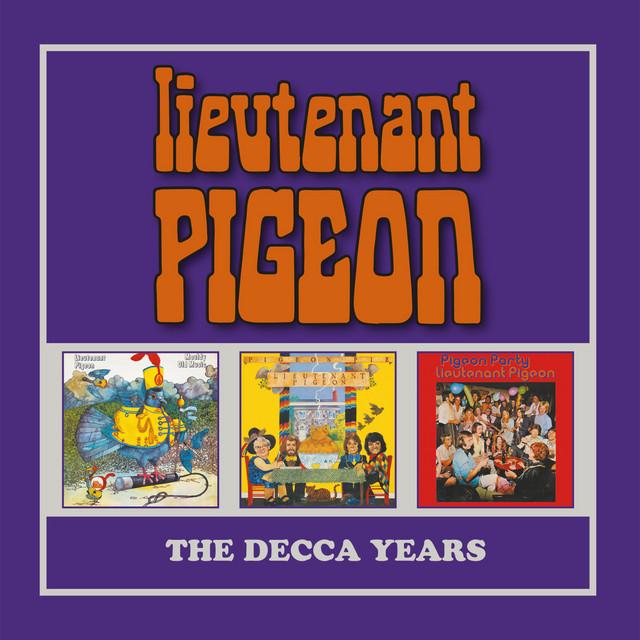
Lieutenant Pigeon had just one more big British hit, "Desperate Dan," which made the Top 20 after its release at the end of 1972. They released two albums the next year, Mouldy Old Music and Pigeon Pie, then returned in 1974 with Pigeon Party. The latter album spawned a number two hit in Australia in 1974 with their version of "I'll Take You Home Again Kathleen." They continued to release singles throughout the decade, and a version of the band could often be found touring Great Britain.
Woodward and Fletcher then established themselves as producers of jingles, voice-overs, and such for radio while continuing to record songs and post them on the group's website. They told their own story in their joint autobiography, When Show Business Is No Business, published in 2001. That same year, the 7T's label released a hits collection, The Best of Lieutenant Pigeon, and in 2023, the same label issued the comprehensive collection The Decca Years. Included on the set was a newly recorded song, "Home on the Rage." ~ Richie Unterberger & Tim Sendra
Viberate is a music analytics platform built for A&Rs, artist managers, labels, booking agents, marketers, and artists.
It helps music professionals track artist growth, analyze audience data, monitor playlist activity, compare artists, follow song performance, and identify opportunities across the music market.
Public artist pages provide a free preview of selected artist data. Paid plans provide access to deeper analytics, historical data, charts, comparisons, playlist tools, exports, alerts, reports, and additional professional features.
Yes. Public Viberate artist pages provide selected artist analytics and music data for free.
Viberate also offers a 7-day free trial of the full platform. A credit card is required to start the trial. The trial includes access to the complete product so users can test deeper artist analytics, historical views, playlist insights, comparisons, charts, exports, alerts, and reporting features before choosing a paid plan.
Viberate provides artist analytics across streaming, playlists, social media, video, radio airplay, songs, and audience markets.
Users can analyze Spotify performance, Spotify and Apple Music playlists, YouTube activity, TikTok and Instagram growth, radio spins, song performance, audience locations, demographics, rankings, and overall artist momentum.
Artist profiles also connect to music charts, similar artists, and comparison tools, helping users benchmark performance and evaluate artists in context.
Viberate updates key artist and track data daily.
For followed artists and tracks, selected data is refreshed multiple times per day. This helps teams monitor playlist changes, streaming movement, audience growth, releases, and campaign performance with more current data.
Update frequency can vary depending on the metric and data source.
Yes. Viberate lets users compare up to five artists side by side across streaming, social media, audience, and engagement metrics.
Users can compare fanbase growth, audience demographics, locations, Spotify performance, social metrics, and other artist data over selected time periods.
Artist comparison can be used for A&R scouting, benchmarking, booking decisions, campaign planning, and evaluating artists with similar audiences or market positions.