Les Parisiennes

Pop
Indie Pop
Mainstream Pop
 Viberate Rank: 305532
 Viberate Rank: 305532
 Monthly ListenersFollowers
 Subscribers
 Followers
 Followers
 FansTop Spotify SongsTop YouTube VideosMonthly ListenersFeatured in Playlists
| Playlist | Followers | |
|---|---|---|
1 |  Salut les yéyés Spotify | 80.91K |
2 |  #NOPLP - N'oubliez pas les paroles Georges Liénard | 15.75K |
3 |  Don't be a Tourist in Paris MessyNessyChic | 5.71K |
4 | nova tunes 1 jars_ki | 5.01K |
5 | À la française Avec Elisa Avec Elisa | 3.98K |
Audience| City | Monthly Listeners | |
|---|---|---|
1 | | 176 |
2 | | 39 |
3 | | 37 |
4 |  | 35 |
5 | | 26 |
See full performance history, audience data, playlist activity, rankings, comparisons, and more in Viberate music analytics. Start with a free trial, then continue with a paid plan.
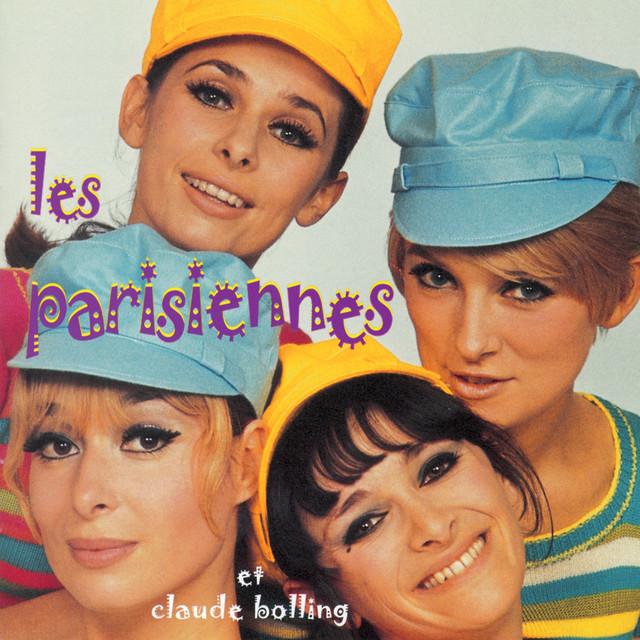
Les Parisiennes’ Spotify BioFrom 1964-1968 Les Parisiennes, a quartet of pretty-faced posturers with brassy voices, made a series of kitschy albums for the Philips label under the supervision of pianist and bandleader Claude Bolling. Their names were Anne-Marie Royer, Hélène Longuet, Anne Lefébure, and Raymonde Bronstein, also known as Beretta. Usually accompanied by a corny trad jazz/pop ensemble with brisk banjo, trumpet, tuba, and tailgate trombone, Les Parisiennes would belt out lyrics in precise unison, enunciating clearly. Their other formula -- and the mingling of both was not at all unusual during the mid-'60s -- involved pop/rock instrumentation grinding out squinky twist-a-go-go accompaniments. Les Parisiennes' appeal was at least partially visual, as evidenced by their brightly pigmented mod outfits and a photo used on the cover of a 1966 EP depicting the four Parisiennes "behind bars" looking oddly fetching in red-and-white striped "prison"-styled long underwear. The extremities of high camp make this… group's music best suited for special occasions requiring quick thrills with little or no substance or depth. Their music was partially revived on compact disc in 2005 with Mercury's Il Fait Trop Beau Pour Travallier, then on a "best-of" collection by Universal in 2006, and in 2007 on a massive 71-track triple-disc edition under the auspices of Claude Bolling entitled Les Parisiennes: L'Integrale. ~ arwulf arwulf, Rovi
Viberate is a music analytics platform built for A&Rs, artist managers, labels, booking agents, marketers, and artists.
It helps music professionals track artist growth, analyze audience data, monitor playlist activity, compare artists, follow song performance, and identify opportunities across the music market.
Public artist pages provide a free preview of selected artist data. Paid plans provide access to deeper analytics, historical data, charts, comparisons, playlist tools, exports, alerts, reports, and additional professional features.
Yes. Public Viberate artist pages provide selected artist analytics and music data for free.
Viberate also offers a 7-day free trial of the full platform. A credit card is required to start the trial. The trial includes access to the complete product so users can test deeper artist analytics, historical views, playlist insights, comparisons, charts, exports, alerts, and reporting features before choosing a paid plan.
Viberate provides artist analytics across streaming, playlists, social media, video, radio airplay, songs, and audience markets.
Users can analyze Spotify performance, Spotify and Apple Music playlists, YouTube activity, TikTok and Instagram growth, radio spins, song performance, audience locations, demographics, rankings, and overall artist momentum.
Artist profiles also connect to music charts, similar artists, and comparison tools, helping users benchmark performance and evaluate artists in context.
Viberate updates key artist and track data daily.
For followed artists and tracks, selected data is refreshed multiple times per day. This helps teams monitor playlist changes, streaming movement, audience growth, releases, and campaign performance with more current data.
Update frequency can vary depending on the metric and data source.
Yes. Viberate lets users compare up to five artists side by side across streaming, social media, audience, and engagement metrics.
Users can compare fanbase growth, audience demographics, locations, Spotify performance, social metrics, and other artist data over selected time periods.
Artist comparison can be used for A&R scouting, benchmarking, booking decisions, campaign planning, and evaluating artists with similar audiences or market positions.