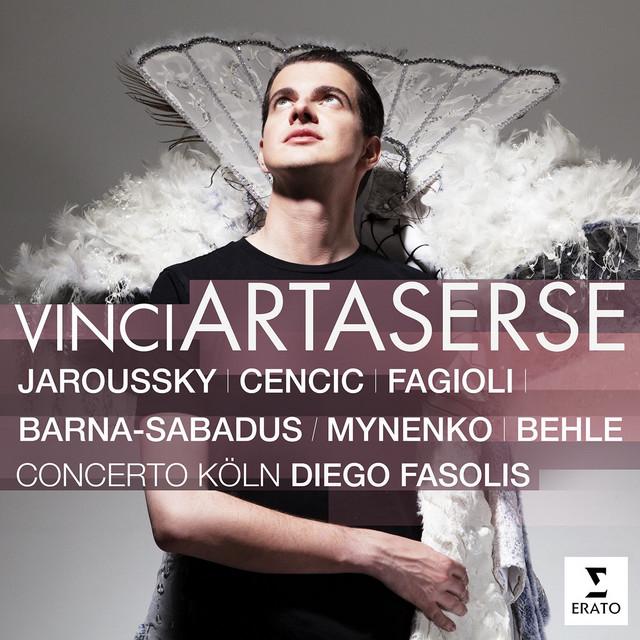
Leonardo Vinci

Classical
Classical Crossover
 Viberate Rank: 522028
 Viberate Rank: 522028
 Monthly ListenersFollowers
 Subscribers
 Followers
 Followers
 FansTop Spotify Songs
| Track | 7-Day Streams | |
|---|---|---|
1 | 461 | |
2 | 214 | |
3 | 104 | |
4 | 95 | |
5 | 88 |
Top YouTube VideosMonthly ListenersFeatured in Playlists| Playlist | Followers | |
|---|---|---|
1 |  Opera - Best of Deutsche Grammophon (DG) | 17.76K |
2 |  Classical for Running unCLASSIFIED | 5.46K |
3 |  Baroque for concentration kbarcham | 4.47K |
4 | Italian Renaissance Music stylerino | 2.27K |
5 |  The Best Opera Playlist Ever Emilio José Gómez Rodríguez | 2.10K |
Audience| City | Monthly Listeners | |
|---|---|---|
1 |  | 141 |
2 |  | 103 |
3 | | 80 |
4 |  | 75 |
5 |  | 69 |
See full performance history, audience data, playlist activity, rankings, comparisons, and more in Viberate music analytics. Start with a free trial, then continue with a paid plan.
Leonardo Vinci’s Spotify BioLeonardo Vinci's life would have been fine fodder for one of his own operas. A composer whose music turned the heads of Vivaldi and Handel, he became an overnight success in comic opera at age 29. As a composer of dramatic works, he was an early collaborator with librettist Metastasio, and developed a long-running professional feud with composer Nicola Porpora. At one point Vinci even sabotaged one of Porpora's productions. He died young, perhaps poisoned because of an illicit love affair.
Vinci entered a conservatory in Naples in 1708; within three years his tuition was waived because he was already working as a student teacher. After 10 years of study and a brief stint working for a local prince, Vinci made a splendid debut as an opera composer in 1719 with his comedy Lo cecato fauzo at the Teatro Fiorentini in Naples. He quickly became the theater's dominant composer, specializing in comic works in Neapolitan dialect. In 1722 he tried his hand at a more serious opera, Publio Cornelio… Scipione, at the Teatro San Bartolomeo, and its immediate success led him to devote most of his energy to dramatic opera thereafter.
His first commission from a Roman theater came in 1724, and from that point he would write one to three operas each year for Rome alone, while also composing for Venice, Parma, and Naples. In 1726 came the first of his collaborations with Metastasio; their work was regarded as a model of the interdependence of words and music. Meanwhile, an old rivalry between Vinci and Porpora intensified through their competing productions in Rome and Venice.
Vinci succeeded Alessandro Scarlatti as vice-director of the royal chapel in Napels in 1725; these duties initially limited his opera activity, but by 1728 he was again cranking out stage works at something resembling his former pace. He also took on extra, short-time work at his old conservatory, where he taught Pergolesi, and the monastery of Santa Caterina a Formiello, where he wrote some sacred works. In 1729 he added impressario at the Teatro delle Dame to his duties, also serving as that theater's principle composer. Meanwhile, Vinci masterminded the sabotage of Porpora's new work being presented in Rome, which was hardly necessary because Vinci was by then and by far the more popular composer. Not for long, though; he died in Naples, rumored to have been poisoned not by the jealous Porpora, but in relation to a romantic misadventure.
Viberate is a music analytics platform built for A&Rs, artist managers, labels, booking agents, marketers, and artists.
It helps music professionals track artist growth, analyze audience data, monitor playlist activity, compare artists, follow song performance, and identify opportunities across the music market.
Public artist pages provide a free preview of selected artist data. Paid plans provide access to deeper analytics, historical data, charts, comparisons, playlist tools, exports, alerts, reports, and additional professional features.
Yes. Public Viberate artist pages provide selected artist analytics and music data for free.
Viberate also offers a 7-day free trial of the full platform. A credit card is required to start the trial. The trial includes access to the complete product so users can test deeper artist analytics, historical views, playlist insights, comparisons, charts, exports, alerts, and reporting features before choosing a paid plan.
Viberate provides artist analytics across streaming, playlists, social media, video, radio airplay, songs, and audience markets.
Users can analyze Spotify performance, Spotify and Apple Music playlists, YouTube activity, TikTok and Instagram growth, radio spins, song performance, audience locations, demographics, rankings, and overall artist momentum.
Artist profiles also connect to music charts, similar artists, and comparison tools, helping users benchmark performance and evaluate artists in context.
Viberate updates key artist and track data daily.
For followed artists and tracks, selected data is refreshed multiple times per day. This helps teams monitor playlist changes, streaming movement, audience growth, releases, and campaign performance with more current data.
Update frequency can vary depending on the metric and data source.
Yes. Viberate lets users compare up to five artists side by side across streaming, social media, audience, and engagement metrics.
Users can compare fanbase growth, audience demographics, locations, Spotify performance, social metrics, and other artist data over selected time periods.
Artist comparison can be used for A&R scouting, benchmarking, booking decisions, campaign planning, and evaluating artists with similar audiences or market positions.