Leo Ornstein

Classical
Chamber Music
 Viberate Rank: 450906
 Viberate Rank: 450906
 Monthly ListenersFollowers
 Subscribers
 Followers
 Followers
 FansTop Spotify Songs
| Track | 7-Day Streams | |
|---|---|---|
1 | 731 | |
2 | 213 | |
3 | 129 | |
4 | 113 | |
5 | 113 |
Top YouTube VideosMonthly ListenersFeatured in Playlists| Playlist | Followers | |
|---|---|---|
1 |  Scary TikTok Audios ⋆♱⚝𝕾𝖐𝖊𝖑𝖑𝖎𝕻𝖆𝖘𝖙𝖊𝖑⚝♱⋆ | 4.81K |
2 |  Silent Film Music synnöve_granat | 2.10K |
3 |  Scary piano music candice | 1.89K |
4 |  Ultimate Dark/Sad Classical brilliantos | 1.20K |
5 |  A.Ross - The Rest is Noise •ele• | 1.13K |
Audience| City | Monthly Listeners | |
|---|---|---|
1 | | 72 |
2 |  | 57 |
3 |  | 46 |
4 | | 42 |
5 | | 31 |
See full performance history, audience data, playlist activity, rankings, comparisons, and more in Viberate music analytics. Start with a free trial, then continue with a paid plan.
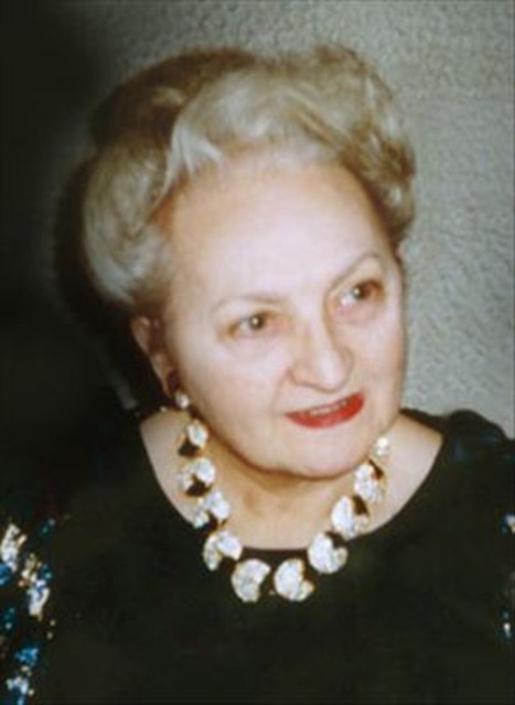
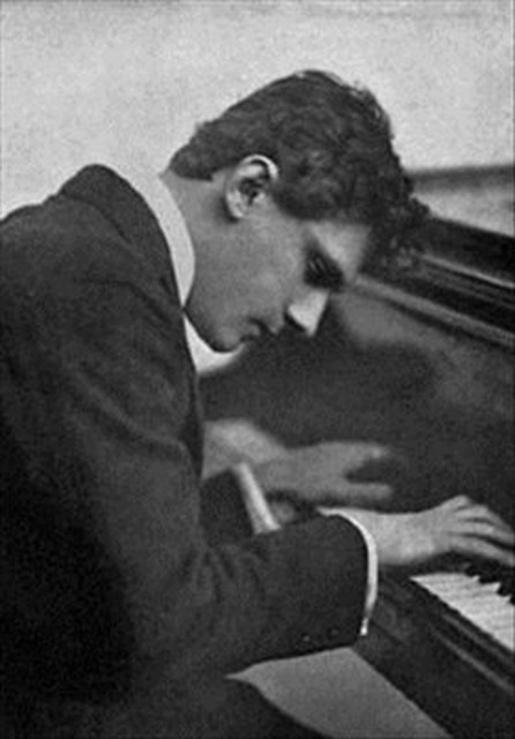
Leo Ornstein’s Spotify BioLeo Ornstein was born the son of a Jewish cantor. As a child, Ornstein demonstrated exceptional talent at the piano, and was sent at age ten to the St. Petersburg Conservatory on a recommendation from his uncle, legendary pianist Josef Hofmann. Owing to renewed hostility towards Jews in Russia, Ornstein's family fled to the United States in 1907. In the U.S., Ornstein studied with Bertha Fiering Tapper at the New England Conservatory of Music and Percy Goetschius at the Institute for Music Art in New York City (later Julliard). Ornstein made his debut as pianist in New York in March 1911.
In 1913, Ornstein composed Danse sauvage (Wild Men's Dance), a violently rhythmic piano piece that is entirely dissonant and fashioned out of large tone clusters. This was followed by a series of such works, including Two Impressions of Notre Dame and Suicide in an Airplane (both 1914), A la chinoise (1917) and others. Beginning in 1914, Ornstein appeared in programs combining these pieces and those of… Schoenberg, Ravel's Gaspard de la nuit, Bartók, Kodály, Debussy, Scriabin, among others, advertised as "Futurist music." Ornstein was soon recognized as the foremost advocate of difficult, ultramodern music. Inasmuch as Ornstein's own work was concerned, critics were overwhelmingly negative at first, one stating that his music "transformed the concert hall into a dental parlor." Some critics recognized the value of Ornstein's idiom. Famous New York critic James Huneker once remarked that Schoenberg's atonal music sounded "timid" next to Ornstein's and dubbed him "most emphatically the only true-blue, genuine, Futurist composer alive." In 1918 Frederick H. Martens was sufficiently moved by Ornstein's music to publish what has to be the earliest book-length biography written on an American modern musician, Leo Ornstein: The Man, His Ideas, His Work. That same year Ornstein married pianist Pauline Mallét-Provost.
In the 1920s Leo Ornstein was respected as one of the chief talents on the piano recital circuit. In 1923, Ornstein launched his Piano Concerto in Philadelphia under the baton of Leopold Stokowski. That year he also co-founded the League of Composers, going on to serve on its board of directors. By this time, Ornstein began to temper his ultra-modernism with late-Romantic elements, realizing as early as the Sonata for violin and piano (1915) that he'd reached a saturation point with dissonance.
In 1933, at age 41 Leo Ornstein dropped out of the concert circuit. He and Pauline founded the Ornstein School of Music in Philadelphia, which they piloted until Leo retired in 1955. In 1936, the League of Composers commissioned his Nocturne and Dance of the Fates, which were premiered in St. Louis under Vladimir Golschmann. This would be the last honor for Ornstein for some 40 years, as he and his music slipped into total obscurity. The Ornsteins took up residence in a mobile home in Brownsville, TX. Throughout this period, Ornstein continued to compose, oblivious to changing trends in the concert world.
In the 1970s, Ornstein was rediscovered, and in 1975 he was awarded the Marjorie Waite Peabody Award by the American Academy and National Institute of Arts and Letters. Musicologist Vivian Perlis arranged for Ornstein to devote his papers to Yale University. In 1985, Pauline Ornstein died, and the composer relocated to Green Bay, WI. In 1990, Ornstein's son Severo published a 10-volume edition of Ornstein's piano works, oddly coinciding with Ornstein's own final work, the Piano Sonata No. 8. Having outlived most of his contemporaries by a substantial period of time, Leo Ornstein is the only concert musician known to have inhabited the nineteenth, twentieth, and twenty-first centuries. Ornstein died on February 24, 2002.
Viberate is a music analytics platform built for A&Rs, artist managers, labels, booking agents, marketers, and artists.
It helps music professionals track artist growth, analyze audience data, monitor playlist activity, compare artists, follow song performance, and identify opportunities across the music market.
Public artist pages provide a free preview of selected artist data. Paid plans provide access to deeper analytics, historical data, charts, comparisons, playlist tools, exports, alerts, reports, and additional professional features.
Yes. Public Viberate artist pages provide selected artist analytics and music data for free.
Viberate also offers a 7-day free trial of the full platform. A credit card is required to start the trial. The trial includes access to the complete product so users can test deeper artist analytics, historical views, playlist insights, comparisons, charts, exports, alerts, and reporting features before choosing a paid plan.
Viberate provides artist analytics across streaming, playlists, social media, video, radio airplay, songs, and audience markets.
Users can analyze Spotify performance, Spotify and Apple Music playlists, YouTube activity, TikTok and Instagram growth, radio spins, song performance, audience locations, demographics, rankings, and overall artist momentum.
Artist profiles also connect to music charts, similar artists, and comparison tools, helping users benchmark performance and evaluate artists in context.
Viberate updates key artist and track data daily.
For followed artists and tracks, selected data is refreshed multiple times per day. This helps teams monitor playlist changes, streaming movement, audience growth, releases, and campaign performance with more current data.
Update frequency can vary depending on the metric and data source.
Yes. Viberate lets users compare up to five artists side by side across streaming, social media, audience, and engagement metrics.
Users can compare fanbase growth, audience demographics, locations, Spotify performance, social metrics, and other artist data over selected time periods.
Artist comparison can be used for A&R scouting, benchmarking, booking decisions, campaign planning, and evaluating artists with similar audiences or market positions.