Le Butcherettes

Punk
Punk Rock
Garage Rock
Alternative Rock
 Viberate Rank: 135133
 Viberate Rank: 135133
 Monthly ListenersFollowers
 Subscribers
 Followers
 Followers
 FansTop Spotify Songs
| Track | 7-Day Streams | |
|---|---|---|
1 | 667 | |
2 | 592 | |
3 | 337 | |
4 | 268 | |
5 | 214 |
Top YouTube VideosMonthly ListenersFeatured in Playlists| Playlist | Followers | |
|---|---|---|
1 | Coachella 2012 Playlist Fuse | 28.50K |
2 | I Diari Della Bicicletta Spotify Italia | 17.70K |
3 | Rock Español México KLM arq.reynoso | 13.49K |
4 | CANCIONES FEMINISTAS XIMENA DÍAZ | 10.45K |
5 |  El Sótano de Radio 3 Groovyfamily | 9.84K |
Audience| City | Monthly Listeners | |
|---|---|---|
1 | | 1.03K |
2 |  | 158 |
3 | | 139 |
4 | | 107 |
5 | | 69 |
See full performance history, audience data, playlist activity, rankings, comparisons, and more in Viberate music analytics. Start with a free trial, then continue with a paid plan.
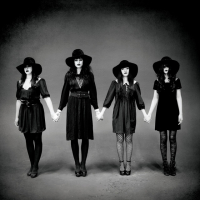
Le Butcherettes’ Spotify BioGarage punk band Le Butcherettes was founded in Mexico by vocalist/guitarist Teri Gender Bender (Denver-born and Mexican-bred Teri Suarez Cosío), who has remained the group's only constant member. Their chaotic sound bleeds the boundaries of punk to embrace everything from mariachi and funk to industrial noise and loopy, absurdist avant-rock on albums like their 2011 debut, Sin Sin Sin.
Gender Bender was born in Denver to a Mexican mother and a Spanish father. At ten, she began having recurring dreams of playing guitar and was eventually able to convince her father to buy her an instrument. Her father died when she was 13, prompting her mother to relocate the family to Mexico. At 17 years old, she and drummer Auryn Jolene formed Le Butcherettes in Guadalajara. Early live shows were outrageous and included props -- such as dressing in '50s-era women's clothing and feather dusters, brooms, aprons, fake blood, flour, eggs, meat, and a real pig's head -- that depicted women as slaves of the… patriarchal household.
In 2008, the band issued their debut EP, Kiss & Kill. The music, combined with the power of the women's stage show, won them Best New Artist and Best Punk Record at the Indie-O Awards 2009. It was during this period, at a gig in Los Angeles, that Suarez met Omar Rodriguez-Lopez. There was a power outage in the venue that interrupted Le Butcherettes show. Undaunted, Suarez jumped into the crowd and continued singing through a megaphone. Impressed, Rodriguez-Lopez signed the group to his own label, produced, and played bass on 2011's Sin Sin Sin with drummer Normandi Heuxdaflo. In 2012, Suarez contributed lyrics and vocals to Rodriguez-Lopez's Octopus Kool Aid and starred in his film project Mi No y Esperanza. Subsequently, Suarez relocated to Los Angeles and entered into a creative partnership with Rodriguez-Lopez, forming and recording with the bands Bosnian Rainbows and Kimono Kult.
In early 2014, Le Butcherettes re-entered the studio and cut Cry Is for the Flies, for Rodriguez-Lopez's Nadie Sound label. Once more, he produced and played bass on the set, along with drummer Lia Braswell. The group pre-released three digital singles; fans who bought them were granted early-purchase access to the full-length three weeks before its release date on May 20. Gender Bender was featured as vocalist on a limited-edition, lathe-cut Melvins' single entitled "Rebel Girl" in early 2015, while the whole of Le Butcherettes shared a split-EP with the Melvins on Amphetamine Reptile a few months later. In September, Le Butcherettes released their next full-length, A Raw Youth, on Ipecac. Produced by Rodriguez-Lopez, it featured guest appearances from Iggy Pop ("La Uva") and guitarist John Frusciante ("My Half"). The album's songs examine themes of personal and social oppression and addresses the plight of victimized women, from the singular hitchhiker to women in the Middle East forced into subjugation and slavery.
Touring Europe, Mexico, and the United States, the on-stage band comprised a quartet (with drummer Alejandra Luna Robles, guitarist Rikardo Rodriguez-Lopez, and keyboardist Marcel Rodriguez-Lopez). Live, their attack ranged from mainstream arena-style rock to vanguard, anarcho-punk. In 2018, the group issued the surprise struggle/STRUGGLE EP, which wove together indie rock and post-punk. They followed it with the full-length bi/MENTAL in January of the following year with production assistance from Jerry Harrison. The album featured the title track off their struggle/STRUGGLE EP, as well as the single "spider/WAVES" featuring Jello Biafra, while ex-Bags' frontwoman Alice Bag guested on "Mother/Holds." In 2020, Le Butcherettes returned with another EP release, the seven-song project Don't Bleed. The EP explored themes of shame and revenge with its slick, sinister rock songs. ~ Thom Jurek, Rovi
Viberate is a music analytics platform built for A&Rs, artist managers, labels, booking agents, marketers, and artists.
It helps music professionals track artist growth, analyze audience data, monitor playlist activity, compare artists, follow song performance, and identify opportunities across the music market.
Public artist pages provide a free preview of selected artist data. Paid plans provide access to deeper analytics, historical data, charts, comparisons, playlist tools, exports, alerts, reports, and additional professional features.
Yes. Public Viberate artist pages provide selected artist analytics and music data for free.
Viberate also offers a 7-day free trial of the full platform. A credit card is required to start the trial. The trial includes access to the complete product so users can test deeper artist analytics, historical views, playlist insights, comparisons, charts, exports, alerts, and reporting features before choosing a paid plan.
Viberate provides artist analytics across streaming, playlists, social media, video, radio airplay, songs, and audience markets.
Users can analyze Spotify performance, Spotify and Apple Music playlists, YouTube activity, TikTok and Instagram growth, radio spins, song performance, audience locations, demographics, rankings, and overall artist momentum.
Artist profiles also connect to music charts, similar artists, and comparison tools, helping users benchmark performance and evaluate artists in context.
Viberate updates key artist and track data daily.
For followed artists and tracks, selected data is refreshed multiple times per day. This helps teams monitor playlist changes, streaming movement, audience growth, releases, and campaign performance with more current data.
Update frequency can vary depending on the metric and data source.
Yes. Viberate lets users compare up to five artists side by side across streaming, social media, audience, and engagement metrics.
Users can compare fanbase growth, audience demographics, locations, Spotify performance, social metrics, and other artist data over selected time periods.
Artist comparison can be used for A&R scouting, benchmarking, booking decisions, campaign planning, and evaluating artists with similar audiences or market positions.