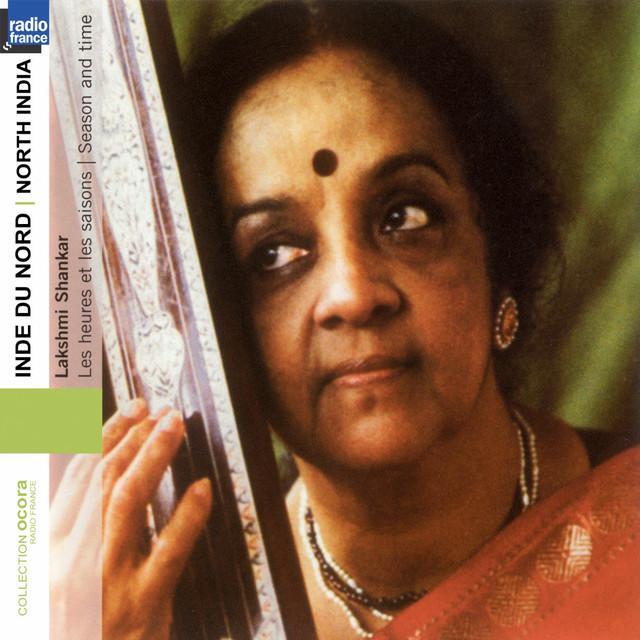
Lakshmi Shankar

Pop
Indian Pop
Hindu Music
 Viberate Rank: 192149
 Viberate Rank: 192149
 Monthly ListenersFollowers
 Subscribers
 Followers
 Followers
 FansTop Spotify Songs
| Track | 7-Day Streams | |
|---|---|---|
1 | 5.92K | |
2 | 1.03K | |
3 | 620 | |
4 | 546 | |
5 | 546 |
Top YouTube VideosMonthly ListenersFeatured in Playlists| Playlist | Followers | |
|---|---|---|
1 |  Hindustani Classical Spotify | 92.81K |
2 |  All Out 70s Hindi Spotify | 92.17K |
3 |  Kishore Kumar Super Hit Songs Sidshore_7 | 45.53K |
4 |  Women of Hindustani Classical Spotify | 19.03K |
5 |  Bhimsen Joshi Suprasiddha Spotify | 18.31K |
Audience| City | Monthly Listeners | |
|---|---|---|
1 |  | 2.62K |
2 | | 1.89K |
3 | | 1.41K |
4 | | 1.33K |
5 | | 1.04K |
See full performance history, audience data, playlist activity, rankings, comparisons, and more in Viberate music analytics. Start with a free trial, then continue with a paid plan.
Lakshmi Shankar’s Spotify BioSister-in-law to Ravi Shankar, mother-in-law to L. Subramaniam, Lakshmi Shankar is a remarkable singer. As a young girl she fell under the spell of dance and, encouraged by her forward-thinking mother, she studied Bharat Natyam dancing. She married the scriptwriter Rajendra Shankar, an elder brother of Ravi Shankar, and joined Uday Shankar's artistic circle during the early '40s. Ill-health forced her to give up dancing but, for us, this had the joyful effect of catalyzing her singing career. Around 1946-47 she worked on the historic adaptation of Pandit Nehru's Discovery of India, a work that prompted Nehru to say, "The ballet's better than my book." In the 1960s she recorded an album called The Voice of Lakshmi Shankar for World Pacific. Since then she has recorded widely in varying capacities and styles including Tamil folk songs, Hindu devotional songs of all sorts, film work (including the soundtrack to Gandhi) and for television documentaries. Her work appears on many labels… including EMI India and RCA. ~ Ken Hunt, Rovi
Viberate is a music analytics platform built for A&Rs, artist managers, labels, booking agents, marketers, and artists.
It helps music professionals track artist growth, analyze audience data, monitor playlist activity, compare artists, follow song performance, and identify opportunities across the music market.
Public artist pages provide a free preview of selected artist data. Paid plans provide access to deeper analytics, historical data, charts, comparisons, playlist tools, exports, alerts, reports, and additional professional features.
Yes. Public Viberate artist pages provide selected artist analytics and music data for free.
Viberate also offers a 7-day free trial of the full platform. A credit card is required to start the trial. The trial includes access to the complete product so users can test deeper artist analytics, historical views, playlist insights, comparisons, charts, exports, alerts, and reporting features before choosing a paid plan.
Viberate provides artist analytics across streaming, playlists, social media, video, radio airplay, songs, and audience markets.
Users can analyze Spotify performance, Spotify and Apple Music playlists, YouTube activity, TikTok and Instagram growth, radio spins, song performance, audience locations, demographics, rankings, and overall artist momentum.
Artist profiles also connect to music charts, similar artists, and comparison tools, helping users benchmark performance and evaluate artists in context.
Viberate updates key artist and track data daily.
For followed artists and tracks, selected data is refreshed multiple times per day. This helps teams monitor playlist changes, streaming movement, audience growth, releases, and campaign performance with more current data.
Update frequency can vary depending on the metric and data source.
Yes. Viberate lets users compare up to five artists side by side across streaming, social media, audience, and engagement metrics.
Users can compare fanbase growth, audience demographics, locations, Spotify performance, social metrics, and other artist data over selected time periods.
Artist comparison can be used for A&R scouting, benchmarking, booking decisions, campaign planning, and evaluating artists with similar audiences or market positions.