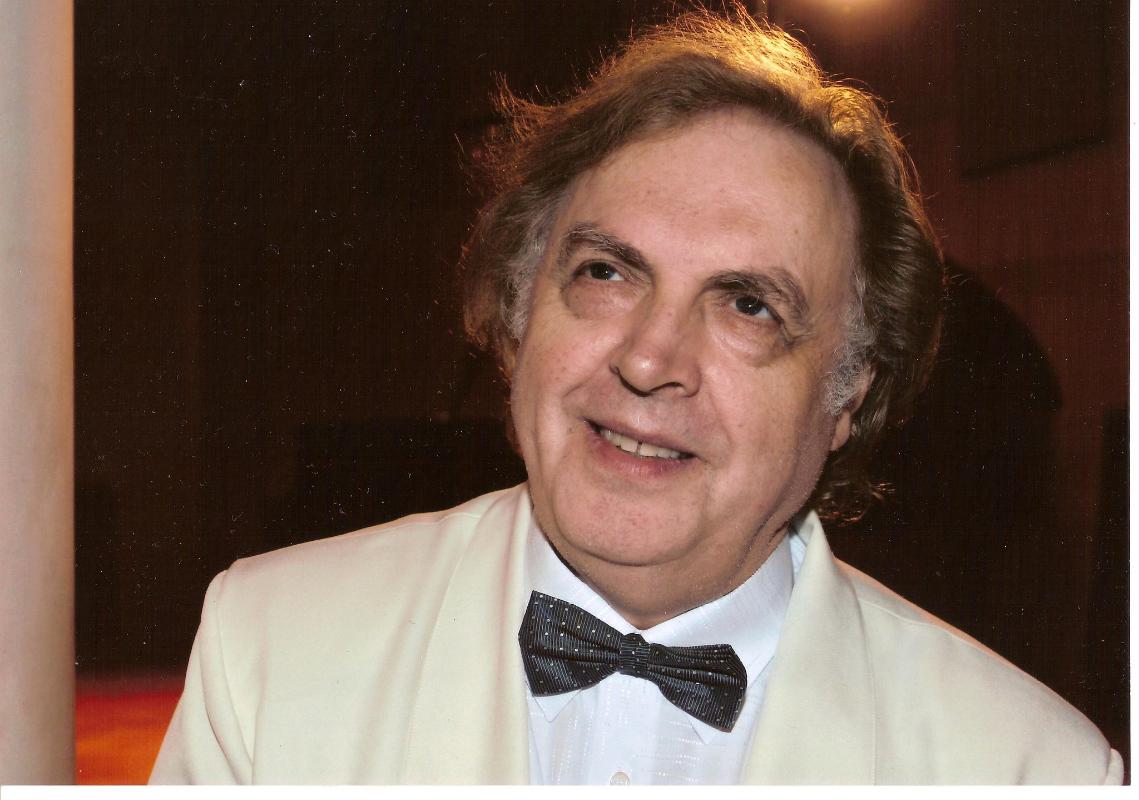
Konstantin Scherbakov

Classical
Chamber Music
 Viberate Rank: 114236
 Viberate Rank: 114236
 Monthly ListenersFollowers
 Subscribers
 Followers
 Followers
 FansTop Spotify SongsTop YouTube VideosMonthly ListenersFeatured in Playlists
| Playlist | Followers | |
|---|---|---|
1 |  Classical Romance Spotify | 467.42K |
2 |  Feel Good Classical Spotify | 283.12K |
3 |  Classical Piano Essentials Pianoramix | 138.31K |
4 |  Haruki Murakami's vinyl collection Masamaro | 109.94K |
5 |  This Is Shostakovich Spotify | 68.80K |
Audience| City | Monthly Listeners | |
|---|---|---|
1 |  | 3.48K |
2 |  | 3.11K |
3 | | 2.46K |
4 |  | 2.19K |
5 |  | 2.17K |
See full performance history, audience data, playlist activity, rankings, comparisons, and more in Viberate music analytics. Start with a free trial, then continue with a paid plan.
Konstantin Scherbakov’s Spotify BioKonstantin Scherbakov is among the most ubiquitous and often-recorded pianists before the public today. The range of his repertory is vast and demanding, both technically and interpretively: he has recorded the complete solo piano outputs of Godowsky, Shostakovich, and Respighi; the complete piano/orchestral works of Medtner, Respighi, and Scriabin; and he is involved in other large projects including the complete Liszt piano transcriptions of the Beethoven symphonies. His repertory also includes such disparate composers as Domenico Scarlatti, Liapunov, and Franck. Scherbakov has made numerous recordings since 1992, mostly for the Naxos label.
Scherbakov was born in the Siberian city of Barnaul in 1963. He was a child prodigy, first playing the piano at five and then making his debut with an orchestra at 11 in a performance of the Beethoven First Piano Concerto. He later moved to Moscow for studies at the Tchaikovsky Conservatory where he was mentored by his chief teacher there, Lev… Naumov.
Scherbakov won the 1983 (first) Rachmaninov Competition and followed that victory with a string of others in Europe. He steadily built his career in the former Soviet Union, then made his first important appearance abroad at the 1990 Asolo (Italy) Chamber Music Festival, where he gave four recitals covering the complete solo piano output of Rachmaninov.
In 1992 he and his family relocated to Switzerland and thereafter his career had a rather meteoric rise. EMI introduced Scherbakov via its Debut Series in a disc of Johann Strauss II waltz paraphrases by Reger, Tausig, Rosenthal, Cziffra, and others. Naxos signed him and his first recording, the Transcendental Etudes by Liapunov, was released in 1994 on that label's sister enterprise Marco Polo.
Amid a heavy concert and recording schedule, Scherbakov joined the faculty at the Hochschule für Musik Winterthur-Zurich in 1998. He also began regularly conducting master classes in pianism and appearing as a jury member for various prestigious piano competitions. In 2003 Scherbakov marked the 20th anniversary of his victory in the Rachmaninov Competition by giving four recitals that once more covered the composer's complete solo output. He also appeared with several orchestras (the Russian State Philharmonic, the Singapore Symphony, the Haifa Symphony Orchestra, and others), performing the composer's four concertos. Among Scherbakov's later recordings is his 2006 Naxos CD of the Shostakovich Piano Sonata No. 2 and other Shostakovich works.
Viberate is a music analytics platform built for A&Rs, artist managers, labels, booking agents, marketers, and artists.
It helps music professionals track artist growth, analyze audience data, monitor playlist activity, compare artists, follow song performance, and identify opportunities across the music market.
Public artist pages provide a free preview of selected artist data. Paid plans provide access to deeper analytics, historical data, charts, comparisons, playlist tools, exports, alerts, reports, and additional professional features.
Yes. Public Viberate artist pages provide selected artist analytics and music data for free.
Viberate also offers a 7-day free trial of the full platform. A credit card is required to start the trial. The trial includes access to the complete product so users can test deeper artist analytics, historical views, playlist insights, comparisons, charts, exports, alerts, and reporting features before choosing a paid plan.
Viberate provides artist analytics across streaming, playlists, social media, video, radio airplay, songs, and audience markets.
Users can analyze Spotify performance, Spotify and Apple Music playlists, YouTube activity, TikTok and Instagram growth, radio spins, song performance, audience locations, demographics, rankings, and overall artist momentum.
Artist profiles also connect to music charts, similar artists, and comparison tools, helping users benchmark performance and evaluate artists in context.
Viberate updates key artist and track data daily.
For followed artists and tracks, selected data is refreshed multiple times per day. This helps teams monitor playlist changes, streaming movement, audience growth, releases, and campaign performance with more current data.
Update frequency can vary depending on the metric and data source.
Yes. Viberate lets users compare up to five artists side by side across streaming, social media, audience, and engagement metrics.
Users can compare fanbase growth, audience demographics, locations, Spotify performance, social metrics, and other artist data over selected time periods.
Artist comparison can be used for A&R scouting, benchmarking, booking decisions, campaign planning, and evaluating artists with similar audiences or market positions.