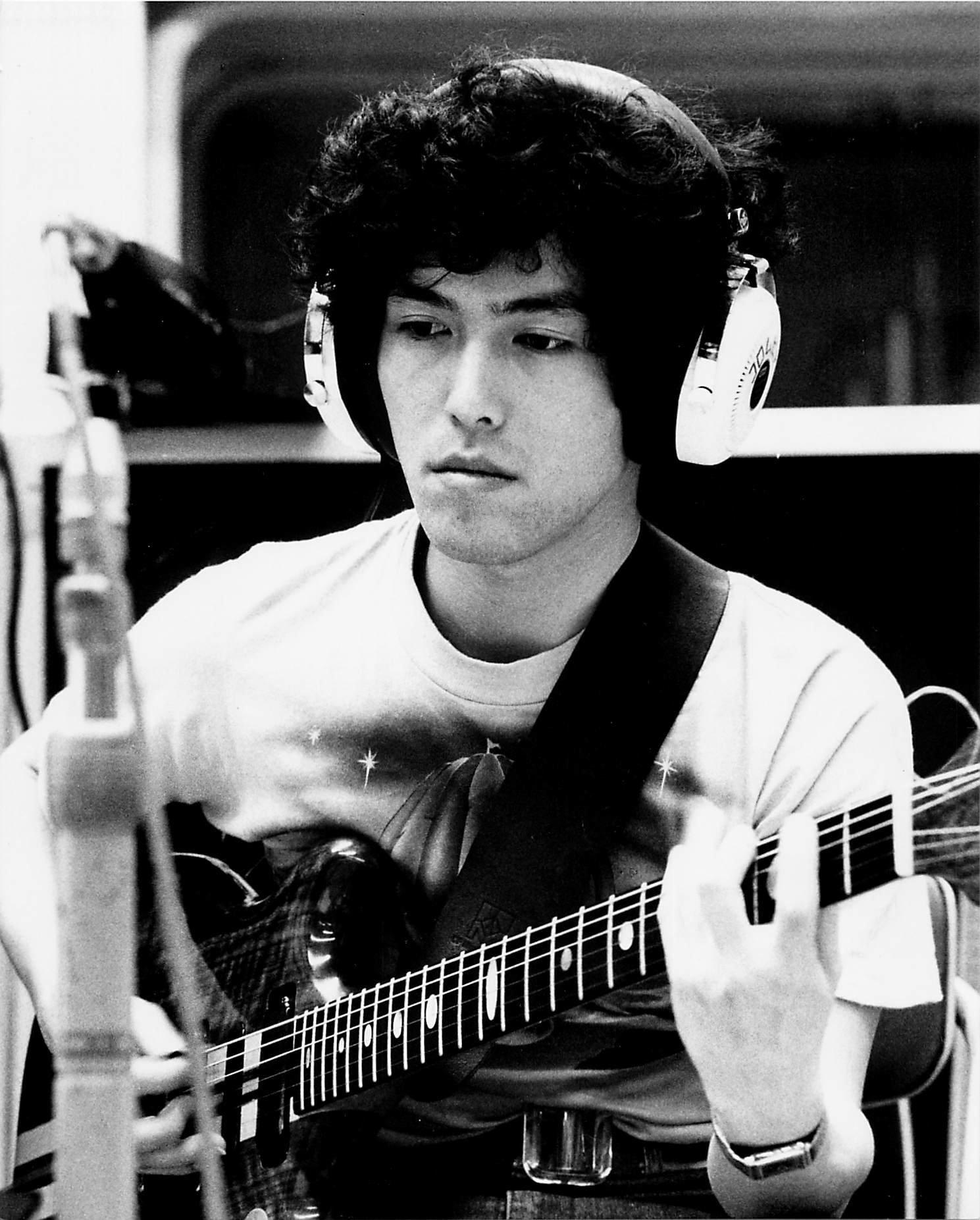
Kazumi Watanabe

Rock
Pop Rock
Jazz Fusion
 Viberate Rank: 99069
 Viberate Rank: 99069
 Monthly ListenersFollowers
 Subscribers
 Followers
 Followers
 FansTop Spotify Songs
| Track | 7-Day Streams | |
|---|---|---|
1 | 12.81K | |
2 | 5.69K | |
3 | 3.23K | |
4 | 2.76K | |
5 | 1.96K |
Top YouTube Videos| Video | 7-Day Views | |
|---|---|---|
1 | 1.03K | |
2 | 947 | |
3 | 684 | |
4 | 438 | |
5 | 436 |
Monthly ListenersFeatured in Playlists| Playlist | Followers | |
|---|---|---|
1 |  dancing in the kitchen Matthew Meyer | 136.44K |
2 | Japanese Jazz Fusion Funk ellissam90 | 56.10K |
3 |  songs you need to hear at least once... Matthew Meyer | 46.70K |
4 |  FUSION TO MY EARS daymondwho | 38.98K |
5 |  Smooth Jazz (Numero Group) Numero Group Concierge | 29.27K |
Audience| City | Monthly Listeners | |
|---|---|---|
1 | | 921 |
2 |  | 856 |
3 |  | 801 |
4 | | 749 |
5 |  | 658 |
See full performance history, audience data, playlist activity, rankings, comparisons, and more in Viberate music analytics. Start with a free trial, then continue with a paid plan.
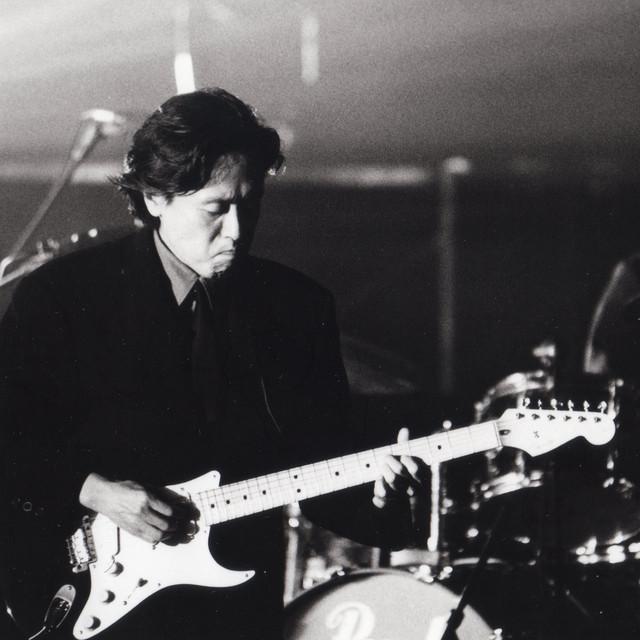
Kazumi Watanabe’s Spotify BioA technically adept guitarist with a dynamic, highly inventive, jazz fusion-based sound, Kazumi Watanabe is one of Japan's most prolific and recognizable instrumentalists. Although primarily focused on jazz, Watanabe has left his mark on such varied genres as hard rock, electronic pop, and ambient classical music. Since debuting in the '70s, the early prodigy has built an impressive body of work with numerous solo projects and collaborations with such luminaries as Ryuichi Sakamoto, Mike Mainieri, Bill Bruford, and many more.
Born in Tokyo in 1953, Watanabe became interested in music at a young age, starting out on the piano at age seven. However, by age 12 he had picked up a guitar, inspired by the twangy electric surf rock of the Ventures and, later, the warm and soulful jazz of Wes Montgomery. Although naturally gifted and largely hailed as a prodigy, he did study for a time with Sadanori Nakamure at the Yamaha Music School in Tokyo. At age 17, Watanabe made his recorded debut with… 1971's Infinite, a sprawling set of edgy modal jazz.
He then signed with Columbia and delivered a handful of highly regarded efforts including 1974's Endless Way, 1977's Lonesome Cat, and 1977's Olive's Step, all of which found him embracing a bold crossover jazz and rock sound. His 1978 album, Mermaid Boulevard, further solidified his fusion star status with an all-star lineup featuring Lee Ritenour, Ernie Watts, Patrice Rushen, Harvey Mason, and others. He also toured often during this period, appearing with many of Japan's top performers including Sadao Watanabe, Isao Suzuki, Masaru Imada, and others.
Watanabe closed out the '70s with formation of the landmark fusion and pop outfit Kylyn alongside legendary keyboardist Ryuichi Sakamoto. Together, they released such well-received efforts as Kylyn and Kylyn Live. The guitarist also contributed to Sakamoto's 1978 solo debut, Thousand Knives, and toured with the keyboardist's electronic outfit Yellow Magic Orchestra. The pair's work together was compiled for 1978's Tokyo Joe, which was re-released outside of Japan in the early '80s.
The '80s continued to prove a fruitful period for the guitarist, who issued the hugely successful fusion effort To Chi Ka in 1980, featuring vibraphonist Mike Mainieri, pianist Kenny Kirkland, bassists Marcus Miller and Tony Levin, drummer Peter Erskine, and guest saxophonist Michael Brecker. A year later he delivered Dogatana, which revealed his growing interest in the acoustic guitar. Also during this period, he toured with the Brecker Brothers and Jaco Pastorius, and recorded with Mainieri's Steps Ahead and saxophonist Sadao Watanabe.
In 1983, he founded the genre-bending fusion and rock outfit Mobo with pianist Ichiko Hashimoto, guitarist Gregg Lee, saxophonist Mitsuru Sawamura, and drummers Shuichi Murakami and Kiyohiko Senba. The group debuted with Mobo, Vol. 1, followed by a handful of influential efforts including 1983's Mobo Club and 1985's Mobo Splash. He then paired with bassist Jeff Berlin and Yes drummer Bill Bruford for 1987's The Spice of Life and 1988's The Spice of Life Too. Watanabe capped the decade with his solo effort Kilowatt, which featured guest spots from saxophonist Wayne Shorter, percussionist Alex Acuña, and keyboardist Patrick Moraz.
Having established himself as one of the world's preeminent electric fusion guitarists, Watanabe began gravitating toward acoustic music, a sound he explored on 1990's Ganesia. He also played numerous live acoustic shows duetting with guitarists like Babik Reinhardt, Ralph Towner, Tonino Horta, and others. Nonetheless, he remained a vital force in electric fusion with his Resonance Vox outfit, delivering albums like 1992's Pandora, 1996's Romanesque, and 1999's Jigojitoku. In 1999, he reunited with longtime associates vibraphonist Mainieri, bassist John Patitucci, guitarist Larry Coryell, keyboardist Akiko Yano, and drummer Mino Cinelu for the live album One for All.
He also continued to expand his palette, touring with the 32-member Asian Fantasy Orchestra, and exploring new formats, as on his first solo guitar album, 2003's Guitar Renaissance. That same year, he joined bassist Richard Bona and drummer Horacio "El Negro" Hernández in the New Electric Trio with 'Mo Bop. Also around this time, he celebrated 30 years as a guitarist with the Infinite Beyond suite, which was released on album in 2006. A year later, he collaborated with pianist and longtime partner Koko Tanikawa on the environmentally conscious album Castle in the Air. He then paired with vocalist Minako Yoshida for a set of intimate acoustic covers on 2008's Nowadays. He also launched the Asian Super Guitar Project during this period, featuring guitarists from Korea and Hong Kong on the album Guitar Sam Guk Ji.
Along with recording, Watanabe remains an active live performer with regular appearances in Japan and around the world. In 2010, he reunited with Mainieri, Marcus Miller, pianist Warren Bernhardt, and drummer Omar Hakim for To Chi Ka 2010 at the Tokyo Jazz Festival. The concert album Live at the Iridium appeared in 2012, followed by Lotus Night with Mainieri and Bernhardt in 2016. In 2017, Watanabe delivered the orchestral album Tokyo Wanderer. ~ Matt Collar, Rovi
Viberate is a music analytics platform built for A&Rs, artist managers, labels, booking agents, marketers, and artists.
It helps music professionals track artist growth, analyze audience data, monitor playlist activity, compare artists, follow song performance, and identify opportunities across the music market.
Public artist pages provide a free preview of selected artist data. Paid plans provide access to deeper analytics, historical data, charts, comparisons, playlist tools, exports, alerts, reports, and additional professional features.
Yes. Public Viberate artist pages provide selected artist analytics and music data for free.
Viberate also offers a 7-day free trial of the full platform. A credit card is required to start the trial. The trial includes access to the complete product so users can test deeper artist analytics, historical views, playlist insights, comparisons, charts, exports, alerts, and reporting features before choosing a paid plan.
Viberate provides artist analytics across streaming, playlists, social media, video, radio airplay, songs, and audience markets.
Users can analyze Spotify performance, Spotify and Apple Music playlists, YouTube activity, TikTok and Instagram growth, radio spins, song performance, audience locations, demographics, rankings, and overall artist momentum.
Artist profiles also connect to music charts, similar artists, and comparison tools, helping users benchmark performance and evaluate artists in context.
Viberate updates key artist and track data daily.
For followed artists and tracks, selected data is refreshed multiple times per day. This helps teams monitor playlist changes, streaming movement, audience growth, releases, and campaign performance with more current data.
Update frequency can vary depending on the metric and data source.
Yes. Viberate lets users compare up to five artists side by side across streaming, social media, audience, and engagement metrics.
Users can compare fanbase growth, audience demographics, locations, Spotify performance, social metrics, and other artist data over selected time periods.
Artist comparison can be used for A&R scouting, benchmarking, booking decisions, campaign planning, and evaluating artists with similar audiences or market positions.