Kalin Twins

Rock
Pop Rock
Soul
 Viberate Rank: 141395
 Viberate Rank: 141395
 Monthly ListenersFollowers
 Subscribers
 Followers
 Followers
 FansTop Spotify Songs
| Track | 7-Day Streams | |
|---|---|---|
1 | 32.73K | |
2 | 664 | |
3 | 664 | |
4 | 664 | |
5 | 573 |
Top YouTube VideosMonthly ListenersFeatured in Playlists| Playlist | Followers | |
|---|---|---|
1 |  50's and 60's Rock'n'Roll classics lxwless playlists | 40.24K |
2 |  Every Official UK Number 1 Ever Official Charts | 33.96K |
3 |  Essential Classics Essential Classics | 31.39K |
4 |  1950s hits (300) mervynvankuyen | 24.29K |
5 | George Trottiscliffe | 21.83K |
Audience| City | Monthly Listeners | |
|---|---|---|
1 |  | 1.33K |
2 |  | 1.18K |
3 | | 1.01K |
4 | | 835 |
5 |  | 827 |
See full performance history, audience data, playlist activity, rankings, comparisons, and more in Viberate music analytics. Start with a free trial, then continue with a paid plan.
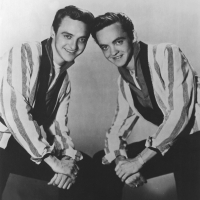
Kalin Twins’ Spotify BioHerbert and Harold Kalin, twin brother harmony singers, sang like a pop-focused version of the Everly Brothers, and they charted a few catchy records in 1958, including one Top Five hit. They represent one of the better acts to find a compromise between rock & roll and pop music, even if they weren't the Everlys by a long shot.
Although Herbert and Harold were born in the same period as Elvis Presley, they came from more of a middle-class background, and from much further north as well. Not surprisingly, their musical preferences lay more with the pop music that preceded Elvis (so, to some degree, did Presley's own taste), and their music was closer in spirit to that tamer third wave of rock & roll, exemplified by Bobby Darin, Paul Anka, and Dion DiMucci.
The Kalins grew up in Port Jervis, NY, and pursued music as a career while in their teens. Their listening ran toward Tony Bennett, Johnny Ray, and Nat King Cole -- they weren't allowed to listen to R&B, although they did get to hear… records by LaVern Baker, Ruth Brown, and other R&B stars of the period, even if these weren't central to their taste or experience. Their aspirations to a recording career were delayed until Hal's stint in the Army was over, and the two moved to Washington, D.C., in 1957. This led them to a hookup with songwriter Clint Ballard, who helped them land a contract with Decca Records.
The Kalins' first recording session took place in December of 1957, by which time the rock & roll boom was in full swing -- the record company wanted them to compete for the teen market and insisted that they try something close in spirit and beat to the newer sounds. Their first session yielded a trio of songs that went nowhere, but they struck gold three months later with "When," a catchy romantic pop/rocker with a good beat (originally intended as a B-side) that rose to number five in the United States and number one in England.
They appeared on The Milt Grant Show, Washington's answer to American Bandstand, and became nationally known, appearing on the typical package tours of the period. "Forget Me Not," a hastily scheduled and recorded follow-up done while they were on the road promoting the big hit, was notably less successful. Their next single, the ethereal and catchy "It's Only the Beginning," however, could have been close in spirit to the Everly Brothers, but for the inclusion of the chorus behind the brothers. During this period, they also recorded a pair of their own songs, "Clickety Clack" and "Oh! My Goodness."
By the middle of 1959, they were working in Nashville with Owen Bradley and doing songs by, among others, Felice and Boudleaux Bryant, who had previously supplied the Everlys with material. The Bryants' "Sweet Sugar Lips" -- the Kalins' final chart entry, at number 97 -- was as close to the Everlys' sound as the Kalins ever got, soft country-based rock complete with Hank Garland on guitar and Floyd Cramer at the piano. Meanwhile, out on the road, the Kalins also performed in England, opening for Cliff Richard.
Back home, the Kalin Twins kept recording until 1962, even hooking up with their one-time mentor, Clint Ballard. Among the highlights of the later part of their recording career were the duo's cover of "Zing, Went the Strings of My Heart," which recalled "When," and their soaring cover of "Picture of You," a hit in England for Brit-rocker Joe Brown (Paul McCartney has also been known to sing it, though not formally in concert). They also left behind a body of unreleased material from Nashville, featuring Garland and Cramer, that was fairly solid pop/rock.
As the 1960s dawned, the Kalins moved away from teen-oriented numbers, preferring to perform more mature material. Curiously, although their influence in the United States was minimal, it is probable that their number one hit in England with "When" was an influence on the fortunes and perhaps even the sound of the Brook Brothers, an English brother act (signed to Pye Records) with a nearly identical sound. The Kalins ceased recording after 1962, but three decades later, they were still performing as a pop-nostalgia act before audiences in their 50s. ~ Bruce Eder, Rovi
Viberate is a music analytics platform built for A&Rs, artist managers, labels, booking agents, marketers, and artists.
It helps music professionals track artist growth, analyze audience data, monitor playlist activity, compare artists, follow song performance, and identify opportunities across the music market.
Public artist pages provide a free preview of selected artist data. Paid plans provide access to deeper analytics, historical data, charts, comparisons, playlist tools, exports, alerts, reports, and additional professional features.
Yes. Public Viberate artist pages provide selected artist analytics and music data for free.
Viberate also offers a 7-day free trial of the full platform. A credit card is required to start the trial. The trial includes access to the complete product so users can test deeper artist analytics, historical views, playlist insights, comparisons, charts, exports, alerts, and reporting features before choosing a paid plan.
Viberate provides artist analytics across streaming, playlists, social media, video, radio airplay, songs, and audience markets.
Users can analyze Spotify performance, Spotify and Apple Music playlists, YouTube activity, TikTok and Instagram growth, radio spins, song performance, audience locations, demographics, rankings, and overall artist momentum.
Artist profiles also connect to music charts, similar artists, and comparison tools, helping users benchmark performance and evaluate artists in context.
Viberate updates key artist and track data daily.
For followed artists and tracks, selected data is refreshed multiple times per day. This helps teams monitor playlist changes, streaming movement, audience growth, releases, and campaign performance with more current data.
Update frequency can vary depending on the metric and data source.
Yes. Viberate lets users compare up to five artists side by side across streaming, social media, audience, and engagement metrics.
Users can compare fanbase growth, audience demographics, locations, Spotify performance, social metrics, and other artist data over selected time periods.
Artist comparison can be used for A&R scouting, benchmarking, booking decisions, campaign planning, and evaluating artists with similar audiences or market positions.