Joseph Achron

Classical
Classical Crossover
 Viberate Rank: 667066
 Viberate Rank: 667066
 Monthly ListenersFollowers
 Subscribers
 Followers
 Followers
 FansTop Spotify SongsTop YouTube VideosMonthly ListenersFeatured in Playlists
| Playlist | Followers | |
|---|---|---|
1 |  Piano Classics 🎹 relaxing piano music Sony Classical & Jazz Sweden | 331.92K |
2 |  Violin Concertos Gonzalo Jimenez | 2.46K |
3 |  Classical Theremin boobly | 2.13K |
4 | Bar Mitzvah playlist jengottesman | 1.74K |
5 |  Itzak Perlman j.vanhussen | 1.42K |
Audience| City | Monthly Listeners | |
|---|---|---|
1 |  | 60 |
2 |  | 44 |
3 |  | 24 |
4 |  | 24 |
5 |  | 24 |
See full performance history, audience data, playlist activity, rankings, comparisons, and more in Viberate music analytics. Start with a free trial, then continue with a paid plan.
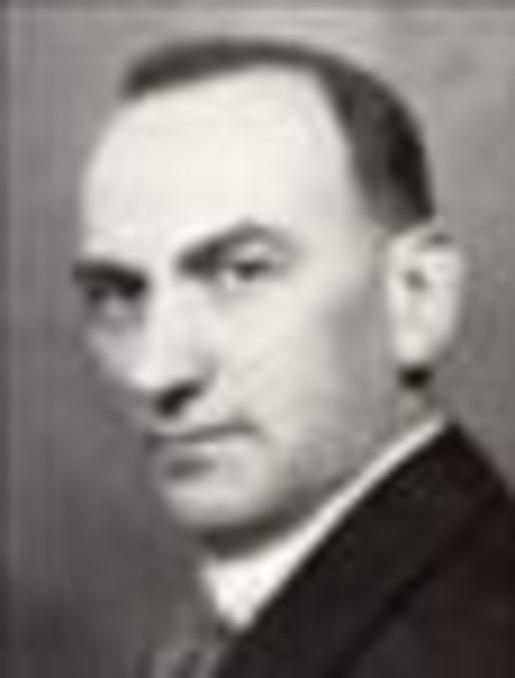
Joseph Achron’s Spotify BioJoseph Achron was born Youssel Achron, the eldest son of a Russian Jewish cantor, fiddler, and folk architect. Joseph Achron took an interest in the violin at age two, and had his first lessons at five. In Warsaw, in 1891, Achron studied with Polish virtuoso Isidor Lott. At age seven, Achron made his debut as violinist, wrote his first composition, and began to tour Russia as a prodigy violinist. From 1898 Achron studied with Leopold Auer at the St. Petersburg Conservatory, taking harmony with composer Anatol Liadov, and later, orchestration with Maximilian Steinberg.
In 1911, Achron came into contact with the members of the Jewish Folk Art Society, a loosely organized group of composers headed by Joel Engel. In hindsight this coalition is recognized as representing the first fruits of the New Jewish School. The Jewish Folk Art Society was founded in 1908 and dedicated, in part, to the notion of fostering a concert class variety of traditional Jewish folk music. Once aware of the… Society's goals, Achron promptly wrote out the first masterpiece of the Jewish folk art genre, Hebrew Melody for violin and piano, Op. 33. Several of the other violin pieces for which Achron is best known, including Hebrew Lullaby op. 35/2 and the two pairs of Stimmungen (Moods, Op. 32 and Op. 36) were written in 1911-14.
Achron spent World War I in Russia, engaged primarily to play for Russian troops. In 1918, the Soviets dissolved the Jewish Folk Art Society as counter-revolutionary. In 1920, Achron married singer Marie Raphof, and composed incidental music for the local Jewish Chamber Theater. In 1922, Achron relocated to Germany, to rejoin members of the discredited Jewish Folk Art Society still active there. In Berlin, Achron composed the popular Kindersuite, Op. 57, and became acquainted with the powerful head of the Prussian Music Conservatory and ISCM founder, Arnold Schoenberg. However Achron decided to immigrate to the United States in 1925. Before departing for America, Achron took a trip to Palestine to see the Holy Land. Achron's experiences in Palestine were transformed into such works as his Dance of Salome for wordless chorus, percussion, and piano, Op. 61 (1925).
Once in New York City, Achron composed music for Maurice Schwartz' Yiddish Art Theater. Achron refashioned his music for Sholem Aleichem's play Stempenyu (The Fiddler, 1929) into a suite for violin and piano that has become a latter day favorite with concert violinists. In 1932, Achron presented a suite drawn from his music for H. Leivick's play Der Golem at the ISCM Festival held in Venice. This work marked Achron's adoption of atonal elements, and the final section, signifying the unmaking of the monster, is a total retrograde of the first, in which the Golem is created. In 1934, Achron settled Los Angeles, Achron; he and his wife Marie becoming a part of the inner circle of artists that surrounded Schoenberg. Achron also worked as a violinist in the major Hollywood studio orchestras. In December 1936, Achron gave the highly successful premiere of his own Second Violin Concerto, op. 68 with the Los Angeles Philharmonic under conductor Otto Klemperer. However, in March 1939 Los Angeles critics rejected Achron's Third Violin Concerto op. 71 as being too cold and abstract. In the early 1940s, Achron became ill, and his last completed work was the Concerto for Piano Alone op. 72. Achron died at age 56, leaving a legacy of just about 100 compositions, mostly in manuscript. These are now housed at Tel Aviv University, where a Conservatory is named after him.
Viberate is a music analytics platform built for A&Rs, artist managers, labels, booking agents, marketers, and artists.
It helps music professionals track artist growth, analyze audience data, monitor playlist activity, compare artists, follow song performance, and identify opportunities across the music market.
Public artist pages provide a free preview of selected artist data. Paid plans provide access to deeper analytics, historical data, charts, comparisons, playlist tools, exports, alerts, reports, and additional professional features.
Yes. Public Viberate artist pages provide selected artist analytics and music data for free.
Viberate also offers a 7-day free trial of the full platform. A credit card is required to start the trial. The trial includes access to the complete product so users can test deeper artist analytics, historical views, playlist insights, comparisons, charts, exports, alerts, and reporting features before choosing a paid plan.
Viberate provides artist analytics across streaming, playlists, social media, video, radio airplay, songs, and audience markets.
Users can analyze Spotify performance, Spotify and Apple Music playlists, YouTube activity, TikTok and Instagram growth, radio spins, song performance, audience locations, demographics, rankings, and overall artist momentum.
Artist profiles also connect to music charts, similar artists, and comparison tools, helping users benchmark performance and evaluate artists in context.
Viberate updates key artist and track data daily.
For followed artists and tracks, selected data is refreshed multiple times per day. This helps teams monitor playlist changes, streaming movement, audience growth, releases, and campaign performance with more current data.
Update frequency can vary depending on the metric and data source.
Yes. Viberate lets users compare up to five artists side by side across streaming, social media, audience, and engagement metrics.
Users can compare fanbase growth, audience demographics, locations, Spotify performance, social metrics, and other artist data over selected time periods.
Artist comparison can be used for A&R scouting, benchmarking, booking decisions, campaign planning, and evaluating artists with similar audiences or market positions.