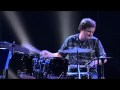
Jim Black

Jazz
Smooth Jazz
Free Jazz
 Viberate Rank: 283241
 Viberate Rank: 283241
 Monthly ListenersFollowers
 Subscribers
 Followers
 Followers
 FansTop Spotify Songs
| Track | 7-Day Streams | |
|---|---|---|
1 | 775 | |
2 | 117 | |
3 | 62 | |
4 | 53 | |
5 | 51 |
Top YouTube VideosMonthly ListenersFeatured in Playlists| Playlist | Followers | |
|---|---|---|
1 |  Bee Movie Justas Janušauskas | 28.31K |
2 |  Real Book - Jazz standards/classics Anders Garbom Bjørklund | 13.79K |
3 |  The Sound of Free Jazz The Sounds of Spotify | 10.46K |
4 | nova tunes 1 jars_ki | 5.01K |
5 |  Progressive Jazz | Jazz Metal | Fusion Jazz | Experimental Jazz | Post-Jazz JEITEMILLER | 4.89K |
Audience| City | Monthly Listeners | |
|---|---|---|
1 | | 38 |
2 |  | 36 |
3 |  | 27 |
4 |  | 24 |
5 |  | 24 |
See full performance history, audience data, playlist activity, rankings, comparisons, and more in Viberate music analytics. Start with a free trial, then continue with a paid plan.
Jim Black’s Spotify BioDrummer and percussionist Jim Black has become one of the most in-demand drummers in avant-garde jazz and experimental rock since emerging as a key member of the New York downtown scene during the '90s. After growing up in Seattle, he moved to Boston to attend Berklee and began performing and recording with Human Feel, which also included guitarist Kurt Rosenwinkel and reedmen Chris Speed and Andrew D'Angelo. In 1991 Black moved from Boston to New York City (as did many others who would become prominent in the N.Y.C. avant jazz world). He became a member of Tim Berne's Bloodcount, Dave Douglas' Tiny Bell Trio, the Ellery Eskelin Trio, and Pachora. In addition to his regular performances and recordings in these groups, Black also played with Ben Monder, Ned Rothenberg, Stephane Furic, Dave Binney, Cuong Vu, and many others. Black developed a multi-tasking approach to drumming with a constant flow incorporating various objects from bells to bowls to hand drums, wowing countless live… audiences and helped to bring a new generation of listeners to jazz and improvised music.
As the 2000s began, Black surprised some of his jazz fans with the establishment of his rock-inclined AlasNoAxis quartet, also featuring longtime collaborator Speed on tenor sax and clarinet, Skuli Sverrisson on bass, and Hilmar Jensson on guitar. Black proved as innovative as ever as a bandleader, this time exploring post-rock/experimental directions while continuing to draw from his background in avant jazz. Seemingly balancing influences from Seattle and Icelandic rock with Brooklyn jazz, the AlasNoAxis quartet blended harsh textures and a disarming melodicism, while always emphasizing Black's assertive and often skewed rhythmic foundation. Over the next decade, AlasNoAxis would release five innovative albums, all on the Winter & Winter label.
Meanwhile, Black remained a key member of a number of other working groups, most prominently Chris Speed's yeah NO, the Ellery Eskelin Trio, Hilmar Jensson's Tyft, and the Satoko Fujii Four, not to mention a reunited Human Feel, who released a new album in 2007 on Speed's Skirl Records label. One of Black's higher-profile gigs was as drummer for Laurie Anderson's touring band (which also included bassist Sverrisson). In the coming decade, Black would remain active, releasing a live collaboration between himself, Tim Berne, and guitarist Nels Cline (under the name BB&C) in 2011 called The Veil. Two years later he delivered AlasNoAxis' sixth album, Antiheroes, and played on Uri Caine's adaptation of Gershwin's Rhapsody in Blue. In 2015, he joined pianist Kris Davis' Infrasound octet to record the album Save Your Breath. ~ Joslyn Layne & Dave Lynch, Rovi
Viberate is a music analytics platform built for A&Rs, artist managers, labels, booking agents, marketers, and artists.
It helps music professionals track artist growth, analyze audience data, monitor playlist activity, compare artists, follow song performance, and identify opportunities across the music market.
Public artist pages provide a free preview of selected artist data. Paid plans provide access to deeper analytics, historical data, charts, comparisons, playlist tools, exports, alerts, reports, and additional professional features.
Yes. Public Viberate artist pages provide selected artist analytics and music data for free.
Viberate also offers a 7-day free trial of the full platform. A credit card is required to start the trial. The trial includes access to the complete product so users can test deeper artist analytics, historical views, playlist insights, comparisons, charts, exports, alerts, and reporting features before choosing a paid plan.
Viberate provides artist analytics across streaming, playlists, social media, video, radio airplay, songs, and audience markets.
Users can analyze Spotify performance, Spotify and Apple Music playlists, YouTube activity, TikTok and Instagram growth, radio spins, song performance, audience locations, demographics, rankings, and overall artist momentum.
Artist profiles also connect to music charts, similar artists, and comparison tools, helping users benchmark performance and evaluate artists in context.
Viberate updates key artist and track data daily.
For followed artists and tracks, selected data is refreshed multiple times per day. This helps teams monitor playlist changes, streaming movement, audience growth, releases, and campaign performance with more current data.
Update frequency can vary depending on the metric and data source.
Yes. Viberate lets users compare up to five artists side by side across streaming, social media, audience, and engagement metrics.
Users can compare fanbase growth, audience demographics, locations, Spotify performance, social metrics, and other artist data over selected time periods.
Artist comparison can be used for A&R scouting, benchmarking, booking decisions, campaign planning, and evaluating artists with similar audiences or market positions.