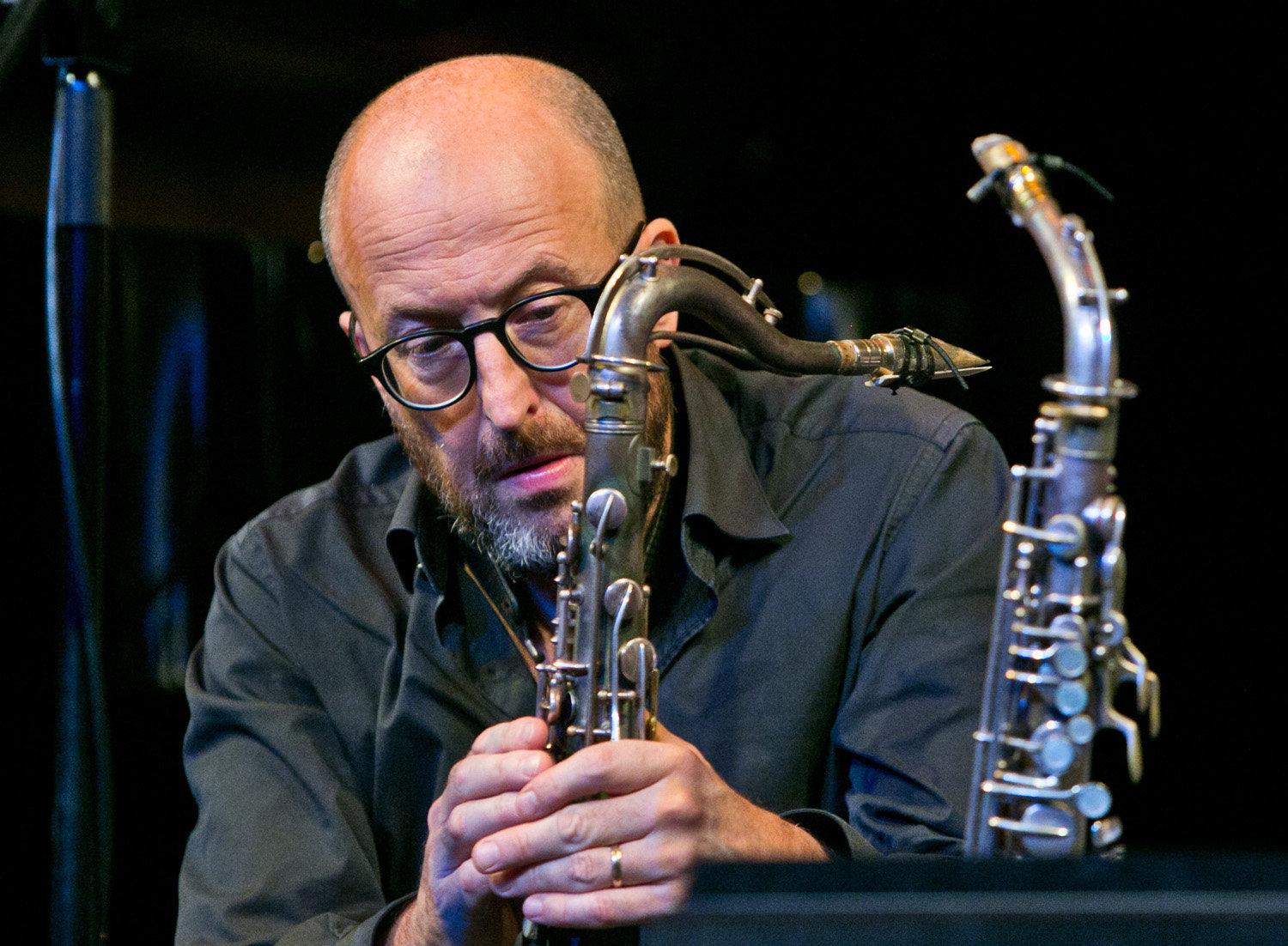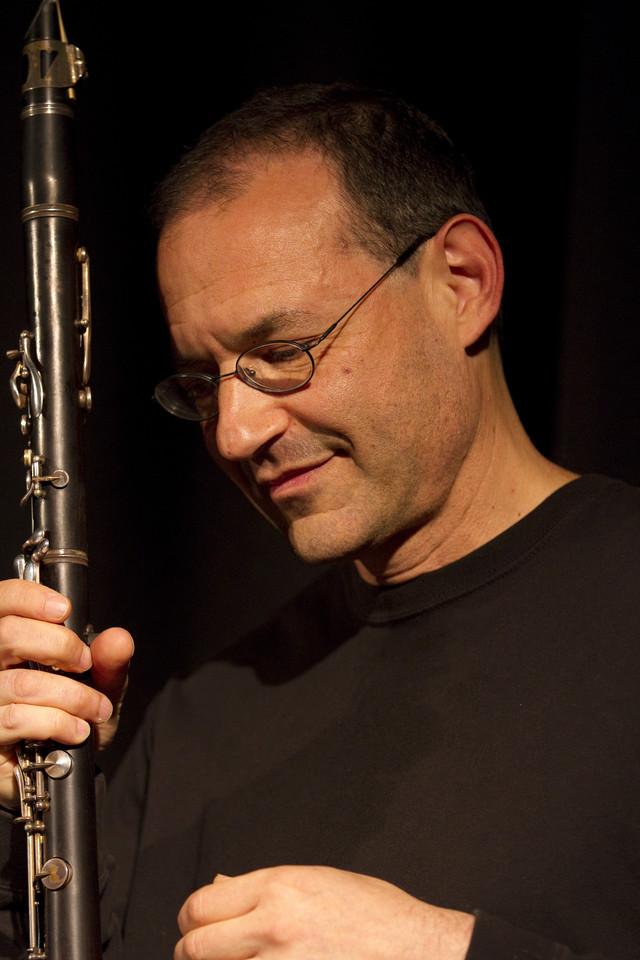
Ben Goldberg

Jazz
Smooth Jazz
Free Jazz
Classical Crossover
 Viberate Rank: 360503
 Viberate Rank: 360503
 Monthly ListenersFollowers
 Subscribers
 Followers
 Followers
 FansTop Spotify Songs
| Track | 7-Day Streams | |
|---|---|---|
1 | 171 | |
2 | 81 | |
3 | 69 | |
4 | 66 | |
5 | 66 |
Top YouTube VideosMonthly ListenersFeatured in Playlists| Playlist | Followers | |
|---|---|---|
1 |  The Jazz Clarinet Adam Price | 10.18K |
2 |  Cinema Paradiso cafenocturn | 2.36K |
3 | Jazz sexy pelleteur | 2.12K |
4 | Tenor Saxophone Jazz Greats JD | 1.92K |
5 |  New Age Music Disc Guide // Ambient, Minimalism, Balearic, Fourth World, Kankyo Ongaku Tsunaki Kadowaki 🐾 | 1.89K |
Audience| City | Monthly Listeners | |
|---|---|---|
1 | | 46 |
2 | | 35 |
3 | | 23 |
4 |  | 22 |
5 |  | 19 |
See full performance history, audience data, playlist activity, rankings, comparisons, and more in Viberate music analytics. Start with a free trial, then continue with a paid plan.
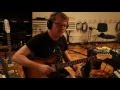
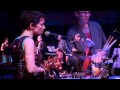
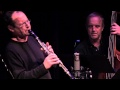
Ben Goldberg’s Spotify BioClarinetist Ben Goldberg is an inventive improviser, composer, and musical theorist who has consistently challenged not only the role his chosen instrument plays in jazz, but also in new music, klezmer, classical, and pop. Influenced heavily by the work of his mentor, saxophonist Steve Lacy, he has explored a variety of settings from solo, duo, and trio dates to larger ensemble projects rife with layered, polyphonic arrangements and group improvisation. A top-tier sideman, he has worked with Marty Ehrlich, John Zorn, Charlie Hunter, Allison Miller, and others. He is also a longtime member of the expansive Tin Hat ensemble and the New Klezmer Trio. As a leader, he has issued his own exploratory works like 1992's duo album The Relative Value of Things with Kenny Wollesen, 2006's Lacy-inspired The Door, The Hat, The Chair, The Fact, and 2015's nonet recording Orphic Machine, which found him drawing upon the work of poet Allen Grossman.
Ben Goldberg was born and raised in Denver, Colorado,… later earning an undergraduate music degree from the University of California, Santa Cruz and a subsequent Master of Arts in Composition from Mills College. A student of Rosario Mazzeo, Steve Lacy, and Joe Lovano, Goldberg initially won acclaim as a member of the New Klezmer Trio, debuting in 1991 with Masks and Faces; two years later he won a grant from the National Endowment for the Arts to mount a retrospective series spotlighting the music of key American jazz composers including Thelonious Monk and Herbie Nichols, a project on which he collaborated with the likes of Andrew Hill and Bobby Bradford. After teaming with Kenny Wollesen for the 1993 LP The Relative Value of Things, Goldberg resurfaced two years later with another New Klezmer Trio record, Melt Zonk Rewire. He also contributed to 1996's Live at the Elbo Room with the group Snorkel. In 1998, Goldberg headlined no less than four new recordings: Eight Phrases for Jefferson Rubin, Twelve Minor, Here by Now, and What Comes Before. He ended the decade with Ghost of Electricity as part of the Junk Genius band with Kenny Wollesen, Trevor Dunn, and John Schott.
Goldberg kicked off the new century with Short for Something, the third release by his New Klezmer Trio on Tzadik. He also released Almost Never, a new collection of his own songs, with Dunn and Schott. He appeared on Schott's Elegies for the Recording Angel, as well as recording Helium with the Tin Hat Trio. In 2003, Goldberg arranged Voices in the Wilderness, a CD celebrating the tenth anniversary of John Zorn's Masada compositions.
When Steve Lacy fell ill with cancer in 2004, Goldberg began considering the soprano saxophonist's massive influence on him as a composer, bandleader, and soloist. He started writing and performing compositions for a quintet that comprised Carla Kihlstedt, violin; Rob Sudduth, saxophone; Devin Hoff, bass; Ches Smith, drums. Recorded just after Lacy's death, these songs were released in 2006 as The Door, The Hat, The Chair, The Fact on Cryptogramophone. (He received a grant from the Aaron Copland Fund for Music the following year to write and record more compositions for this group.) Goldberg was also part of Nels Cline's group on New Monastery: The Music of Andrew Hill.
While he remained busy composing and playing on others' records, in the intervening two years, a trio recording, Plays Monk with Scott Amendola & Devin Hoff, was released on Cryptogramophone. He became prolific again in 2009, recording in a variety of settings. He played on the trio offering Speech Communication with Wollesen and Greg Cohen; The Sad Machinery of Spring with Tin Hat; Cry, Want with Beth Custer's Clarinet Thing, and Myra Melford's Be Bread album The Whole Tree Gone; he also guested on Xiu Xiu's La Forêt.
After previous nominations, Goldberg was the recipient of the Alpert Award in the Arts in 2010. That same year, he kicked off his own label, BAG Productions, with Go Home, a quartet date with Charlie Hunter, Ron Miles, and Amendola. He also led a quartet for Baal: The Book of Angels, Vol. 15 from Zorn's second Masada book, and recorded as part of Tin Hat for Foreign Legion. In 2011, he topped the Downbeat Critic's Poll as Rising Star Clarinetist. Goldberg guested on Aaron Novik's Secrets of Secrets on Tzadik in 2012, and Tin Hat released The Rain Is a Handsome Animal, a 17-movement song cycle based on the work of e.e. cummings. Two releases from BAG appeared in 2013: a quintet date entitled Unfold Ordinary Mind, and Subatomic Particle Homesick Blues, recorded back in 2008 with a group that lasted only a couple of days and included saxophonist Joshua Redman. An album from 2010 sessions with Deerhoof guitarist John Dieterich and Amendola, was finally released in 2014 as Short-Sighted Dream Colossus. The clarinetist was also honored with a residency at The Stone in New York.
In early 2015, Goldberg released his nonet project, Orphic Machine, on BAG. Initially begun in 2008, the album found him drawing inspiration from the late poet, professor, and MacArthur Fellow Allen Grossman's book Summa Lyrica: A Primer of the Commonplaces in Speculative Poetry. He then joined Nels Cline, Ron Miles, and Dean Young for 2019's Good Day for Cloud Fishing. ~ Jason Ankeny & Thom Jurek, Rovi
Viberate is a music analytics platform built for A&Rs, artist managers, labels, booking agents, marketers, and artists.
It helps music professionals track artist growth, analyze audience data, monitor playlist activity, compare artists, follow song performance, and identify opportunities across the music market.
Public artist pages provide a free preview of selected artist data. Paid plans provide access to deeper analytics, historical data, charts, comparisons, playlist tools, exports, alerts, reports, and additional professional features.
Yes. Public Viberate artist pages provide selected artist analytics and music data for free.
Viberate also offers a 7-day free trial of the full platform. A credit card is required to start the trial. The trial includes access to the complete product so users can test deeper artist analytics, historical views, playlist insights, comparisons, charts, exports, alerts, and reporting features before choosing a paid plan.
Viberate provides artist analytics across streaming, playlists, social media, video, radio airplay, songs, and audience markets.
Users can analyze Spotify performance, Spotify and Apple Music playlists, YouTube activity, TikTok and Instagram growth, radio spins, song performance, audience locations, demographics, rankings, and overall artist momentum.
Artist profiles also connect to music charts, similar artists, and comparison tools, helping users benchmark performance and evaluate artists in context.
Viberate updates key artist and track data daily.
For followed artists and tracks, selected data is refreshed multiple times per day. This helps teams monitor playlist changes, streaming movement, audience growth, releases, and campaign performance with more current data.
Update frequency can vary depending on the metric and data source.
Yes. Viberate lets users compare up to five artists side by side across streaming, social media, audience, and engagement metrics.
Users can compare fanbase growth, audience demographics, locations, Spotify performance, social metrics, and other artist data over selected time periods.
Artist comparison can be used for A&R scouting, benchmarking, booking decisions, campaign planning, and evaluating artists with similar audiences or market positions.