Jesu

Rock
Shoegaze
Doom/Sludge Metal
 Viberate Rank: 125604
 Viberate Rank: 125604
 Monthly ListenersFollowers
 Subscribers
 Followers
 Followers
 FansTop Spotify Songs
| Track | 7-Day Streams | |
|---|---|---|
1 | 3.88K | |
2 | 2.75K | |
3 | 1.44K | |
4 | 1.32K | |
5 | 1.18K |
Top YouTube Videos| Video | 7-Day Views | |
|---|---|---|
1 | 161 |
Monthly ListenersFeatured in Playlists| Playlist | Followers | |
|---|---|---|
1 |  Shoegaze Classics Spotify | 708.02K |
2 |  CLANDE Y AFTER 2026 EME SARAV | 118.76K |
3 |  Joda y After 2026: Reggaeton, Cumbia y Cachengue CLANDEYAFTER | 90.93K |
4 | wicks Brennan McDowell | 43.73K |
5 |  techengue eme sarav 2026 EME SARAV | 35.61K |
Audience| City | Monthly Listeners | |
|---|---|---|
1 |  | 471 |
2 | | 470 |
3 | | 469 |
4 | | 457 |
5 | | 318 |
See full performance history, audience data, playlist activity, rankings, comparisons, and more in Viberate music analytics. Start with a free trial, then continue with a paid plan.
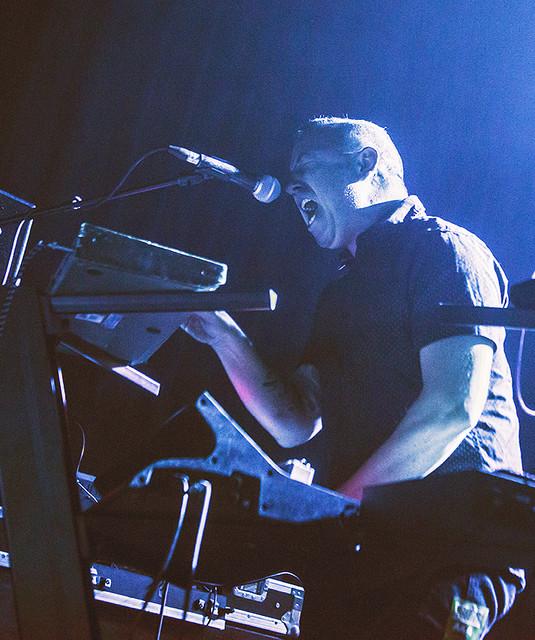
Jesu’s Spotify BioJesu is the most melodic and accessible of Justin Broadrick's many projects, incorporating heavy guitar riffs and ambient textures into expansive yet pop-informed song structures. Initially devised as a successor to industrial metal juggernaut Godflesh following their initial breakup, Jesu's self-titled 2004 debut album was a bleak, sludgy set of post-metal with noticeably cleaner vocals than Broadrick's former bands. Subsequent EPs, split releases, and albums like 2007's Conqueror found Jesu incorporating more shoegaze and post-punk influences as well as electronic elements. Broadrick started the Pale Sketcher offshoot to explore Jesu's ambient techno-informed side, while the main project returned to a guitar-focused sound with 2011's Ascension. Following collaborations with Sun Kil Moon and Dirk Serries, as well as a preoccupation with other projects like a reunited Godflesh and techno alias JK Flesh, Broadrick revivified Jesu in 2020 with genre-blurring releases such as the… full-length Terminus, and continued with the 2023 drone-metal EP Pity/Piety.
Birmingham-born musician and producer Justin Broadrick has been a fixture of England's extreme music scene since his membership in the earliest recording lineup of Napalm Death in the mid-'80s. Also a member of several other bands and projects (Head of David, Techno Animal, Final, etc.), he is probably best known for his leadership of pioneering industrial ensemble Godflesh. Having officially laid that hallowed institution to rest in 2002, Broadrick turned his attention to a new entity, Jesu, which he named after the last track on Godflesh's intended swan song, Hymns. Essentially a solo project with Broadrick handling vocals, guitars, bass, and programming, Jesu's 2004 debut EP, Heart Ache, consisted of two 20-minute-long meditations melding uncompromising sonic textures with seemingly abstract musings and a few hard-won melodic rewards.
But with Jesu's eponymous full-length release, former Godflesh associate drummer Ted Parsons (also ex-Prong, Swans, etc.) and bassist Diarmuid Dalton were called in to help fill out a more evenly paced, and certainly more focused (though only slightly shorter, at an average of ten minutes apiece), set of ambient, droning, and semi-industrial extrapolations. Jesu, the album, received almost unqualified critical acclaim across the world, and encouraged Broadrick to move ahead with his new endeavor, resulting in another form-challenging EP in 2006's Silver. At the end of the year, Broadrick was performing with Sunn 0))) on a tour of the U.K. Early in 2007, second full-length Conqueror was released concurrently with the EP Sun Down/Sun Rise. A split release with Eluvium appeared in July. The Lifeline EP and Pale Sketches, a compilation of stray material that didn't fit on any of the prior Jesu releases, were both issued that October.
A pair of split recordings came out in 2008: one with Envy, and another with Battle of Mice. Jesu also released a more electronic-leaning EP titled Why Are We Not Perfect. Toward the end of 2009, Jesu issued the Opiate Sun EP, on which Broadrick performed all instruments and vocals without assistance. Infinity, a nearly 50-minute, suite-like composition that featured Broadrick on all instruments, including live drums, also arrived in 2009. The following year, he unveiled his Pale Sketcher alias; he remixed each Pale Sketches track and issued the results as Jesu: Pale Sketches Demixed on Ghostly International. Later in the year, Heart Ache was reissued and combined with Dethroned (previously unreleased material dating back to 2003). The Christmas EP, including remixes by other Broadrick projects, appeared in December.
Jesu re-emerged in 2011 with the more conventional, songlike Ascension on Caldo Verde (run by Sun Kil Moon's Mark Kozelek). Broadrick went deeper and darker on 2013's Everyday I Get Closer to the Light from Which I Came, a five-track album that indulged not just his melodic art metal, but also the influences of dub, post-punk, and electronic music. By this time, Godflesh had reunited and were playing gigs at festivals; an EP (Decline & Fall) and full-length (A World Lit Only by Fire) both appeared in 2014. Nevertheless, Broadrick returned to the Jesu moniker with a long-promised collaboration with Sun Kil Moon, which appeared on Caldo Verde in January 2016. Their second collaborative effort, 30 Seconds to the Decline of Planet Earth, arrived in May 2017. Hospital Productions released a different version of Christmas in 2018, this time in conjunction with a Paris Fashion Week show by designer Yang Li, which included a remix by Prurient.
In 2020, following a remastered deluxe edition of Ascension, Jesu issued an experimental electronic pop EP titled Never. This preceded the full-length Terminus, which explored themes such as rejection, nostalgia, and loneliness. Heart Ache was remastered and reissued in 2021, and a deluxe remaster of Jesu arrived in 2022. Bringing the project back to its drone-metal beginnings, Pity/Piety, an EP consisting of two slow, side-long tracks, appeared at the end of 2022. ~ Eduardo Rivadavia & Paul Simpson, Rovi
Viberate is a music analytics platform built for A&Rs, artist managers, labels, booking agents, marketers, and artists.
It helps music professionals track artist growth, analyze audience data, monitor playlist activity, compare artists, follow song performance, and identify opportunities across the music market.
Public artist pages provide a free preview of selected artist data. Paid plans provide access to deeper analytics, historical data, charts, comparisons, playlist tools, exports, alerts, reports, and additional professional features.
Yes. Public Viberate artist pages provide selected artist analytics and music data for free.
Viberate also offers a 7-day free trial of the full platform. A credit card is required to start the trial. The trial includes access to the complete product so users can test deeper artist analytics, historical views, playlist insights, comparisons, charts, exports, alerts, and reporting features before choosing a paid plan.
Viberate provides artist analytics across streaming, playlists, social media, video, radio airplay, songs, and audience markets.
Users can analyze Spotify performance, Spotify and Apple Music playlists, YouTube activity, TikTok and Instagram growth, radio spins, song performance, audience locations, demographics, rankings, and overall artist momentum.
Artist profiles also connect to music charts, similar artists, and comparison tools, helping users benchmark performance and evaluate artists in context.
Viberate updates key artist and track data daily.
For followed artists and tracks, selected data is refreshed multiple times per day. This helps teams monitor playlist changes, streaming movement, audience growth, releases, and campaign performance with more current data.
Update frequency can vary depending on the metric and data source.
Yes. Viberate lets users compare up to five artists side by side across streaming, social media, audience, and engagement metrics.
Users can compare fanbase growth, audience demographics, locations, Spotify performance, social metrics, and other artist data over selected time periods.
Artist comparison can be used for A&R scouting, benchmarking, booking decisions, campaign planning, and evaluating artists with similar audiences or market positions.