Jessi Colter

Country
Americana/Alt Country
Contemporary Country
 Viberate Rank: 71371
 Viberate Rank: 71371
 Monthly ListenersFollowers
 Subscribers
 Followers
 Followers
 FansTop Spotify Songs
| Track | 7-Day Streams | |
|---|---|---|
1 | 27.22K | |
2 | 20.95K | |
3 | 15.59K | |
4 | 14.48K | |
5 | 9.58K |
Top YouTube Videos| Video | 7-Day Views | |
|---|---|---|
1 | 1.37K | |
2 | 1.07K | |
3 | 1.02K | |
4 | 569 | |
5 | 278 |
Monthly ListenersFeatured in Playlists| Playlist | Followers | |
|---|---|---|
1 |  70s Country Spotify | 320.72K |
2 |  Outlaw Spotify | 230.58K |
3 |  Queer As Folk Spotify | 156.02K |
4 |  Outlaw Country ramblinman66 | 149.58K |
5 |  Classic Country Filtr Legacy Sweden | 135.83K |
Audience| City | Monthly Listeners | |
|---|---|---|
1 | | 2.89K |
2 |  | 2.30K |
3 | | 2.22K |
4 | | 2.17K |
5 | | 2.04K |
See full performance history, audience data, playlist activity, rankings, comparisons, and more in Viberate music analytics. Start with a free trial, then continue with a paid plan.
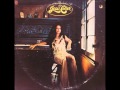
Jessi Colter’s Spotify BioJessi Colter came to prominence as part of the Outlaw Country movement of the 1970s, being the only woman featured on the genre-defining compilation Wanted! The Outlaws, and has continued to release records that embody the spirit of the rebellious attitude and sound. Like many of her maverick compatriots, including her husband Waylon Jennings and Willie Nelson, Colter paid her dues for the better part of a decade before refashioning herself as an outsider early in the '70s. "I'm Not Lisa" became her breakout single in 1975, topping not only Billboard's Country charts but reaching number four on the Hot 100. A handful of other hits, including "What's Happened to Blue Eyes" and "It's Morning (And I Still Love You)," followed in the mid-'70s before she slowly receded from the spotlight in the '80s after she and Waylon had a hit with her slow-burning ballad "Storms Never Last." After years of relative silence, Colter re-emerged in 2006 with Out of the Ashes, an album produced by Don Was.… Over the next two decades, she recorded occasionally, releasing such distinctive projects as the Lenny Kaye-produced The Psalms and Edge of Forever, a 2023 record helmed by Margo Price and mixed by Colter's son, Shooter Jennings.
Prior to adopting the name Jessi Colter -- a salute to her ancestor Jess Colter, a compatriot of famed outlaws Frank and Jesse James -- she performed under her birthname Mirriam Johnson. Born on May 25, 1943, in Phoenix, Arizona, she left her Pentecostal household when she was a teenager to sing with Duane Eddy, the king of twang of guitar; she met Eddy through her sister Sharon. Johnson and Eddy married in 1961 -- the year after he had his last Top Ten Billboard hit, as well as the year she released her first single, "Lonesome Road" -- then spent the next few years touring, eventually settling in Los Angeles.
Working under the name Mirriam Eddy, she spent the late '60s as a professional songwriter, continuing on this track after divorcing Duane Eddy in 1968; she placed songs on records by Nancy Sinatra, Don Gibson, and Dottie West. Returning to Phoenix after the divorce, she met Waylon Jennings, who swiftly fell for her. Inviting her to record a duet, he also set her on a path to a deal with RCA Victor. The pair married on October 27, 1969, and she assumed the name Jessi Colter.
Alongside Chet Atkins, Jennings produced A Country Star Is Born, the 1970 album that was Colter's one and only album for RCA. After it failed to attract attention, Colter and Jennings released a pair of duets -- covers of "Suspicious Minds" and "Under Your Spell Again" -- as Waylon & Jessi. The first part of the decade found Jennings laboring to free himself from the machinations of Nashville, accomplishing this with the 1973 album Honky Tonk Heroes. He started his streak of chart-topping singles with "This Time" in 1974, helping pave the way for Colter to sign to Capitol for 1975's I'm Jessi Colter.
Thanks to "I'm Not Lisa" and "What's Happened to Blue Eyes," I'm Jessi Colter became a hit, reaching four on Billboard's Country Charts. Jessi and Diamond in the Rough, the two records she released in 1976, reached the same position, leading RCA to repackage some of her old music as part of Wanted! The Outlaws, the genre-defining compilation also featuring Jennings, Willie Nelson, and Tompall Glaser that became the first country album to be certified platinum from the RIAA.
Colter remained a noteworthy presence in country in the late '70s but only "I Thought I Heard You Calling My Name" cracked the Country Top 40 between 1976 and 1980. In 1981, she and Jennings released the duet album Leather and Lace, which featured the hits "Storms Never Last" and "Wild Side of Life"/"It Wasn't God Who Made Honky Tonk Angels," but that was her final flourish of chart success; she left Capitol after her 1981 album Ridin' Shotgun. After releasing the Chips Moman-produced album Rock and Roll Lullaby on Triad in 1984, she stopped making new music.
Colter spent the remainder of the '80s tending to Jennings, helping him recover from addiction and subsequent illness. By the early '90s, she'd begun directing her energies toward performing children's music, and starred in the home video Jessi Colter Sings Just for Kids: Songs from Around the World, which featured a guest appearance by Jennings, who recited some of his poetry. She also appeared on his 2000 live album Never Say Die, which was the last record he released before his death in 2002.
Capitol released the An Outlaw...A Lady: The Very Best of Jessi Colter anthology in 2003. It was followed by Out of the Ashes on the Shout! Factory label in 2006. Over the next two years, Colter and guitarist Lenny Kaye recorded improvisational melodies for The Psalms. During the next decade, Kaye worked on finishing the album by adding additional instrumentation. The Psalms was released in March 2017; that same year, she published her autobiography An Outlaw and a Lady: A Memoir of Music, Life with Waylon, and the Faith That Brought Me Home.
Colter returned in 2023 with Edge of Forever, an album produced by her disciple Margo Price and mixed by her son Shooter Jennings. ~ Stephen Thomas Erlewine, Rovi
Viberate is a music analytics platform built for A&Rs, artist managers, labels, booking agents, marketers, and artists.
It helps music professionals track artist growth, analyze audience data, monitor playlist activity, compare artists, follow song performance, and identify opportunities across the music market.
Public artist pages provide a free preview of selected artist data. Paid plans provide access to deeper analytics, historical data, charts, comparisons, playlist tools, exports, alerts, reports, and additional professional features.
Yes. Public Viberate artist pages provide selected artist analytics and music data for free.
Viberate also offers a 7-day free trial of the full platform. A credit card is required to start the trial. The trial includes access to the complete product so users can test deeper artist analytics, historical views, playlist insights, comparisons, charts, exports, alerts, and reporting features before choosing a paid plan.
Viberate provides artist analytics across streaming, playlists, social media, video, radio airplay, songs, and audience markets.
Users can analyze Spotify performance, Spotify and Apple Music playlists, YouTube activity, TikTok and Instagram growth, radio spins, song performance, audience locations, demographics, rankings, and overall artist momentum.
Artist profiles also connect to music charts, similar artists, and comparison tools, helping users benchmark performance and evaluate artists in context.
Viberate updates key artist and track data daily.
For followed artists and tracks, selected data is refreshed multiple times per day. This helps teams monitor playlist changes, streaming movement, audience growth, releases, and campaign performance with more current data.
Update frequency can vary depending on the metric and data source.
Yes. Viberate lets users compare up to five artists side by side across streaming, social media, audience, and engagement metrics.
Users can compare fanbase growth, audience demographics, locations, Spotify performance, social metrics, and other artist data over selected time periods.
Artist comparison can be used for A&R scouting, benchmarking, booking decisions, campaign planning, and evaluating artists with similar audiences or market positions.