Jerry's Kids

Punk
Hardcore Punk
 Viberate Rank: 237572
 Viberate Rank: 237572
 Monthly ListenersFollowers
 Subscribers
 Followers
 Followers
 FansTop Spotify Songs
| Track | 7-Day Streams | |
|---|---|---|
1 | 2.25K | |
2 | 842 | |
3 | 500 | |
4 | 465 | |
5 | 413 |
Top YouTube VideosMonthly ListenersFeatured in Playlists| Playlist | Followers | |
|---|---|---|
1 |  Hardcore Punk Pure Noise Records | 77.03K |
2 |  80's Hardcore Punk Antonio Leal Filho | 20.65K |
3 | Hardcore Punk - Actual real shit Christina Pap | 15.65K |
4 |  Punk Rock Radio Nick Worthington | 4.83K |
5 |  SEKKDS 10K x 10K SEKKDS | 4.02K |
Audience| City | Monthly Listeners | |
|---|---|---|
1 | | 272 |
2 | | 129 |
3 | | 114 |
4 | | 111 |
5 | | 81 |
See full performance history, audience data, playlist activity, rankings, comparisons, and more in Viberate music analytics. Start with a free trial, then continue with a paid plan.
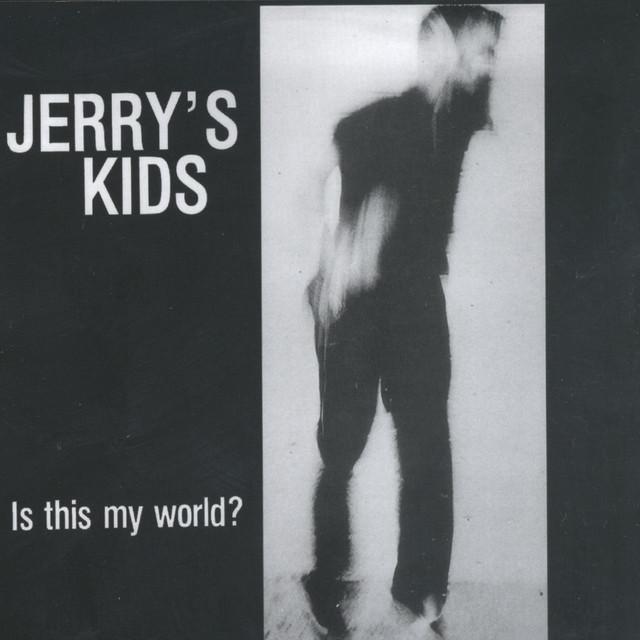
Jerry's Kids’ Spotify BioBoston hardcore/thrash metallists Jerry's Kids (named after a long-running fund-raising organization that comedian Jerry Lewis formed for children with cerebral palsy) formed originally in 1981, rising out of a local scene that included such bands as SS Decontrol, the F.U.'s, Freeze, Negative FX, and Gang Green (the latter of which would often swap members with Jerry's Kids off and on). Jerry's Kids caught their first break in 1982, when they were featured on a compilation of local talent (This Is Boston, Not L.A.), which created a buzz for the band beyond just Boston. 1983 saw the release of their debut album for X-Claim Records, Is This My World. The group spilt from the label shortly thereafter, leading to the album being shortly out of print, before the Taang! label reissued it. 1989 saw the release of their second and final release, Kill Kill Kill, before splitting up. Although there were plenty of switches in the Jerry's Kids lineup, the best-known included members Rick Jones on… vocals and bass, Rockin' Bob Cenci on lead guitar, Dave Aronson on rhythm guitar, and Jack Clark on drums. ~ Greg Prato, Rovi
Viberate is a music analytics platform built for A&Rs, artist managers, labels, booking agents, marketers, and artists.
It helps music professionals track artist growth, analyze audience data, monitor playlist activity, compare artists, follow song performance, and identify opportunities across the music market.
Public artist pages provide a free preview of selected artist data. Paid plans provide access to deeper analytics, historical data, charts, comparisons, playlist tools, exports, alerts, reports, and additional professional features.
Yes. Public Viberate artist pages provide selected artist analytics and music data for free.
Viberate also offers a 7-day free trial of the full platform. A credit card is required to start the trial. The trial includes access to the complete product so users can test deeper artist analytics, historical views, playlist insights, comparisons, charts, exports, alerts, and reporting features before choosing a paid plan.
Viberate provides artist analytics across streaming, playlists, social media, video, radio airplay, songs, and audience markets.
Users can analyze Spotify performance, Spotify and Apple Music playlists, YouTube activity, TikTok and Instagram growth, radio spins, song performance, audience locations, demographics, rankings, and overall artist momentum.
Artist profiles also connect to music charts, similar artists, and comparison tools, helping users benchmark performance and evaluate artists in context.
Viberate updates key artist and track data daily.
For followed artists and tracks, selected data is refreshed multiple times per day. This helps teams monitor playlist changes, streaming movement, audience growth, releases, and campaign performance with more current data.
Update frequency can vary depending on the metric and data source.
Yes. Viberate lets users compare up to five artists side by side across streaming, social media, audience, and engagement metrics.
Users can compare fanbase growth, audience demographics, locations, Spotify performance, social metrics, and other artist data over selected time periods.
Artist comparison can be used for A&R scouting, benchmarking, booking decisions, campaign planning, and evaluating artists with similar audiences or market positions.