Jerry Bergonzi

Jazz
Smooth Jazz
 Viberate Rank: 264106
 Viberate Rank: 264106
 Monthly ListenersFollowers
 Subscribers
 Followers
 Followers
 FansTop Spotify Songs
| Track | 7-Day Streams | |
|---|---|---|
1 | 5.37K | |
2 | 3.13K | |
3 | 2.30K | |
4 | 637 | |
5 | 386 |
Top YouTube VideosMonthly ListenersFeatured in Playlists| Playlist | Followers | |
|---|---|---|
1 |  Late Night Jazz Spotify | 2.18M |
2 |  Jazzy Dinner Spotify | 417.94K |
3 |  Saxophone Classics Spotify | 142.16K |
4 |  Dinner Jazz Spotify | 96.77K |
5 |  Real Book - Jazz standards/classics Anders Garbom Bjørklund | 13.79K |
Audience| City | Monthly Listeners | |
|---|---|---|
1 |  | 353 |
2 |  | 298 |
3 |  | 295 |
4 | | 283 |
5 |  | 237 |
See full performance history, audience data, playlist activity, rankings, comparisons, and more in Viberate music analytics. Start with a free trial, then continue with a paid plan.
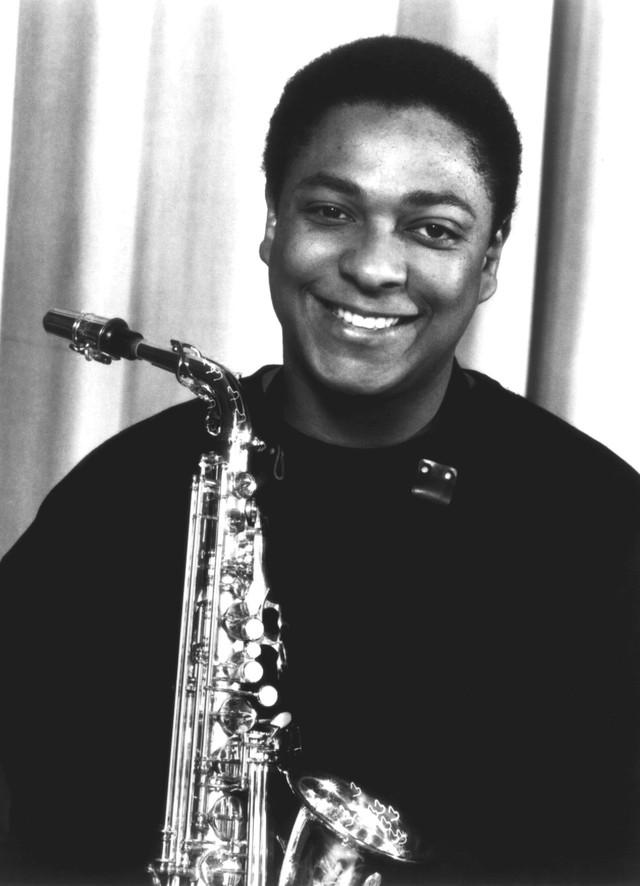
Jerry Bergonzi’s Spotify BioJerry Bergonzi is a tenor saxophonist, composer, bandleader, and author. His meaty tone is influenced by John Coltrane and Sonny Rollins. He is a master of harmony and chromaticism with a profound, innate lyricism and an unshakeable rhythmic sensibility. He has a commanding grasp of the entire jazz tradition, but his style leans toward post-bop and blues. After releasing 1988's Gonz, Bergonzi built a strong underground following in the Boston area. By the time he issued 1991's Lineage (with pianist Mulgrew Miller) jazz critics in the U.S., Italy, and Asia were writing about him. He went on to release more than 70 albums in myriad musical settings on a startling number of labels. These range from 1993's Open Architecture with Daniel Humair and J.F. Jenny-Clark to 1996's Within as a sideman to Guido Manusardi. They also include 2004's speculative duo outing Intuition with pianist Andy LaVerne, 2014's Intersecting Lines, 2020's Nearly Blue, and 2023's Extra Extra.
Born in Boston in 1947,… Bergonzi began studying clarinet when he was eight. Four years later, already under the sway of bebop and emergent hard bop, he switched to alto saxophone; at 16 he switched to tenor saxophone. Along with Coltrane, Bergonzi was inspired early on by Sonny Rollins and Hank Mobley. He attended Lowell University and after graduation played electric bass in local bands behind singers and strippers, saving up enough money to move to New York in 1972.
After struggling there for seven years and gaining some recognition as a member of Two Generations of Brubeck and the Dave Brubeck Quartet (with whom he appeared on several Concord albums between 1979 and 1981), Bergonzi returned to Boston in 1981, where he developed a strong career as both a musician and as an educator.
As a leader, he debuted in 1983 with Con Brio on the Plug label, followed by a series of well-regarded dates like 1986's Uranian Undertow, 1988's Gonz, 1989's Lineage, and 1991's ECT Plus One. In 1991, he delivered the standards-heavy Standard Gonz for Blue Note with pianist Joey Calderazzo, longtime bassist Dave Santoro, and drummer Adam Nussbaum. More well-regarded albums appeared in the '90s like 1995's Vertical Reality, 1997's Just Within, and 1998's Lost in the Shuffle.
Over the next two decades, he stayed active, releasing a steady stream of albums on Double-Time, SteepleChase, and Savant including 2001's A Different Look, 2007's The Tenorist, and 2009's Saxology with Dick Oatts. He then delivered the 2010 trio effort Three for All, and joined pianist Bruce Barth on 2011's Convergence. By Any Other Name followed a year later. He later collaborated with Oatts again for 2014's Intersecting Lines and rejoined Barth for 2015's Rigamaroll. In 2017, he released two albums with pianist Carl Winther: Inner Journey and Dog Star.
His conceptual The Seven Rays arrived in 2019. Though recorded while making Dog Star in 2015, both albums featured longtime pianist Carl Winther, trumpeter Phil Grenadier, and a Danish rhythm section composed of bassist Johnny Åman and drummer Anders Mogensen. Minus Grenadier, this group went on to back the saxophonist as the Modern Jazz Trio. The album's themes were spiritual, reflecting on teachings drawn from Hinduism, Buddhism, Catholicism, new age philosophy and more. In 2020, Bergonzi issued Nearly Blue, a standards set performed by a jazz organ trio with Renato Chicco on the Hammond B-3 and drummer Andrea Michelutti.
The saxophonist issued four albums in 2021, though not all of them were recorded that year or released physically. Straight Gonz appeared in June, Take Your Pick in August, Now and Then in October, and Let It Happen in November. While Bergonzi focused on live work in 2022, he and MJT were also active in the studio. 2023 saw the release of the digital releases Transformation in May and Presence in October, with Extra, Extra appearing on Savant in November. ~ Scott Yanow & Thom Jurek, Rovi
Viberate is a music analytics platform built for A&Rs, artist managers, labels, booking agents, marketers, and artists.
It helps music professionals track artist growth, analyze audience data, monitor playlist activity, compare artists, follow song performance, and identify opportunities across the music market.
Public artist pages provide a free preview of selected artist data. Paid plans provide access to deeper analytics, historical data, charts, comparisons, playlist tools, exports, alerts, reports, and additional professional features.
Yes. Public Viberate artist pages provide selected artist analytics and music data for free.
Viberate also offers a 7-day free trial of the full platform. A credit card is required to start the trial. The trial includes access to the complete product so users can test deeper artist analytics, historical views, playlist insights, comparisons, charts, exports, alerts, and reporting features before choosing a paid plan.
Viberate provides artist analytics across streaming, playlists, social media, video, radio airplay, songs, and audience markets.
Users can analyze Spotify performance, Spotify and Apple Music playlists, YouTube activity, TikTok and Instagram growth, radio spins, song performance, audience locations, demographics, rankings, and overall artist momentum.
Artist profiles also connect to music charts, similar artists, and comparison tools, helping users benchmark performance and evaluate artists in context.
Viberate updates key artist and track data daily.
For followed artists and tracks, selected data is refreshed multiple times per day. This helps teams monitor playlist changes, streaming movement, audience growth, releases, and campaign performance with more current data.
Update frequency can vary depending on the metric and data source.
Yes. Viberate lets users compare up to five artists side by side across streaming, social media, audience, and engagement metrics.
Users can compare fanbase growth, audience demographics, locations, Spotify performance, social metrics, and other artist data over selected time periods.
Artist comparison can be used for A&R scouting, benchmarking, booking decisions, campaign planning, and evaluating artists with similar audiences or market positions.