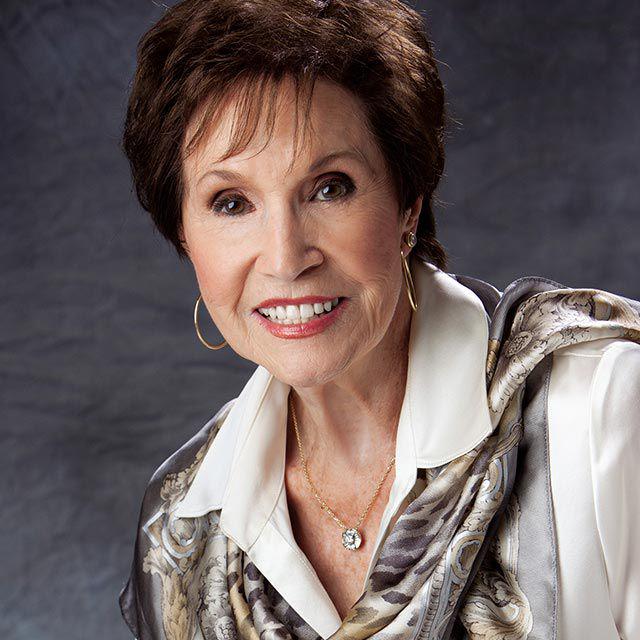
Jeannie Seely

Country
Contemporary Country
 Viberate Rank: 107725
 Viberate Rank: 107725
 Monthly ListenersFollowers
 Subscribers
 Followers
 Followers
 FansTop Spotify Songs
| Track | 7-Day Streams | |
|---|---|---|
1 | 5.65K | |
2 | 3.75K | |
3 | 2.02K | |
4 | 1.35K | |
5 | 707 |
Top YouTube Videos| Video | 7-Day Views | |
|---|---|---|
1 | 19.76K | |
2 | 14.47K | |
3 | 5.00K | |
4 | 2.91K | |
5 | 1.71K |
Monthly ListenersFeatured in Playlists| Playlist | Followers | |
|---|---|---|
1 |  60s Country Spotify | 388.01K |
2 |  Legendary Women of Country Spotify | 309.56K |
3 |  Classic Country Filtr Legacy Sweden | 135.79K |
4 |  God & Country Music Braden Smith | 15.50K |
5 |  Smittys Country Gold Smitty | 8.17K |
Audience| City | Monthly Listeners | |
|---|---|---|
1 |  | 633 |
2 | | 570 |
3 | | 537 |
4 | | 377 |
5 |  | 297 |
See full performance history, audience data, playlist activity, rankings, comparisons, and more in Viberate music analytics. Start with a free trial, then continue with a paid plan.
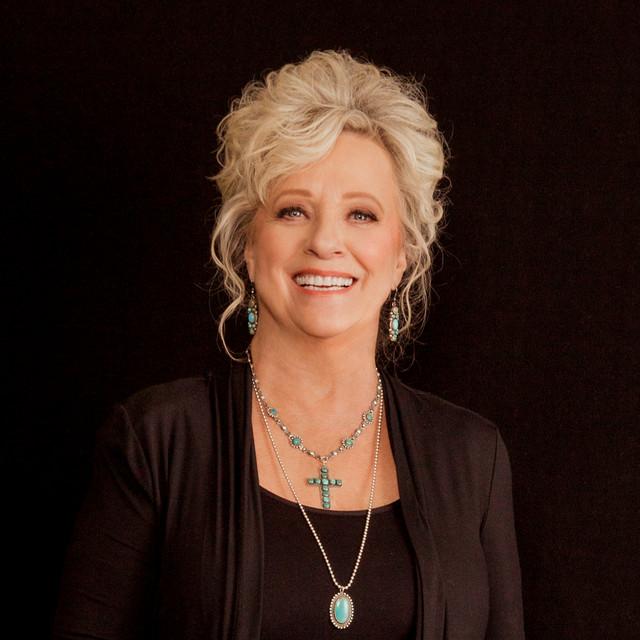
Jeannie Seely’s Spotify BioArriving in 1966 as part of a wave of modern country women country singers that also included Tammy Wynette and Loretta Lynne, Jeannie Seely had a blockbuster right out of the gate with "Don't Touch Me." Peaking at number two on Billboard's Country chart, the stately "Don't Touch Me" established Seely's soulful, yearning style, helping her earn a Grammy for Country Female Vocal. Over the next seven years, she regularly appeared in Billboard's Top 40, cracking the Top Ten in 1970 with her Jack Greene duet "Wish I Didn't Have to Miss You" and with 1973's "Can I Sleep in Your Arms?" Seely's time as a hitmaker had concluded by the dawn of the '80s yet she spent the ensuing decades performing regularly, releasing a new record, such as 2017's Written in Song, on occasion.
Born in Titusville, Pennsylvania, on July 6, 1940, Jeannie Seely was drawn to music at an early age. After singing at local dances, talent shows, and on the radio, Seely decided to pursue music professionally after… graduating high school. Moving to Los Angeles in 1961, she worked as a secretary at Imperial Records, becoming a professional songwriter in her spare time and earning a promotion to professional songwriter. Her first break arrived in 1964, when Irma Thomas took "Anyone Who Knows What Love Is (Will Understand)" -- a song she co-wrote with Randy Newman, as well as Judith Arbuckle and Pat Sheeran -- into Billboard's R&B Top 40; on its flipside was "Time Is on My Side," a song the Rolling Stones would soon turn into a standard.
Signing with Challenge Records, Seely released a pair of singles for the label in 1965 -- "What Am I Doing in Your World" and "Bring It on Back" -- but her primary success came as a songwriter. Country singers especially were drawn to her material, leading Seely to move to Nashville later in 1965. Aligning herself with Hank Cochran, Seely received a big break when she was hired to step into the vacancy left by Norma Jean, Porter Wagoner's partner on television and stage. Shortly afterward, she signed with Monument Records.
"Don't Touch Me," a song written by Hank Cochran, appeared in March 1966 and became a runaway hit, climbing to two on Billboard's Country chart while also scraping the bottom of the Hot 100. It'd win the Grammy for Best Country Vocal Performance and help Seely become a member of the Grand Ole Opry in 1967; she was the first singer to wear a mini-skirt on the Opry stage. By that point, she had racked up two additional Country Top 20 hits in "It's Only Love" and "A Wanderin' Man." Early in 1968, she once again reached the Top Ten thanks to "I'll Love You More (Than You Need)."
Seely's busy solo career led her to part ways with Wagoner -- he'd replace her with Dolly Parton -- and she left Monument for Decca in 1969, where she collaborated with producer Owen Bradley. "Wish I Didn't Have to Miss You," her first big hit for the label, was a duet with Jack Greene that reached number two early in 1970. Seely and Greene reteamed a few times during the early '70s, reaching the charts in 1972 with "Much Oblige" and "What in the World Has Gone Wrong with Our Love," singles which punctuated individual hits by Seely. Additionally, Seely continued to work as a songwriter; Faron Young took her "Leavin' and Sayin' Goodbye" to number one in 1972.
In 1973, Seely signed with MCA. "Can I Sleep in Your Arms," her first single for the label, was her last Top Ten hit, peaking at six. "Lucky Numbers" went to 11 early in 1974; later that year, "He Can Be Mine" became her last Top 40 hit on the Billboard Country charts. Seely released a pair of singles for Columbia between 1977 and 1978 but a serious car crash in June of 1977 led to a downturn in her career. Willie Nelson had her sing on the soundtrack to his 1980 film Honeysuckle Rose, then she re-teamed with Jack Greene in 1982 to re-record their old hits. By the mid-'80s, Seely was concentrating on performances in Nashville -- she appeared regularly as a host at the Grand Ole Opry and played at her short-lived nightclub Jeannie Seely's Country Club -- which morphed into regular TV appearances, particularly on the Nashville Network.
Seely continued to balance the Opry and television throughout the '90s, dabbling in some acting work as well as an occasional stop in the recording studio. She released an eponymous independent album in 1990, then her first holiday set, Number One Christmas, in 1996. The covers album Been There…Sung That! arrived in 1999, followed by Life's Highway in 2003. Another covers album, Vintage Country: Old But Treasured, appeared in 2011, with Written in Song -- a collection of songs she wrote for other artists -- following in 2017. The 2020 album An American Classic combined re-recordings of her hits with covers of songs from the likes of Sammy Cahn, Roger Miller, and Paul McCartney. ~ Stephen Thomas Erlewine, Rovi
Viberate is a music analytics platform built for A&Rs, artist managers, labels, booking agents, marketers, and artists.
It helps music professionals track artist growth, analyze audience data, monitor playlist activity, compare artists, follow song performance, and identify opportunities across the music market.
Public artist pages provide a free preview of selected artist data. Paid plans provide access to deeper analytics, historical data, charts, comparisons, playlist tools, exports, alerts, reports, and additional professional features.
Yes. Public Viberate artist pages provide selected artist analytics and music data for free.
Viberate also offers a 7-day free trial of the full platform. A credit card is required to start the trial. The trial includes access to the complete product so users can test deeper artist analytics, historical views, playlist insights, comparisons, charts, exports, alerts, and reporting features before choosing a paid plan.
Viberate provides artist analytics across streaming, playlists, social media, video, radio airplay, songs, and audience markets.
Users can analyze Spotify performance, Spotify and Apple Music playlists, YouTube activity, TikTok and Instagram growth, radio spins, song performance, audience locations, demographics, rankings, and overall artist momentum.
Artist profiles also connect to music charts, similar artists, and comparison tools, helping users benchmark performance and evaluate artists in context.
Viberate updates key artist and track data daily.
For followed artists and tracks, selected data is refreshed multiple times per day. This helps teams monitor playlist changes, streaming movement, audience growth, releases, and campaign performance with more current data.
Update frequency can vary depending on the metric and data source.
Yes. Viberate lets users compare up to five artists side by side across streaming, social media, audience, and engagement metrics.
Users can compare fanbase growth, audience demographics, locations, Spotify performance, social metrics, and other artist data over selected time periods.
Artist comparison can be used for A&R scouting, benchmarking, booking decisions, campaign planning, and evaluating artists with similar audiences or market positions.