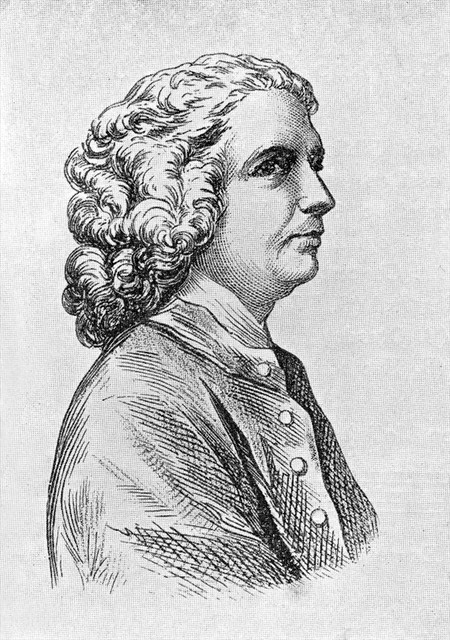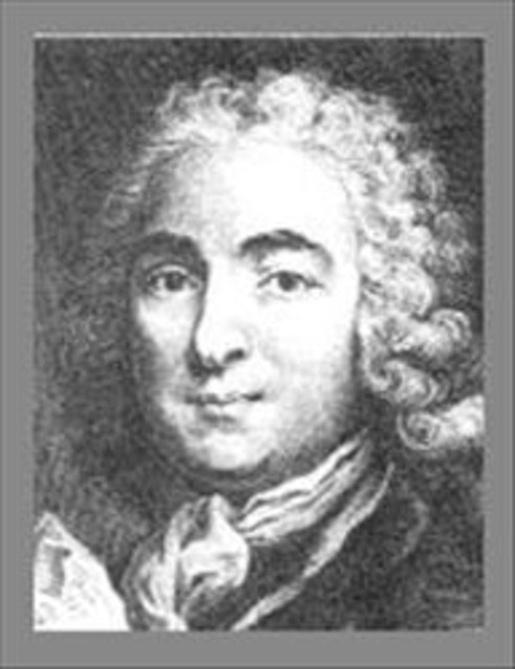
Jean-Marie Leclair

Classical
Classical Crossover
 Viberate Rank: 201619
 Viberate Rank: 201619
 Monthly ListenersFollowers
 Subscribers
 Followers
 Followers
 FansTop Spotify SongsTop YouTube VideosMonthly ListenersFeatured in Playlists
| Playlist | Followers | |
|---|---|---|
1 |  New Classical Spotify | 760.91K |
2 |  Feel Good Classical Spotify | 283.10K |
3 | Baroque For Thinking & Study redzeno52 | 41.78K |
4 | MUSICA BARROCA para concentrarse Eva Represa | 23.46K |
5 |  FIP Radio (en live) Matthou | 13.27K |
Audience| City | Monthly Listeners | |
|---|---|---|
1 |  | 662 |
2 |  | 588 |
3 |  | 450 |
4 |  | 449 |
5 |  | 447 |
See full performance history, audience data, playlist activity, rankings, comparisons, and more in Viberate music analytics. Start with a free trial, then continue with a paid plan.
Jean-Marie Leclair’s Spotify BioThe French violinist and composer Jean-Marie Leclair (often referred to as "the elder" to distinguish him from a younger brother who went by the same name) is remembered for an effective synthesis of his own Parisian musical heritage with the Italian sonata style brought into vogue by Corelli.
Born in 1697 to a French lacemaker and cellist, Leclair was considered a master of both the violin and his father's lacemaking trade by the time he reached adulthood. His skill as a dancer earned him a position with the Lyons Opera (1716 or perhaps a little earlier), and in the next few years it is probable that he either lived in or was a frequent visitor to Paris (an assumption scholars base on a 1721 Parisian musical publication which included ten of Leclair's violin sonatas). By 1723 Leclair had convinced Joseph Bonnier, one of France's wealthiest aristocrats, to publish his Opus 1 collection of violin sonatas, which were received with great admiration by the Parisian musical establishment.
Aro…und 1726 Leclair found his way to Turin to study with violinist-composer G.B. Somis, as well as to compose ballet interludes (now lost) for opera productions at the Teatro Regio Ducale. A second opus of violin sonatas was published in 1728, and during that same year Leclair made his debut as a violinist at the Concert Spirituel. Performances of his own music in London, Kassel (where Leclair engaged in a musical "duel" with famed Italian violinist Pietro Locatelli) and Paris earned Leclair a reputation as one of the leading figures of the new French school of violinist-composers. Formal recognition came in 1733 with an appointment to the musical court of Louis XV, to whom Leclair dedicated his third opus of violin sonatas as a display of gratitude.
Leclair divided his time between a number of court appointments for the remaining decades of his life, including positions at The Hague, at the court of Orange in the Netherlands, and in the service of the Duke of Gramont (a former pupil of the composer). The official investigation of Leclair's suspicious death in 1767 incriminated both his nephew and his second wife (the couple had lived in separate households since 1758), but neither was ever formally charged with his murder.
Leclair took the Italian sonata da chiesa and the sonata da camera and infused them with a stylistic elegance derived largely from the ballet music of Jean-Baptiste Lully. Fittingly, he composed almost exclusively for the violin (he did compose one opera in 1746, but the work never entered the Parisian repertory). His significance as a teacher of the violin, however, is perhaps greater than his place in the annals of composition: with a string of pupils including notable French violinists L'abbé le fils, Jean-Josephe Rudolphe, and Pierre Gaviniès, Leclair can truly be called the father of the modern French violin school.
Viberate is a music analytics platform built for A&Rs, artist managers, labels, booking agents, marketers, and artists.
It helps music professionals track artist growth, analyze audience data, monitor playlist activity, compare artists, follow song performance, and identify opportunities across the music market.
Public artist pages provide a free preview of selected artist data. Paid plans provide access to deeper analytics, historical data, charts, comparisons, playlist tools, exports, alerts, reports, and additional professional features.
Yes. Public Viberate artist pages provide selected artist analytics and music data for free.
Viberate also offers a 7-day free trial of the full platform. A credit card is required to start the trial. The trial includes access to the complete product so users can test deeper artist analytics, historical views, playlist insights, comparisons, charts, exports, alerts, and reporting features before choosing a paid plan.
Viberate provides artist analytics across streaming, playlists, social media, video, radio airplay, songs, and audience markets.
Users can analyze Spotify performance, Spotify and Apple Music playlists, YouTube activity, TikTok and Instagram growth, radio spins, song performance, audience locations, demographics, rankings, and overall artist momentum.
Artist profiles also connect to music charts, similar artists, and comparison tools, helping users benchmark performance and evaluate artists in context.
Viberate updates key artist and track data daily.
For followed artists and tracks, selected data is refreshed multiple times per day. This helps teams monitor playlist changes, streaming movement, audience growth, releases, and campaign performance with more current data.
Update frequency can vary depending on the metric and data source.
Yes. Viberate lets users compare up to five artists side by side across streaming, social media, audience, and engagement metrics.
Users can compare fanbase growth, audience demographics, locations, Spotify performance, social metrics, and other artist data over selected time periods.
Artist comparison can be used for A&R scouting, benchmarking, booking decisions, campaign planning, and evaluating artists with similar audiences or market positions.