Jason Kahn

Electronic
Other Electronic Music
Drone
 Viberate Rank: 754738
 Viberate Rank: 754738
 Monthly ListenersFollowers
 Subscribers
 Followers
 Followers
 FansTop YouTube VideosMonthly ListenersFeatured in Playlists
| Playlist | Followers | |
|---|---|---|
1 |  Japanese Ambient/New Age/Kankyo Ongaku (環境音楽) tstomc | 9.26K |
2 |  The Sound of Lowercase The Sounds of Spotify | 2.67K |
3 |  Atrax morgue Opi(h)um | 2.51K |
4 | japanese ambient mariannatyler | 1.66K |
5 |  The Sound of Glitch The Sounds of Spotify | 1.25K |
Audience| City | Monthly Listeners | |
|---|---|---|
1 |  | 6 |
2 |  | 3 |
3 |  | 3 |
4 |  | 3 |
5 | | 3 |
See full performance history, audience data, playlist activity, rankings, comparisons, and more in Viberate music analytics. Start with a free trial, then continue with a paid plan.
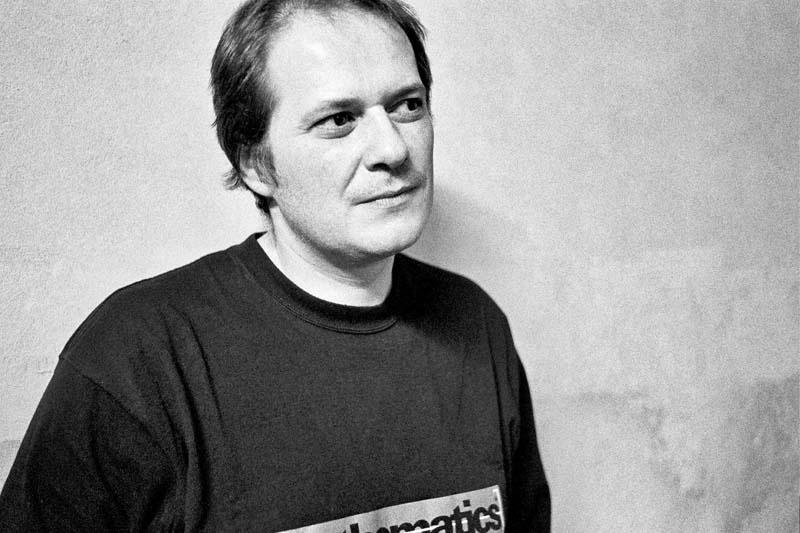
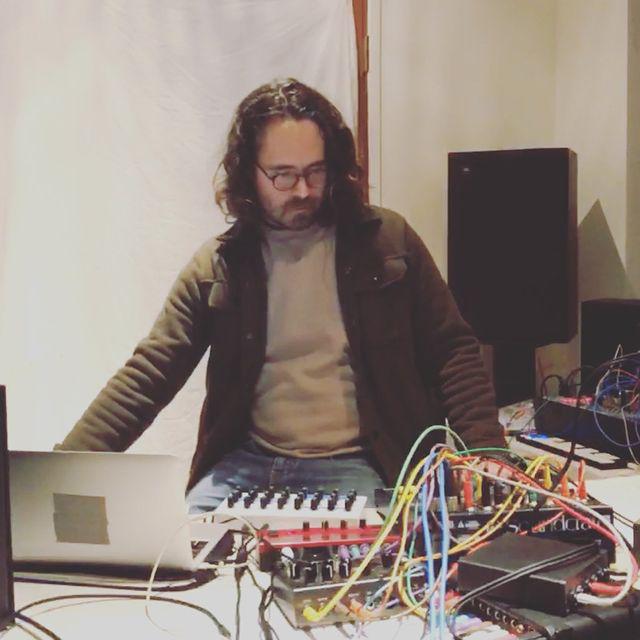
Jason Kahn’s Spotify BioJason Kahn began as a drummer in Los Angeles-based alternative rock and avant-rock bands in the mid-'80s. When he relocated to Berlin in 1990, he turned resolutely toward free improvisation and later to the micro-sound scene, incorporating electronics to his percussion work. He spent the 1990s between Germany and Japan, playing in Arnold Dreyblatt's Orchestra of Excited Strings; with Toshimaru Nakamura as the duo Repeat; and collaborating on-stage and on record with improvisers like Günter Müller, Dieb13, Otomo Yoshihide, Evan Parker, Sainkho Namchylak, and Taku Sugimoto.
Born in New York City in 1960, Kahn grew up in Los Angeles, surrounded by the Californian music of the '60s. Punk rock in the mid-'70s gave him the impetus to become a musician. After college studies in African history and music, he went to the University of London for a year and began to play drums. Back in L.A., he studied with session drummer Billy Moore.
His interests included jazz and improvisation (hearing Ed… Blackwell drum on Eric Dolphy's album Live at the Five Spot was a revelation), but for a long time he played with rock bands. The most important was the Universal Congress Of, with whom he recorded three albums and toured extensively in the U.S. and Europe. It is after such a tour, in February 1990, that he decided to quit and move to East Berlin, to experience the exhilaration of the city shortly after the end of the Communist regime. There he hooked up with the free improv crowd, performing with Dietmar Diesner, Johannes Bauer, and Ernst-Ludwig Petrowsky, while absorbing the burgeoning techno scene.
A friend put him in contact with Dreyblatt, and for five years Kahn participated in the activities of the Orchestra of Excited Strings. Meanwhile, he radically transformed his approach to drums, taking lessons in Arabic and Iranian music, and most importantly stripping down his technique to rediscover the sonic properties of his instrument. The results of his search began to be detectable in the recordings of Cut, his duo with guitarist Birger Löhl; but they really surfaced starting with Temporary Contemporary, the second album by his other duo Repeat, with Toshimaru Nakamura. Started in 1997, this project attracted a little more attention, thanks to Nakamura's unusual use of a "no-input mixing board."
In 1996, Kahn started the small independent label Cut, on which he released albums by Repeat and a string of solo recordings (Drums and Metals and Analogues, 1999; Plurabelle, 2001). By 2001, he had also begun to present sound installations and to perform as a solo laptop computer artist. He also curated Sonique Series, a series of experimental music concerts in Zürich, Switzerland. ~ François Couture, Rovi
Viberate is a music analytics platform built for A&Rs, artist managers, labels, booking agents, marketers, and artists.
It helps music professionals track artist growth, analyze audience data, monitor playlist activity, compare artists, follow song performance, and identify opportunities across the music market.
Public artist pages provide a free preview of selected artist data. Paid plans provide access to deeper analytics, historical data, charts, comparisons, playlist tools, exports, alerts, reports, and additional professional features.
Yes. Public Viberate artist pages provide selected artist analytics and music data for free.
Viberate also offers a 7-day free trial of the full platform. A credit card is required to start the trial. The trial includes access to the complete product so users can test deeper artist analytics, historical views, playlist insights, comparisons, charts, exports, alerts, and reporting features before choosing a paid plan.
Viberate provides artist analytics across streaming, playlists, social media, video, radio airplay, songs, and audience markets.
Users can analyze Spotify performance, Spotify and Apple Music playlists, YouTube activity, TikTok and Instagram growth, radio spins, song performance, audience locations, demographics, rankings, and overall artist momentum.
Artist profiles also connect to music charts, similar artists, and comparison tools, helping users benchmark performance and evaluate artists in context.
Viberate updates key artist and track data daily.
For followed artists and tracks, selected data is refreshed multiple times per day. This helps teams monitor playlist changes, streaming movement, audience growth, releases, and campaign performance with more current data.
Update frequency can vary depending on the metric and data source.
Yes. Viberate lets users compare up to five artists side by side across streaming, social media, audience, and engagement metrics.
Users can compare fanbase growth, audience demographics, locations, Spotify performance, social metrics, and other artist data over selected time periods.
Artist comparison can be used for A&R scouting, benchmarking, booking decisions, campaign planning, and evaluating artists with similar audiences or market positions.