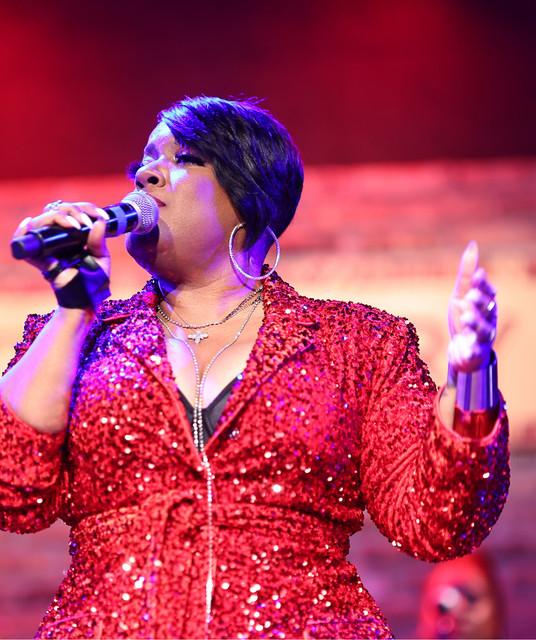
James Fortune

Religious
Christian Music
Gospel
 Viberate Rank: 21364
 Viberate Rank: 21364
 Monthly ListenersFollowers
 Subscribers
 Followers
 Followers
 FansTop Spotify Songs
| Track | 7-Day Streams | |
|---|---|---|
1 | 26.73K | |
2 | 20.45K | |
3 | 17.27K | |
4 | 15.54K | |
5 | 14.61K |
Top YouTube Videos| Video | 7-Day Views | |
|---|---|---|
1 | 14.13K | |
2 | 12.61K | |
3 | 7.70K | |
4 | 7.21K | |
5 | 5.80K |
Monthly ListenersFeatured in Playlists| Playlist | Followers | |
|---|---|---|
1 |  Spread the Gospel Spotify | 346.93K |
2 |  Gospel Hits 2026 SOZO Playlists | 160.05K |
3 | Black Gospel Praise and Worship diywithme772 | 81.46K |
4 | Best Gospel Songs of All Time Meimi | 77.19K |
5 | GOSPEL CLASSICS Patrice Troope | 53.46K |
Audience| City | Monthly Listeners | |
|---|---|---|
1 | | 7.25K |
2 | | 5.75K |
3 | | 5.45K |
4 |  | 5.35K |
5 | | 5.31K |
See full performance history, audience data, playlist activity, rankings, comparisons, and more in Viberate music analytics. Start with a free trial, then continue with a paid plan.
James Fortune’s Spotify BioJames Fortune understands that if you preach redemption in the 21st century, you have to make a production of it, and his albums are a bit like urban gospel/hip-hop/soul revues performed in show biz fashion, complete with Fortune's spoken, sung, and shouted encouragements. Since making his full-length debut with You Survived (2004), he has been one of the most successful recording artists in contemporary gospel. Along with several number one gospel singles, he has a pair of Grammy nominations -- both for Identity (2012). He entered his third decade of activity with Dream Again (Live from Rock City) (2020), My Life (2022), and the 2023 EP Worth It.
Fortune, who was born November 29, 1978, in Richmond, Texas, was raised in the church where his dad was a pastor, and he was playing drums by the age of five. He graduated from Kempner High School in Sugar Land, Texas, and then attended Cal State Northridge, consequently becoming the choir director at Dimension Church in Houston. As much or… more a preacher, choir leader, master of ceremonies, and worship service manager as he is a straight-up singer, Fortune's strength is in understanding how to put gospel and praise songs over to a young 21st century audience. With his featured choir, FIYA (which stands for "Free in Yahweh's Abundance"), he freely incorporates hip-hop arrangements and urban beats into his recordings.
Fortune established himself with a prolific run that included 2004's You Survived, 2007's The Transformation, 2010's Encore, and 2012's Identity and Grace Gift. Identity was nominated for a Grammy in the category of Best Gospel Album, while its hit single "Hold On," featuring Fred Hammond and Monica, was a Best Gospel Song nominee. His first live album, the two-disc Live Through It, appeared early in 2014. By the end of the decade, Fortune issued Dear Future Me and Dream Again, albums that included guest spots from the likes of Tasha Cobbs Leonard, Kierra Sheard, Deborah Carolina, and Lisa Knowles Smith. Fortune continued in 2020 with Dream Again (Live from Rock City), and two years later issued My Life, highlighted by the rousing "Never Let Me Down." Fortune's next project was the seven-song EP, Worth It. Released in 2023, the singer again collaborated with Monica, as well as rapper Waka Flocka Flame and Zacardi Cortez, on a collection of encouraging praise songs to remind his listeners that their struggles are "worth it." ~ TiVo Staff
Viberate is a music analytics platform built for A&Rs, artist managers, labels, booking agents, marketers, and artists.
It helps music professionals track artist growth, analyze audience data, monitor playlist activity, compare artists, follow song performance, and identify opportunities across the music market.
Public artist pages provide a free preview of selected artist data. Paid plans provide access to deeper analytics, historical data, charts, comparisons, playlist tools, exports, alerts, reports, and additional professional features.
Yes. Public Viberate artist pages provide selected artist analytics and music data for free.
Viberate also offers a 7-day free trial of the full platform. A credit card is required to start the trial. The trial includes access to the complete product so users can test deeper artist analytics, historical views, playlist insights, comparisons, charts, exports, alerts, and reporting features before choosing a paid plan.
Viberate provides artist analytics across streaming, playlists, social media, video, radio airplay, songs, and audience markets.
Users can analyze Spotify performance, Spotify and Apple Music playlists, YouTube activity, TikTok and Instagram growth, radio spins, song performance, audience locations, demographics, rankings, and overall artist momentum.
Artist profiles also connect to music charts, similar artists, and comparison tools, helping users benchmark performance and evaluate artists in context.
Viberate updates key artist and track data daily.
For followed artists and tracks, selected data is refreshed multiple times per day. This helps teams monitor playlist changes, streaming movement, audience growth, releases, and campaign performance with more current data.
Update frequency can vary depending on the metric and data source.
Yes. Viberate lets users compare up to five artists side by side across streaming, social media, audience, and engagement metrics.
Users can compare fanbase growth, audience demographics, locations, Spotify performance, social metrics, and other artist data over selected time periods.
Artist comparison can be used for A&R scouting, benchmarking, booking decisions, campaign planning, and evaluating artists with similar audiences or market positions.