Jacques Hotteterre

Classical
Classical Crossover
 Viberate Rank: 695781
 Viberate Rank: 695781
 Monthly ListenersFollowers
 Subscribers
 Followers
 Followers
 FansTop Spotify Songs
| Track | 7-Day Streams | |
|---|---|---|
1 | 145 | |
2 | 37 | |
3 | 32 | |
4 | 23 | |
5 | 20 |
Top YouTube VideosMonthly ListenersFeatured in Playlists| Playlist | Followers | |
|---|---|---|
1 | Flute Solos bakery1 | 5.56K |
2 |  harmonia mundi picks harmonia mundi | 4.66K |
3 |  A Guide to Baroque Outhere Music | 2.80K |
4 | Quiet Places Riley Lee | 2.07K |
5 |  The Classical Archive Warner Classics | 1.98K |
Audience| City | Monthly Listeners | |
|---|---|---|
1 |  | 51 |
2 | | 44 |
3 |  | 32 |
4 |  | 30 |
5 |  | 29 |
See full performance history, audience data, playlist activity, rankings, comparisons, and more in Viberate music analytics. Start with a free trial, then continue with a paid plan.
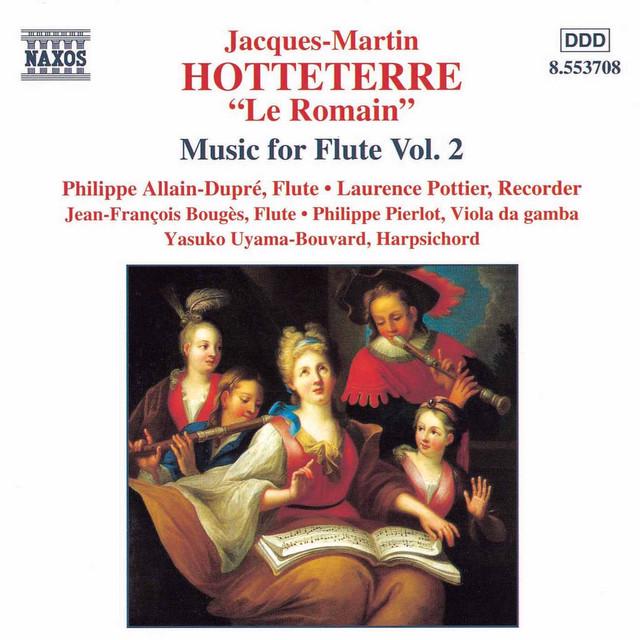
Jacques Hotteterre’s Spotify BioJacques-Martin Hotteterre was a member of a long and distinguished dynasty of Burgundian instrument-makers and performers, several generations of which played at the King's court. He was known as "Le Romain," possibly because, unlike others of his immediate family, he had visited Rome. He was primarily a practicing musician and a dedicated teacher. Little else is known about his life, and even the dates of his birth and death are disputed. Thus Hotteterre might well have joined the legion of anonymous masters had it not been that, in addition to his musical talents, he lived during a period of great artistic and cultural expansion, and was prominent in both the development and playing of woodwind instruments that took place in Europe -- particularly in France -- from the beginning of the eighteenth century.
Hotteterre was also a respected figure in the musical activities of the Versailles court of King Louis XIV where, after succeeding his father as a member of the King's "hautbois et… violons de la Grand Écurie", he played oboe and bass viol and held the title of "Ordinaire de la Musique du Roi." It has been said that his services were more highly rewarded than were the best organists of the time.
Hotteterre's present reputation lies mainly in having written important instructional treatises on the (then newly designed) three-section, single-keyed wooden flute we now call the Baroque flute. His Principes de la Flûte and more extended L'art de Préluder sur la Flûte Traversière.... " (1712) are among the most detailed sources of information on the styles and technique of flute-playing during the French Baroque, and include chapters and fingering charts for the oboe and alto recorder. He also wrote an instructional method for the musette, a small French bagpipe then being adopted for pastoral effect by composers at the Royal Court in Versailles.
Hotteterre's compositions -- principally for transverse flutes, recorders and oboes -- possess all the elegance, invention, and exuberance of the period, with the added advantage that they contain signs and notations showing exactly what would then have been expected of accomplished players, and are, therefore, instructive to present-day students of eighteenth century French woodwind music in matters of interpretation and embellishment.
Viberate is a music analytics platform built for A&Rs, artist managers, labels, booking agents, marketers, and artists.
It helps music professionals track artist growth, analyze audience data, monitor playlist activity, compare artists, follow song performance, and identify opportunities across the music market.
Public artist pages provide a free preview of selected artist data. Paid plans provide access to deeper analytics, historical data, charts, comparisons, playlist tools, exports, alerts, reports, and additional professional features.
Yes. Public Viberate artist pages provide selected artist analytics and music data for free.
Viberate also offers a 7-day free trial of the full platform. A credit card is required to start the trial. The trial includes access to the complete product so users can test deeper artist analytics, historical views, playlist insights, comparisons, charts, exports, alerts, and reporting features before choosing a paid plan.
Viberate provides artist analytics across streaming, playlists, social media, video, radio airplay, songs, and audience markets.
Users can analyze Spotify performance, Spotify and Apple Music playlists, YouTube activity, TikTok and Instagram growth, radio spins, song performance, audience locations, demographics, rankings, and overall artist momentum.
Artist profiles also connect to music charts, similar artists, and comparison tools, helping users benchmark performance and evaluate artists in context.
Viberate updates key artist and track data daily.
For followed artists and tracks, selected data is refreshed multiple times per day. This helps teams monitor playlist changes, streaming movement, audience growth, releases, and campaign performance with more current data.
Update frequency can vary depending on the metric and data source.
Yes. Viberate lets users compare up to five artists side by side across streaming, social media, audience, and engagement metrics.
Users can compare fanbase growth, audience demographics, locations, Spotify performance, social metrics, and other artist data over selected time periods.
Artist comparison can be used for A&R scouting, benchmarking, booking decisions, campaign planning, and evaluating artists with similar audiences or market positions.