Ivan Conti

Jazz
Latin Jazz
 Viberate Rank: 245121
 Viberate Rank: 245121
 Monthly ListenersFollowers
 Subscribers
 Followers
 Followers
 FansTop Spotify Songs
| Track | 7-Day Streams | |
|---|---|---|
1 | 1.70K | |
2 | 1.58K | |
3 | 1.07K | |
4 | 622 | |
5 | 235 |
Top YouTube VideosMonthly ListenersFeatured in Playlists| Playlist | Followers | |
|---|---|---|
1 |  Aphex Twin: [mostly mellow] for Supreme Supreme | 44.15K |
2 |  Antal // Rush Hour Choice antalrushhour | 15.47K |
3 |  Late Night Tales Likes Late Night Tales | 12.99K |
4 |  SOUL PURPOSE RADIO Loyle Carner | 12.84K |
5 |  trovo musica bella così non devi farlo tu cyaodieffe | 9.86K |
Audience| City | Monthly Listeners | |
|---|---|---|
1 | | 439 |
2 |  | 345 |
3 |  | 210 |
4 | | 188 |
5 |  | 188 |
See full performance history, audience data, playlist activity, rankings, comparisons, and more in Viberate music analytics. Start with a free trial, then continue with a paid plan.
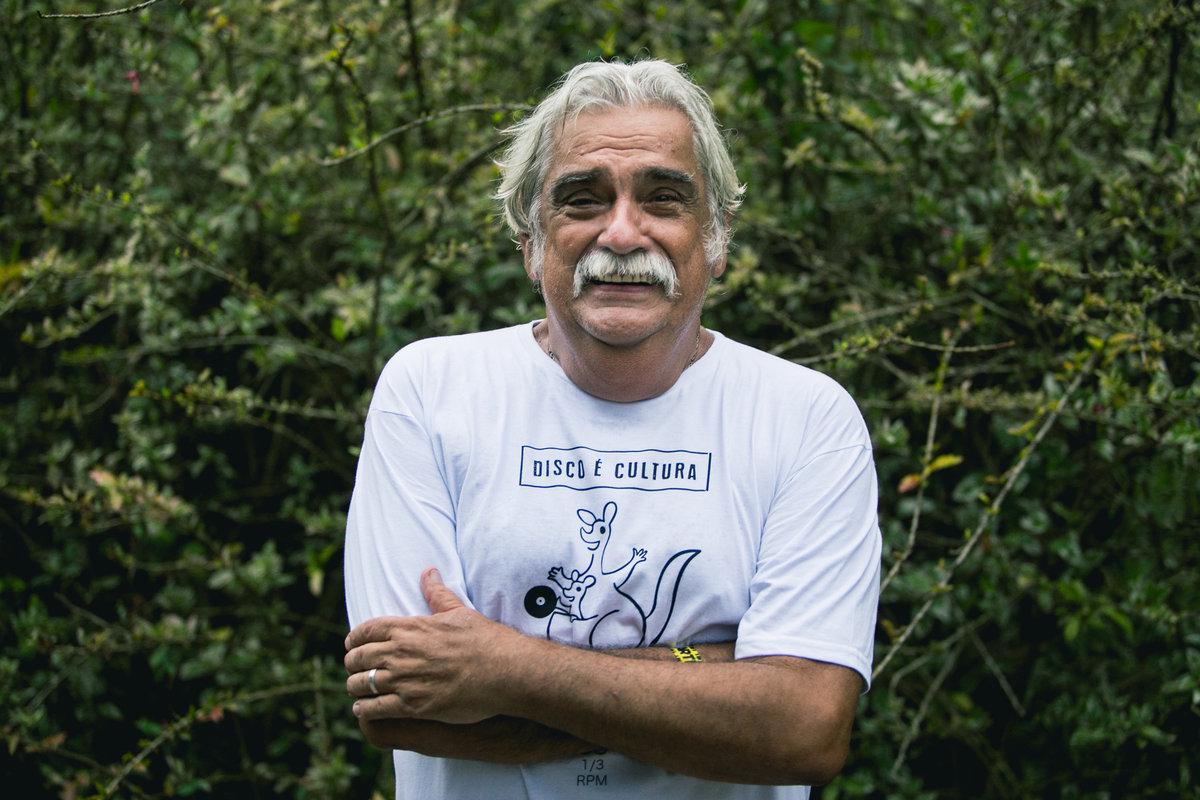
Ivan Conti’s Spotify BioWith a music career that spans more than half a century, drummer, composer, arranger, producer, and multi-instrumentalist Ivan Conti, aka Mamão, was among the most celebrated musicians in Brazil. His nimble, break-driven, hard-swinging style was the rhythmic backbone of jazz-funk fusion trio Azymuth from their inception in 1973. That group, with bassist/composer Alex Malheiros and keyboardist/composer/producer José Roberto Bertrami (until his death in 2012, when he was replaced by Kiko Continentino) worked together as Projeto 3, recording the album O Trio in 1968. Conti was an active studio and concert musician who began working in the fertile fields of bossa nova and samba in the early 1960s with Eumir Deodato, and he recorded prolifically with artists ranging from Roberto Carlos, Erasmo Carlos, Marcos Valle, Edu Lobo, Vinicius de Moraes, and Toquinho to Chico Buarque, Gal Costa, Maria Bethania, Ithamara Koorax, and Rita Lee, to name just a few. He directed and played drums in… numerous orchestras (including Paul Muriat's and the Rio de Janeiro National Orchestra), contributed to movie and television soundtracks, and worked with Madlib (using the moniker Jackson Conti) for 2008's hip-hop/Latin jazz-funk effort Sujinho. He issued a handful of solo albums and 12" singles, beginning with 1984's acclaimed The Human Factor.
Conti was born in the Estancia district of Rio in 1946; his given name was Ivan Miguel Conti Maranhao; "Mamao" was the nickname given him by schoolmates after an incident where he destroyed a papaya tree ("mamoeiro" in Portuguese). He was raised in the Tijuca district, where he first heard flamenco, a music he loved his entire life, as well as samba. In an interview he reflected, "Samba is my roots; jazz was my school because of my father's records; rock was my debut when I listened to Pink Floyd and Led Zeppelin. Samba, jazz, and rock are the three essential genres for any musician." Initially a guitarist (he never stopped playing), Mamão fell in love with drums at a friend’s house before he was 20 and took the instrument seriously enough to pursue it -- truth be told, it was easier to get work as a drummer since there weren't as many around. In the early '60s, Conti began frequenting the Beco das Garrafas (Bottles' Alley) in Copacabana, Rio, where bossa nova, samba, and Brazilian jazz groups were featured nightly. He encountered several important artists like Elis Regina and Sergio Mendes, who both debuted there. The place also held shows by consecrated composers/performers like Johnny Alf, Leny Andrade, Dolores Durán, and Silvinha Telles, among others. As a young amateur, Conti sat in with those artists. Because of his perfect ear, he was able to emulate American jazz drummers such as Gene Krupa, Buddy Rich, and Louie Bellson, and learned from Brazilian players such as Wilson das Neves and his idol, Edgard Nuñes Rocca. He played in a rock group called the Youngsters -- one of the most important supporting groups of the Jovem Guarda ("young guard") -- and in 1968, opened the Canecão, a popular music room in Rio. By then he had five years of experience as a sessionman: he worked with Deodato in 1964 and 1965 and met Bertrami and Malheiros in 1968 at a concert hall. Over a drink, Bertrami suggested that they form a band called Grupo Seleçao. That same year, as Projeto 3, they recorded an album titled O Trio. The following year, as Apolo VI, they contributed two tracks to the television soundtrack for Véu de Noiva (Trilha Sonora Original Da Novela), including the Marcos Valle tune "Azimuth." (The same cut appeared on the composer's Mustang Côr De Sangue that year. The trio's members were all busy individually, but in 1973, they formed Azymuth and began gigging and doing studio work for others. They performed on Marcos Valle's soundtrack for the film O Fabuloso Fittipaldi. They also played on the Sérgio Sampaio classic Eu Quero É Botar Meu Bloco Na Rua and contributed to his 1972 release Som Ambiente. In 1975, Azymuth issued their self-titled debut. The trio established themselves as a hot ticket on the club scene and in concert halls. They signed to the Som Livre label and issued the self-titled debut Azimuth in 1975. Two years later, they released Águia Não Come Mosca for Atlantic in Brazil. The trio played numerous festivals, purveying their exotic fusion of jazz, funk, and progressive samba that they called "Samba Doido" ("Crazy Samba"). In 1979 they signed to Milestone, where they would remain for a decade and establish themselves as one of the most innovative fusion bands ever. Their debut for the label, Light as a Feather, became both a radio and club hit all over the world and netted a hit single with "Jazz Carnival" that peaked at number 19 on the U.K. Singles Chart in January 1980. The Milestone period garnered a host of albums that would not only resonate with fusion and Brazilian music fans, but also dance music aficionados. Later albums like 1981's Telecommunication, 1983's Cascades, and 1984's Rapid Transit, joined Light as a Feather to become so influential that they inspired hip-hop, techno, and house producers to sample them. In 1984, while Azymuth were on a well-deserved break, Conti, ever restless, recorded The Human Factor for Milestone, an album solely comprised of his own compositions; reviewers regarded it as "space age fusion." While Azymuth continued their run of contemporary jazz chart dominance with albums such as Flame, Spectrum, and Tightrope Walker, they also branched out to work with singers in Brazil and elsewhere. One of those collaborations was with American jazz vocalist Mark Murphy for the acclaimed The Music of Ivan Lins. Leaving Milestone after 1988's Crazy Rhythm and 1989's Carioca -- their last charting record in the U.S. -- the band backed German saxophonist Jürgen Seefelder for Rio de Janeiro on ITM, then signed to Intima for a pair of albums and West Wind for 1991's Volta á Turma.
In 1992, Conti issued his sophomore solo release, Batida Diferente, on Maracatu -- it was a funky jazz outing that atypically included reeds, brass, and winds as well as the vocals of Leny Andrade. It reached the jazz charts in Germany and Brazil. In 1996, Azymuth, whose members were either working solo or producing for other artists, signed to the U.K.'s premier Brazilian music label Far Out Recordings. Carnival, their label debut, was met with great fanfare in Europe and Asia, creating demand for the trio to tour the world once more. The band's influence exploded on the independent electronic music and dance music scenes, influencing and working with acts such as Jazzanova, Kruder & Dorfmeister, and St. Germain.
In 1997, Conti released Pulsar for Brazil's CID label. Utilizing a large ensemble that included his Azymuth bandmates, the album was the drummer's exposition of Afro Cuban jazz roots. Between 1996 and 2016, Azymuth issued no less than ten records for Far Out, including samba-jazz-funk club hits Brazilian Soul, Partido Novo, and Aurora. Apart from the band, Conti kept busy. He was on regular call for Brazil's top artists in the studio and on the road. In 2000, Conti produced and played on the classic Africa Brazil for Far Out, a big-band, jazz-funk, and fusion date. Bertrami also appeared on the set. Conti also produced the subsequent 12" of Kenny Dope remixes. He also played on a series of acclaimed recordings by Koorax (Ithamara Koorax Sings the Luiz Bonfá Songbook and Serenade In Blue), Deodato (Skyscrapers), Andreas Vollenweider (Kryptos), Marvio Ciribelli (Nazareth Na Confraria), Valle (Escape), Embalo (A New Concept of Brazilian Music), and Stanley Jordan (State of Nature). In 2005, in the midst of a flurry of Azymuth touring, recording, and reissue activity, Conti met Otis Jackson, Jr. (Madlib) through director Brian Cross' documentary Brasilintime: Batucada com Discos, which sparked a collaboration between the drummers in São Paulo (Conti, Wilson das Neves, João Parahyba, Paul Humphrey, Derf Reklaw, and James Gadson) and hip-hop producers (Madlib, Cut Chemist, J. Rocc, Babu, and Nuts). The pair got on famously. Afterwards, they began sending tapes and tracks back and forth over the internet and meeting whenever both were in Los Angeles. Madlib suggested they cut an album together. 2008's Sujinho, a mixture of covers and original compositions, was billed to Jackson Conti and issued with the promo dictum, "Madlib loves Brasilian (sic) music." Given Madlib's popularity, the recording sold exceptionally well. Between 2009 and Bertrami's death in 2012, Azymuth continued to record and tour, knocking out 2009's celebrated Butterfly. They also worked on Valle & Celso Fonseca's Página Central, Jose Roberto Bertrami & His Modern Sound's album Aventura, and Sabrina Malheiros' debut album, Dreaming. The final Azymuth offering with Bertrami was 2011's Aurora, one of the trio's masterpieces.
After Bertrami's passing, Conti and Malheiros took some time apart before deciding to continue Azymuth. They rehearsed a number of players before settling on keyboardist/arranger/composer/producer Kiko Continentino. The trio took to the road to cement themselves as a band over the next several years before issuing Fenix in 2016. In 2018, Conti played on Sean Khan's and Hermeto Pascoal's Palmares Fantasy, and re-entered the studio himself. He cut 11 rootsy electronic samba and tripped-out jazz, beats, and dance tunes and titled the set Poison Fruit. Released late in 2018, and produced by London's Daniel Maunick (Dokta Venom), the studio sessions included participation from his Azymuth bandmates as well as others. Taken as a whole, the recording's sounds evoked the vibes and textures of house, EDM, and techno. Garnering wildly positive reviews across the globe, the set also included a handful of remixes from forward-thinking percussion-centric producers IG Culture, 22a crew, Max Graef, and Glenn Astro. In 2020, Conti reunited with Azymuth for the album Azymuth JID004, which also featured Ali Shaheed Muhammad of A Tribe Called Quest and Adrian Younge. Ivan Conti's long and busy career came to an end on April 17, 2023, when he died at the age of 76. ~ Alvaro Neder, Rovi
Viberate is a music analytics platform built for A&Rs, artist managers, labels, booking agents, marketers, and artists.
It helps music professionals track artist growth, analyze audience data, monitor playlist activity, compare artists, follow song performance, and identify opportunities across the music market.
Public artist pages provide a free preview of selected artist data. Paid plans provide access to deeper analytics, historical data, charts, comparisons, playlist tools, exports, alerts, reports, and additional professional features.
Yes. Public Viberate artist pages provide selected artist analytics and music data for free.
Viberate also offers a 7-day free trial of the full platform. A credit card is required to start the trial. The trial includes access to the complete product so users can test deeper artist analytics, historical views, playlist insights, comparisons, charts, exports, alerts, and reporting features before choosing a paid plan.
Viberate provides artist analytics across streaming, playlists, social media, video, radio airplay, songs, and audience markets.
Users can analyze Spotify performance, Spotify and Apple Music playlists, YouTube activity, TikTok and Instagram growth, radio spins, song performance, audience locations, demographics, rankings, and overall artist momentum.
Artist profiles also connect to music charts, similar artists, and comparison tools, helping users benchmark performance and evaluate artists in context.
Viberate updates key artist and track data daily.
For followed artists and tracks, selected data is refreshed multiple times per day. This helps teams monitor playlist changes, streaming movement, audience growth, releases, and campaign performance with more current data.
Update frequency can vary depending on the metric and data source.
Yes. Viberate lets users compare up to five artists side by side across streaming, social media, audience, and engagement metrics.
Users can compare fanbase growth, audience demographics, locations, Spotify performance, social metrics, and other artist data over selected time periods.
Artist comparison can be used for A&R scouting, benchmarking, booking decisions, campaign planning, and evaluating artists with similar audiences or market positions.