Instant Funk

R&B
Funk
Disco house
 Viberate Rank: 85922
 Viberate Rank: 85922
 Monthly ListenersFollowers
 Subscribers
 Followers
 Followers
 FansTop Spotify Songs
| Track | 7-Day Streams | |
|---|---|---|
1 | 25.07K | |
2 | 5.56K | |
3 | 4.37K | |
4 | 3.68K | |
5 | 3.17K |
Top YouTube VideosMonthly ListenersFeatured in Playlists| Playlist | Followers | |
|---|---|---|
1 |  Disco Classics 70 & 80 💃🕺 Sebastiaan de Vries | 77.76K |
2 |  Soul Train 70s Disco and Funk djlarras | 69.74K |
3 | Nobby Clarke | 48.81K |
4 | wicks Brennan McDowell | 43.73K |
5 |  Larry Levan at Paradise Garage Honey-K | 29.29K |
Audience| City | Monthly Listeners | |
|---|---|---|
1 |  | 1.93K |
2 | | 1.63K |
3 | | 1.14K |
4 | | 1.13K |
5 | | 978 |
See full performance history, audience data, playlist activity, rankings, comparisons, and more in Viberate music analytics. Start with a free trial, then continue with a paid plan.
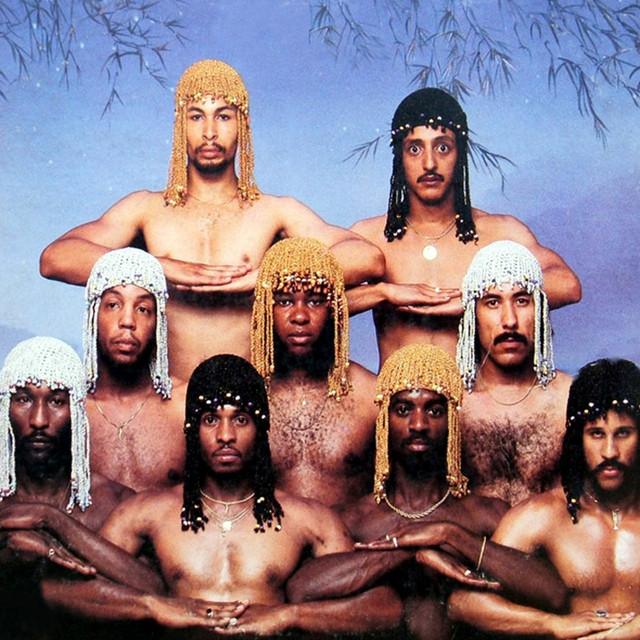
Instant Funk’s Spotify BioInstant Funk burst on the '70s disco scene with the million-selling single "I Got My Mind Made Up (You Can Get It Girl)" and the gold album Instant Funk. The Trenton, NJ, band started out with the core lineup of bassist Raymond Earl, drummer Scotty Miller, and guitarist Kim Miller. It later expanded to include keyboardist Dennis Richardson; lead singer James Carmichael; horn players Larry Davis, Eric Huff, and Johnny Onderlinde; and percussionist Charles Williams. The band can be heard on sides by Evelyn "Champagne" King (her gold single "Shame"), Archie Bell & the Drells ("Let's Groove," "The Soul City Walk," and "Strategy"), South Shore Commission ("Free Man," "A Train Called Freedom"), the O'Jays (" Let Me Make Love to You," "I Swear I Love No One but You"), Lou Rawls ("From Now On," "When You Get Home"), Gabor Szabo ("Keep Smilin'"), and Jean Carn, as well as for their mentor, Bunny Sigler, and his cover of "Love Train," "Keep Smilin'," "Let Me Party With You," "Sweeter Than the… Berry," and "Only You," a duet with Loleatta Holloway.
In the mid-'60s, bassist Raymond Earl met drummer Scotty Miller in grade school and formed the duo the Music Machine. In 1973, Scotty's younger brother, guitarist Kim Miller, joined the duo. After hours and hours of playing together, the trio found that they clicked; they became so intuitively "tuned" into each other that they could anticipate and accent each other's playing. In 1968, they began backing local vocal group the TNJs, appearing at local dances and venues building up a good reputation. Around 1971, the group's manager Jackie Ellis christened the backup band Instant Funk because they could come up with funky grooves instantaneously.
Philly soul artist/producer/songwriter Bunny Sigler was invited by Ellis to see Instant Funk and the TNJs perform. Sometime during the show, Sigler was called on stage to perform. He was impressed that the band knew "Sunshine," a song he co-wrote with Phil Hurtt that was made popular by the O'Jays. They began backing Sigler, the Manhattans, and various other R&B acts. As a staff songwriter/producer at Gamble & Huff's Philadelphia International Records, Sigler began using Instant Funk on his sessions along with the TNJs. At those sessions and later, Sigler would record the basic track with Earl and the Miller brothers. Sigler, a brimming fount of ideas, would often stop the band midsong to implement one of his flashes of brillance. They backed Sigler on three of his PIR albums: That's How Long I'll Be Loving You, Keep Smilin', and My Music. Some tracks from those LPs are on Sony/Legacy's The Best of Bunny Sigler: Sweeter Than the Berry and the 1998 Sony CD Bunny Sigler. Instant Funk released a single on PIR's TSOP imprint, "Float Like a Butterfly," and an album, Get Down With the Philly Jump, issued in November 1976, whose title track and "It Aint Reggae (But It Sho Is Funky)" were popular in disco clubs.
Instant Funk can also be heard on sides by the O'Jays ("Let Me Make Love to You," "You've Got Your Hooks in Me," "Once Is Not Enough," and "I Swear I Love No One but You" from Message in Our Music; "Strokety Stroke" from So Full of Love), Archie Bell & the Drells ("Let's Groove," "Strategy," "The Soul City Walk," and "I Could Dance All Night" on Tightening It Up:The Best of Archie Bell & the Drells), the Three Degrees ("Take Good Care of Yourself"), Jean Carn ("I'm in Love Once Again" and "You Are All I Need" from Jean Carn), Dexter Wansel ("Life on Mars," the best recording that gives an idea of how the band sounded live, and "You Can Be What You Wanna Be" from The Very Best of Dexter Wansel), and M.F.S.B. ("Let's Go Disco" from Universal Love). The band can be heard on studio bandmate T. Life's That's Life album and LPs by his protégée, Evelyn "Champagne" King (Smooth Talk and Music Box).
In 1977, M.F.S.B. guitarist Norman Harris started his own label, Gold Mind Records, distributed by New York-based Salsoul Records. Sigler signed on as a recording artist. He and the band were constantly in the studio recording ideas and songs. One track, "Let Me Party With You," Sigler would listen to while driving around and excited passengers suggested that he release it. The single, co-written by the Miller brothers, Earl, and Sigler, went to number eight R&B in January 1978. The track was reminiscent of Marvin Gaye's "Got to Give It Up." The album, Let Me Party With You, was a huge disco hit, and included the follow-up single, the funky Sam Peake's sax-drenched ballad "I Got What You Need," "Don't Even Try," and the club hit "Your Love Is So Good."
While brainstorming in the studio, Sigler and Instant Funk came up with "I Got My Mind Made Up (You Can Get It Girl)." Sigler did overdubs on the track at Philadelphia-area studios, Alpha International and Sigma Sound Studios, before taking it to Bob Blank's Blank Tapes in New York. When the track was done, Sigler shopped it around to the record labels, who rebuffed him with comments like "the hook's not strong enough" and it sounds incomplete." Instant Funk signed with Gold Mind, but by the time their single "I Got My Mind Made Up (You Can Get It Girl)" was released, Gold Mind had folded and all of its acts were transferred to Salsoul.
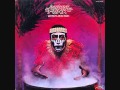
The million-selling "I Got My Mind Made Up (You Can Get It Girl)" (remixed by Larry Levan) parked at number one R&B for three weeks, peaking at number 20 pop on Billboard's charts in March 1979. Their second album, Instant Funk, issued January 1979, went gold hitting number one R&B in spring 1979. Other Instant Funk albums on Salsoul were: Witch Doctor (November 1979), The Funk Is On (October 1980), Looks So Fine (March 1982), Instant Funk, Vol. 5 (January 1983), and Kinky (September 1983). The band backed Sigler on his Salsoul LPs: I've Always Wanted to Sing...Not Just Write Songs (March 1979) and Let It Snow (June 1980). Other Salsoul LPs that feature Instant Funk are Loleatta Holloway's Queen of the Night, Loleatta, and Greatest Hits; Double Exposure's Locker Room; and the Salsoul Orchestra's How High. For Neil Bogart's Casablanca Records, the band can be heard on two albums Sigler produced for the label: Party Girl by Patti Brooks and Callin' by the Pips. On Curtis Mayfield's Curtom Records, Sigler and the band are on Barbara Mason & Bunny Sigler's Locked in This Position, the self-titled debut of Mystique featuring Ralph Johnson, and Mayfield's own Heartbeat. With the John Brothers, who were featured on Witch Doctor, they recorded a Sigler-produced RCA single, "Try to Walk a Mile" b/w "I Just Want to Be Free," both songs written by Bunny's brother Jimmy Sigler. They are also on Gabor Szabo's Mercury LP Nightflight and Carl Carlton's I Wanna Be With You.
When the Cayre brothers, owners of Salsoul Records, decided to fold the label in 1984, in an effort to concentrate on the then-emerging home video market, Instant Funk was without a record deal. The band toured for a few years then disbanded. Some of the members were still in the music business in one form or another as the 21st century began. Raymond Earl was operating his own studio and production company, Ray Ray Productions. Kim Miller, Dennis Richardson, and James Carmichael went into gospel music. Bunny Sigler was touring the world as a member of the Trammps.
"I Got My Mind Made Up (You Can Get It Girl)" can be found on the CD reissue of their 1979 gold album Instant Funk, Greatest Hits from EMI/Capitol/The Right Stuff, in the movie and on the soundtrack for the Disney/Miramax movie 54, Larry Levan's Paradise Garage, and various Salsoul and Salsoul-licensed compilations. ~ Ed Hogan, Rovi
Viberate is a music analytics platform built for A&Rs, artist managers, labels, booking agents, marketers, and artists.
It helps music professionals track artist growth, analyze audience data, monitor playlist activity, compare artists, follow song performance, and identify opportunities across the music market.
Public artist pages provide a free preview of selected artist data. Paid plans provide access to deeper analytics, historical data, charts, comparisons, playlist tools, exports, alerts, reports, and additional professional features.
Yes. Public Viberate artist pages provide selected artist analytics and music data for free.
Viberate also offers a 7-day free trial of the full platform. A credit card is required to start the trial. The trial includes access to the complete product so users can test deeper artist analytics, historical views, playlist insights, comparisons, charts, exports, alerts, and reporting features before choosing a paid plan.
Viberate provides artist analytics across streaming, playlists, social media, video, radio airplay, songs, and audience markets.
Users can analyze Spotify performance, Spotify and Apple Music playlists, YouTube activity, TikTok and Instagram growth, radio spins, song performance, audience locations, demographics, rankings, and overall artist momentum.
Artist profiles also connect to music charts, similar artists, and comparison tools, helping users benchmark performance and evaluate artists in context.
Viberate updates key artist and track data daily.
For followed artists and tracks, selected data is refreshed multiple times per day. This helps teams monitor playlist changes, streaming movement, audience growth, releases, and campaign performance with more current data.
Update frequency can vary depending on the metric and data source.
Yes. Viberate lets users compare up to five artists side by side across streaming, social media, audience, and engagement metrics.
Users can compare fanbase growth, audience demographics, locations, Spotify performance, social metrics, and other artist data over selected time periods.
Artist comparison can be used for A&R scouting, benchmarking, booking decisions, campaign planning, and evaluating artists with similar audiences or market positions.