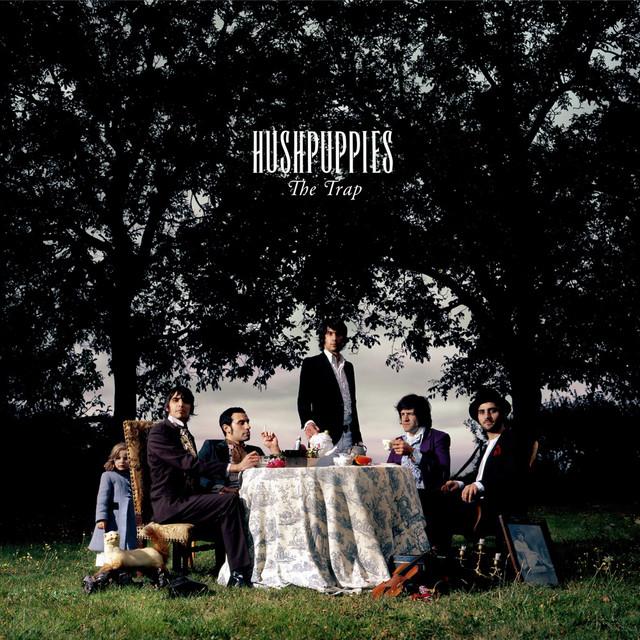
Hushpuppies

Rock
Indie Rock
Garage Rock
 Viberate Rank: 212146
 Viberate Rank: 212146
 Monthly ListenersFollowers
 Subscribers
 Followers
 Followers
 FansTop Spotify Songs
| Track | 7-Day Streams | |
|---|---|---|
1 | 8.84K | |
2 | 478 | |
3 | 146 | |
4 | 132 | |
5 | 121 |
Top YouTube Videos| Video | 7-Day Views | |
|---|---|---|
1 | 266 | |
2 | 68 |
Monthly ListenersFeatured in Playlists| Playlist | Followers | |
|---|---|---|
1 |  Rock 'n' Run Spotify | 649.36K |
2 | dirrrrrty | 43.36K |
3 |  Bass Guitar List Faris Faiz | 19.26K |
4 |  Guitar Hero: World Tour Mickelräven | 16.39K |
5 |  Forza Horizon 5 Slim_Shady4G63 | 16.19K |
Audience| City | Monthly Listeners | |
|---|---|---|
1 |  | 582 |
2 |  | 278 |
3 | | 275 |
4 |  | 258 |
5 |  | 231 |
See full performance history, audience data, playlist activity, rankings, comparisons, and more in Viberate music analytics. Start with a free trial, then continue with a paid plan.
Hushpuppies’ Spotify BioEnergetic French indie rock combo Hushpuppies originally started out as Likyds, a locally known group that bandmembers Olivier Jourdan (vocals), Cyrille Sudreaud (guitars, backing vocals), Wilfried Jourdan (keyboards), and Jean Pompidor (drums) formed in their native town of Perpignan. In the early 2000s the kids moved to Paris, where they were joined by an old friend, Guillame Le Guen, who the band referred to as "the best bass player in Bordeaux" -- and thus Hushpuppies were born. Equally fascinated by the wild unpredictability of punk rock, angular melancholy of post-punk, hypnotic precision of Krautrock, and plain good old noise-making of rock music in general, Hushpuppies allied themselves with singer and musician Benjamin Diamond (best known as the performer of Stardust's "Music Sounds Better with You," a big European dance hit of 1998), who was also conveniently the owner of the independent label Diamondtraxx. The label issued their debut record, The Trap, in 2005; it was… released in more then 20 countries and became an independent hit in France, selling more than 20,000 copies. In support of the record, Hushpuppies played more than 100 gigs all across Europe, as well as in Russia and Japan. Their sophomore record, Silence Is Golden, recorded with producer Peter Deimel (known for his work with the Kills and dEUS), was released in 2007 and preceded by the single "I Want My Kate Moss." ~ Sergey Mesenov
Viberate is a music analytics platform built for A&Rs, artist managers, labels, booking agents, marketers, and artists.
It helps music professionals track artist growth, analyze audience data, monitor playlist activity, compare artists, follow song performance, and identify opportunities across the music market.
Public artist pages provide a free preview of selected artist data. Paid plans provide access to deeper analytics, historical data, charts, comparisons, playlist tools, exports, alerts, reports, and additional professional features.
Yes. Public Viberate artist pages provide selected artist analytics and music data for free.
Viberate also offers a 7-day free trial of the full platform. A credit card is required to start the trial. The trial includes access to the complete product so users can test deeper artist analytics, historical views, playlist insights, comparisons, charts, exports, alerts, and reporting features before choosing a paid plan.
Viberate provides artist analytics across streaming, playlists, social media, video, radio airplay, songs, and audience markets.
Users can analyze Spotify performance, Spotify and Apple Music playlists, YouTube activity, TikTok and Instagram growth, radio spins, song performance, audience locations, demographics, rankings, and overall artist momentum.
Artist profiles also connect to music charts, similar artists, and comparison tools, helping users benchmark performance and evaluate artists in context.
Viberate updates key artist and track data daily.
For followed artists and tracks, selected data is refreshed multiple times per day. This helps teams monitor playlist changes, streaming movement, audience growth, releases, and campaign performance with more current data.
Update frequency can vary depending on the metric and data source.
Yes. Viberate lets users compare up to five artists side by side across streaming, social media, audience, and engagement metrics.
Users can compare fanbase growth, audience demographics, locations, Spotify performance, social metrics, and other artist data over selected time periods.
Artist comparison can be used for A&R scouting, benchmarking, booking decisions, campaign planning, and evaluating artists with similar audiences or market positions.