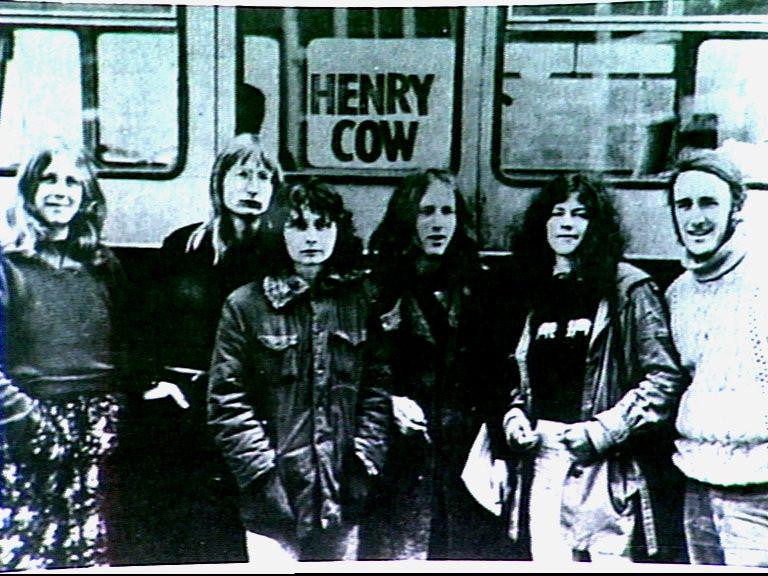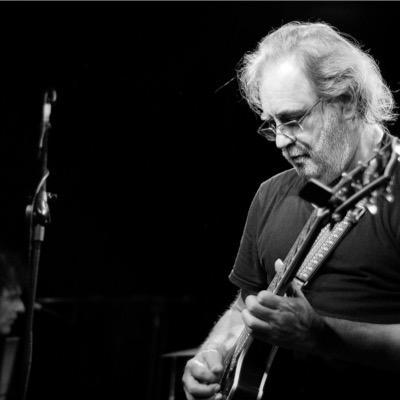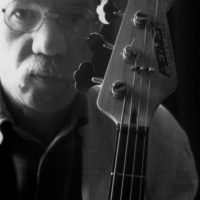
Hugh Hopper

Rock
Pop Rock
Progressive Rock
Jazz Fusion
 Viberate Rank: 438443
 Viberate Rank: 438443
 Monthly ListenersFollowers
 Subscribers
 Followers
 Followers
 FansTop Spotify SongsTop YouTube VideosMonthly ListenersFeatured in Playlists
| Playlist | Followers | |
|---|---|---|
1 |  70s Obscure Folk / Progressive Folk / Psychedelic Folk Darío Toscano | 4.39K |
2 |  The Sound of Canterbury Scene The Sounds of Spotify | 3.46K |
3 |  Nurse With Wound list christophermacauley | 2.83K |
4 |  CANTERBURY SCENE° O.S.D | 2.23K |
5 |  The Ultimate New York City Soundtrack jimlesses | 1.77K |
Audience| City | Monthly Listeners | |
|---|---|---|
1 | | 11 |
2 |  | 8 |
3 |  | 5 |
4 |  | 5 |
5 | | 5 |
See full performance history, audience data, playlist activity, rankings, comparisons, and more in Viberate music analytics. Start with a free trial, then continue with a paid plan.
Hugh Hopper’s Spotify BioHugh Hopper was best known as the electric bassist for Soft Machine during the band's most creative and critically acclaimed period, but his musical career extended far beyond his time spent with that particular group. He arguably manifested the Canterbury scene's progressive spirit -- at least on the instrumental side of the equation -- longer than any other musician, from the late '60s through to nearly the end of the new millennium's first decade, a period spanning over 40 years, although he took a break from music for a brief stretch. Hopper was also the indisputable king of the fuzz bass, introducing the instrument's sustained burning tones into early Soft Machine's sonic palette and laying the groundwork for other bassists' fuzzed and buzzed excursions across subsequent decades on both sides of the Atlantic.
Born in Whitstable, Kent, in April of 1945, like other future Soft Machine members Robert Wyatt and Mike Ratledge, Hopper attended Canterbury's Simon Langton Grammar School… for Boys; he was in the same class as Wyatt (then Robert Ellidge) and two grades behind Ratledge. Like the other future Softs, he also fell under the somewhat renegade influence of Australian-born vocalist/guitarist Daevid Allen -- Hopper's first documented gig was as bassist for the Daevid Allen Trio (also featuring Wyatt on drums) in 1963, and the following year Hopper visited Allen and Gilli Smyth in Paris and became acquainted with Allen's tape loop experiments (which were influenced by Terry Riley).
However, nascent experimentation with poetry and jazz and travels to the Continent were not bearing fruit, and in 1964 Hugh and his older brother Brian (in the same Simon Langton class as Ratledge, incidentally) formed the Wilde Flowers, now seen as forerunners of pretty much anything that later gained notice under the Canterbury rubric. The Wilde Flowers, initially including Hopper brothers Hugh and Brian on bass and guitar/sax, respectively, along with vocalist Kevin Ayers and rhythm guitarist Richard Sinclair, were a beat group that played Chuck Berry, Beatles, Kinks, and Dave Clark Five along with some original material, although they reportedly also had some inclinations toward Monk, Coltrane, and Ellington on the side. Their first live gig, at the Bear and Key Hotel in Whitstable on January 15, 1965, garnered some favorable local press, and scattered gigs and a bit of recording were forthcoming, but the Wilde Flowers began splintering in fairly short order, going through a number of lineup changes -- notably the departures of Wyatt and Ayers to join the Soft Machine quartet with Ratledge and Allen, and the arrivals of vocalist/guitarist Pye Hastings and drummer Richard Coughlan (both of whom would later form Caravan with Richard Sinclair).
While not exactly engaged in groundbreaking endeavors at this particular time, Hugh Hopper was at least displaying the songwriting side of his musical personality, penning the bluesy and soulful ballad "Memories" that would not only be performed by both the Wilde Flowers and Soft Machine, but also appear on the album One Down by Bill Laswell's Material in 1982, featuring the first-ever lead vocal performance on record by a then 18-year-old Whitney Houston. Hopper would remain with the Wilde Flowers until early 1967 -- by then playing sax with the group instead of bass -- and then fall in with the Softs, whose first incarnation came together in August 1966. Almost incredibly given his later bass contributions to the group, Hopper's first involvement with Soft Machine came not as a bandmember but as road manager, responsible for equipment haulage while enduring the general craziness associated with two legendary U.S. tours in 1968 when the Softs opened for the Jimi Hendrix Experience. And so rather than playing bass, Hopper could be found taking charge of Kevin Ayers' bass amp and presumably watching the trio of Ratledge, Wyatt, and Ayers (Allen having departed the group due to visa difficulties with British immigration authorities) from the wings.
However, following the recording of Soft Machine's debut album, Kevin Ayers departed the band, leaving the duo of Ratledge and Wyatt to seek someone to replace him after the band's record label, Probe, sought a second album and more touring from the group. In December 1968 Hugh Hopper met with Ratledge and Wyatt to set a future course, and a new Soft Machine trio was born. It was then that Hopper's signature fuzz bass was employed, as noted in author Graham Bennett's 2005 Soft Machine biography Out-Bloody-Rageous, essentially to match musical wits with Ratledge's fuzzed-up Lowrey organ. Although he first heard fuzz bass used by Paul McCartney on the Beatles track "Think for Yourself" (a George Harrison tune on Rubber Soul) and never claimed to have invented the technique of plugging an electric bass into a fuzz box, Hopper was certainly unique in making the fuzz bass such an important part of any group's sound to that point. And Hopper brought a keen melodic sensibility that enabled the fuzz bass to serve as a lead instrument at times, scattered throughout many of the short tracks on Soft Machine's Volume Two (1969), appearing prominently during the second portion of Wyatt's "Moon in June" and elsewhere on Third (1970), and significantly contributing to the overall atmosphere of Fourth (1971).
This period is viewed by many as Soft Machine's creative apex, as the group graduated from short pop song forms (albeit combined into suites and with both instrumental prowess and eccentricity on display) into longer-form jazz and contemporary avant-garde explorations, although there would always be listeners who would pine for the earlier psychedelic pop days with Ayers on vocals and bass. Moreover, starting in October 1969 the Softs had expanded from a trio to a septet with the addition of soprano saxophonist/flutist Lyn Dobson and three members of the Keith Tippett Group front line: saxophonist Elton Dean, cornetist Marc Charig, and trombonist Nick Evans. The lineup would later shrink to a quintet and then quartet with the departures of all the reed/brass players aside from Dean, although an expanded lineup including the aforementioned and others (e.g., Jimmy Hastings, Alan Skidmore) would complement the core band on the Softs' early-'70s recordings.
Hopper, like Ratledge, would rise to the challenge of composing and arranging for these more jazz-based aggregations, in fact contributing "Facelift" -- the group's first side-long opus -- to the landmark Third. "Facelift" -- which spliced together two separate live performances and ended with backwards and sped-up tape effects demonstrating Hopper's most experimental side -- was a manifesto of sorts, showcasing Ratledge's explosive organ playing like never before on record and bridging the piece's two live sections with an overlapping interlude in proto-DJ mix fashion, while also allowing Dobson (who actually left the band between the recording of "Facelift" and the release of Third) and especially Dean to display their jazz chops at length. With this opening salvo, Soft Machine had suddenly become a Brit jazz-rock enterprise that could challenge Miles and his fusioneers on the other side of the pond, and although some of the recording techniques employed produced a sound quality that could be charitably viewed as less than top-notch, "Facelift" was a bold statement of its era and has held up remarkably well over the subsequent decades. Both Ratledge and Wyatt also contributed side-long pieces to Third, but Hopper was the only bandmember to continue this practice on the next LP, with his "Virtually" suite on Fourth a somewhat more abstract and textured work, heavy on improvisation for sax, clarinet, and double bass, and with plenty of fuzz bass creating a subdued trippy ambience, true acid jazz unlike the generally accepted style that arrived nearly 20 years later.
To many, the Soft Machine consisting of Hopper, Ratledge, Dean, and Wyatt were and will always be "the classic quartet" -- notably the first "popular music group" to play the BBC Proms classical music festival at Royal Albert Hall (during August of 1970, two months after the release of Third). The band membership would continue to change, however, with the departure of Wyatt and arrivals of (briefly) Phil Howard and (more lastingly) John Marshall on drums prior to Fifth (1972) and the exit of Dean and entry of reedman/keyboardist Karl Jenkins prior to Six (1973). The inevitable changes in direction -- and mainly a perceived diminishment of the band's "weirdness" according to a quote in Out-Bloody-Rageous -- led to Hopper's departure before the release of Seven (1974), in which Roy Babbington debuted as the Softs' new bassist (having guested on Fourth).
Roughly concurrent with Hopper's exit from Soft Machine came the release of his first solo album, 1973's 1984, inspired by the George Orwell novel and believed by some to be one of the strangest albums ever issued by a major label (Columbia Records affiliate CBS, which acquiesced to releasing the album but didn't finance the studio costs). 1984 harked back to Hopper's early interest in tape loops, and in this case the bassist interspersed lengthy experimental bass-and-loop pieces with shorter tunes featuring a more standard band lineup and drawing from another area of inspiration, the soul-funk of James Brown. The album was favorably reviewed for the most part, although Hopper subsequently noted in the liners of the 1998 Cuneiform reissue that Fred Frith, who had reviewed the LP under a pseudonym, was less than enamored by the presence of the short tunes that interrupted the abstraction occurring elsewhere.
Although Hopper had left Soft Machine due at least in part to dissatisfaction with the band's particular jazz-rock direction, during the '70s following the release of 1984 he could be found handling bass duties with a pair of notable jazz-rock ensembles with overlapping personnel, Stomu Yamashta's East Wind (Freedom Is Frightening, 1973; One by One, 1974) and Isotope (Illusion, 1975; Deep End, 1976; Golden Section, recorded live in 1974-1975 and released by Cuneiform in 2008). Hopper also fronted his own Monster Band in 1974 and played bass on Robert Wyatt's classic Rock Bottom released that year, and toured with the Carla Bley Band in 1976 and 1977 (as heard on European Tour 1977, which also includes Elton Dean in the lineup).
In the midst of his mid-'70s work, Hopper recorded what many believe to be one of his finest solo achievements, Hopper Tunity Box, recorded between May and July 1976 at the Mobile Mobile studio with Mike Dunne (Jon Anderson, Yes) engineering. Hopper assembled some of Britain's finest jazz and Canterbury-associated musicians, including keyboardist Dave Stewart, Softs compatriot Dean, cornetist Charig, reedman Gary Windo, and Isotope drummer Nigel Morris to record tracks ranging from a concise revisit of 1984's "Miniluv (Reprise)" to a cover of Ornette Coleman's "Lonely Woman." Sonically adventurous and challenging yet highly focused and even tuneful, Hopper Tunity Box remains in the upper echelon of Hopper releases, and although the original vinyl LP on the Compendium label in 1977 suffered from some sonic shortcomings (which carried over to the first CD issue on Culture Press), the album was remastered from the original master tapes and reissued by Cuneiform in 2007.
As the '70s drew to a close, Hopper involved himself in various collaborative endeavors, and unlike other Soft Machine alumni who might have seemingly wished to keep their distance from anything "Softs" (a few reported grudges resulting from the band's somewhat tortured history), the bassist never seemed dismissive of his Canterbury past. In 1978 Hopper formed the Soft Heap quartet along with saxophonist Dean, keyboardist Alan Gowen, and drummer Pip Pyle; they released an eponymous album on Charly and have been further documented by the Reel Recordings label, which in 2008 released Al Dente, a live recording of a 1978 show in London. In May of 1978 Soft Heap had intended to mount a European tour with Pyle in the lineup but the former Hatfield and the North member was unavailable, and was momentarily replaced by drummer Dave Sheen. The bandmembers rechristened themselves Soft Head and hit the Continent anyway; the Ogun label documented the results of a French gig on Rogue Element, released later that year (and re-released with bonus tracks by Ogun in 1996). Hopper would also join Gowen's somewhat Hatfield-influenced quartet Gilgamesh, appearing on 1978's Another Fine Tune You've Gotten Me Into, and pair up with Gowen on the 1980 duo effort Two Rainbows Daily, an intimate bass-and-keyboards affair that maintains a Canterbury flavor while moving in a more fully ambient direction.
By the end of the '70s and into the early '80s, Hopper had largely stopped playing altogether and his recorded output, even as a sideman, was intermittent at best. However, by the mid-'80s he was prepared to reenter the music world, and began appearing live and on recordings as a member of bands led by Canterbury scene friends like Phil Miller and Pip Pyle. He also formed his own "Franglodutch Band" featuring guitarist Patrice Meyer, keyboardist Dionys Breukers, saxophonist Frank Van Der Kooij, and drummer Pieter Bast. Live gigs from 1987 and 1989 by this outfit were documented on the Wayside Music Archive Series 1991 limited-edition release Meccano Pelorus (later reissued by Cuneiform) and 1994's studio effort Carousel (also on Cuneiform), an album that included Kim Weemhoff on drums as a replacement for the departing Bast.
The '90s saw Hopper hitting more peaks, notably his collaboration with fellow "fuzzaholic" bassist Fred Chalenor, vocalist/keyboardist/accordionist Elaine di Falco, and drummer Henry Franzoni of the U.S. Pacific Northwest avant rock band Caveman Shoestore. Hopper had read about Chalenor's fuzz fixation in an Italian fanzine and contacted the Portland, Oregon, resident; the two vowed to work together and by March of 1995 Hopper had joined up with the band to record the Caveman Hughscore CD at a Portland studio. The "Hughscore" name change would stick as the group recorded two additional albums (without Franzoni), 1997's Highspotparadox (produced by Wayne Horvitz) and 1999's Delta Flora; all three Hughscore albums -- with or without the Caveman -- present both the jazz-rock/experimental and avant pop sides of Hopper as bassist and composer, with vocalist di Falco an ideal singer of his song-oriented material. Hopper also joined the Brainville quartet during this period; the band included Shimmy Disc founder Kramer along with fellow Canterbury scene alumni Daevid Allen and Pip Pyle. Hopper, Allen, and Pyle kept the group going -- minus Kramer -- into the next decade as Brainville 3, with Chris Cutler taking over on drums following Pyle's death in 2006.
Hopper remained active throughout the 2000s, releasing a number of solo and collaborative recordings on independent labels such as Burning Shed, Voiceprint affiliate Blueprint, MoonJune, and old stalwart Cuneiform. And while continuing to find new collaborators such as Doctor Nerve guitarist Nick Didkovsky and Forever Einstein drummer John Roulat (who joined with the bassist under the moniker Bone for 2003's Uses Wrist Grab), he continued to revisit his Canterbury roots, perhaps even more strongly than ever. Hopper played bass on the PolySoft Tribute to Soft Machine CD recorded live at Le Triton in Les Lilas, France, in 2002, and also contributed bass to the Delta Saxophone Quartet's own Softs tribute, Dedicated to You But You Weren't Listening, released in 2007.
Hopper also participated in a pair of quartets featuring Soft Machine alumni, the first under the name Soft Works and featuring guitarist Allan Holdsworth (from the Softs' Bundles lineup) along with Hopper, Dean, and Marshall (Abracadabra, 2003) and the second entitled Soft Machine Legacy with guitarist John Etheridge replacing Holdsworth (Live at the New Morning: The Paris Concert and Soft Machine Legacy, both 2003) and with saxophonist Theo Travis replacing Elton Dean following Dean's death in 2006 (Steam, released by MoonJune in 2007). One of Hopper's strongest improvisational endeavors, Numero d'Vol, arrived from MoonJune in August of 2007, and the label also issued another noteworthy release in July of 2009 with Dune by the HUMI duo, consisting of Hopper on bass and keyboardist/vocalist Yumi Hara Cawkwell.
In June of 2008 Hugh Hopper was diagnosed with leukemia and canceled his scheduled appearances to undergo chemotherapy. In December of that year a benefit for Hopper was held at London's 100 Club, featuring performances by many of the bassists' friends and musical collaborators from across the years, including Alex Maguire & Friends, Phil Miller & In Cahoots, members of Soft Machine Legacy, Sophia Domancich and Simon Goubert, the Delta Saxophone Quartet, and Yumi Hara Cawkwell of HUMI. Initial reports from Hopper himself on his website gave reason for optimism, as the bassist reported in late November 2008 that chemotherapy had been successful and he was slowly getting his strength back. But sadly, Hopper died on June 7, 2009, a year after he was first diagnosed and two days after marrying his companion, Christine Janet. It had been 28 years since his Two Rainbows Daily partner, Alan Gowen, had been felled by the same disease. Following Hugh Hopper's death, the following comment was left by Dave Stewart on Hopper's website: "Farewell Hugh, king of the fuzz bass. A true original, a great player and a gentleman." ~ Dave Lynch
Viberate is a music analytics platform built for A&Rs, artist managers, labels, booking agents, marketers, and artists.
It helps music professionals track artist growth, analyze audience data, monitor playlist activity, compare artists, follow song performance, and identify opportunities across the music market.
Public artist pages provide a free preview of selected artist data. Paid plans provide access to deeper analytics, historical data, charts, comparisons, playlist tools, exports, alerts, reports, and additional professional features.
Yes. Public Viberate artist pages provide selected artist analytics and music data for free.
Viberate also offers a 7-day free trial of the full platform. A credit card is required to start the trial. The trial includes access to the complete product so users can test deeper artist analytics, historical views, playlist insights, comparisons, charts, exports, alerts, and reporting features before choosing a paid plan.
Viberate provides artist analytics across streaming, playlists, social media, video, radio airplay, songs, and audience markets.
Users can analyze Spotify performance, Spotify and Apple Music playlists, YouTube activity, TikTok and Instagram growth, radio spins, song performance, audience locations, demographics, rankings, and overall artist momentum.
Artist profiles also connect to music charts, similar artists, and comparison tools, helping users benchmark performance and evaluate artists in context.
Viberate updates key artist and track data daily.
For followed artists and tracks, selected data is refreshed multiple times per day. This helps teams monitor playlist changes, streaming movement, audience growth, releases, and campaign performance with more current data.
Update frequency can vary depending on the metric and data source.
Yes. Viberate lets users compare up to five artists side by side across streaming, social media, audience, and engagement metrics.
Users can compare fanbase growth, audience demographics, locations, Spotify performance, social metrics, and other artist data over selected time periods.
Artist comparison can be used for A&R scouting, benchmarking, booking decisions, campaign planning, and evaluating artists with similar audiences or market positions.