Harry Partch

Classical
Chamber Music
Orchestral
 Viberate Rank: 296705
 Viberate Rank: 296705
 Monthly ListenersFollowers
 Subscribers
 Followers
 Followers
 FansTop Spotify Songs
| Track | 7-Day Streams | |
|---|---|---|
1 | 463 | |
2 | 446 | |
3 | 165 | |
4 | 152 | |
5 | 129 |
Top YouTube VideosMonthly ListenersFeatured in Playlists| Playlist | Followers | |
|---|---|---|
1 |  The Sound of Everything The Sounds of Spotify | 53.81K |
2 |  ASSTRONOMY 202 caneronwinter | 30.86K |
3 |  Dr Demento Favorites Cade Benoit | 14.83K |
4 |  dark academia writing playlist francine | 11.73K |
5 |  The 200 Best Albums of the 1960s Pitchfork | 10.80K |
Audience| City | Monthly Listeners | |
|---|---|---|
1 |  | 86 |
2 | | 72 |
3 |  | 57 |
4 | | 50 |
5 | | 47 |
See full performance history, audience data, playlist activity, rankings, comparisons, and more in Viberate music analytics. Start with a free trial, then continue with a paid plan.
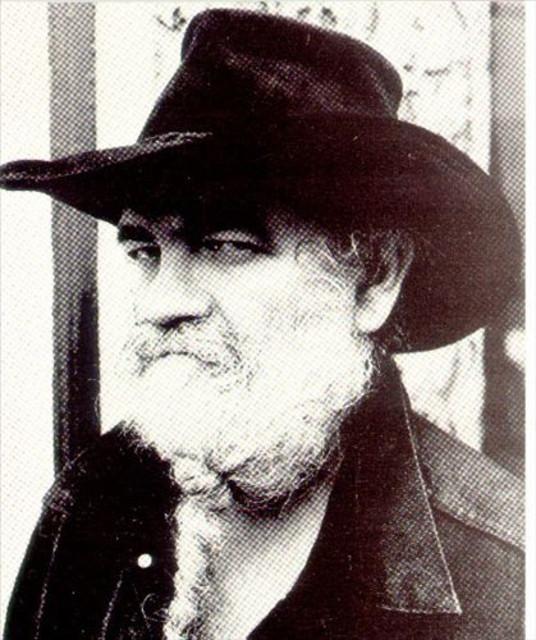
Harry Partch’s Spotify BioThe child of former missionaries, composer Harry Partch grew up in a musical family, and at an early age taught himself to play the guitar, harmonium, clarinet, and other instruments. During his early school years in Arizona and New Mexico he had some rudimentary music lessons, which he found unexciting and conventional. He wrote a considerable amount of music as a youth, but set it all afire in a pot-bellied stove around 1930.
Partch's intensive studies in music history and intonation led him to reject conventional Western tunings and musical techniques. He devised a 43-note octave, and started adapting and building instruments to perform the new kind of music he was envisioning. Employment was hard to come by in those years, and Partch spent the Depression wandering the United States as a hobo, doing occasional odd jobs. Those experiences are reflected in his early works Barstow -- 8 Hitchhiker Inscriptions from a Highway Railing at Barstow, California (1941) and U.S. Highball -- A… Musical Account of a Transcontinental Hobo Trip (1943).
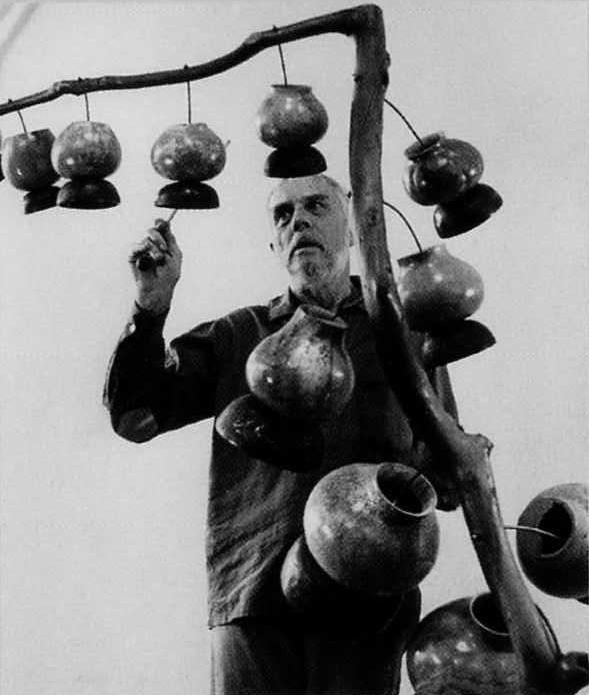
Over the next three-plus decades, Partch created dozens of new reed, string, and percussion instruments using a variety of materials including found objects like artillery shell casings, Pyrex jars, bottles, and old fuel tanks. Many of the works he wrote for this ensemble are ambitious theater pieces that incorporate dance, mime, costumes, and ritual: Oedipus, The Bewitched (A Dance Satire, 1955), Revelation in the Courthouse Park, and Delusion of the Fury (1969), perhaps his best-known work. Partch never held a formal teaching post, although he was employed as a researcher at various times at the Universities of Wisconsin, Illinois, and California. He supported himself through foundation grants and the publication, performing, and recording of his works, working for much of that time out of an abandoned shipyard in Sausalito, California. The Gate 5 Ensemble (named after one of the gates at the shipyard) was created to perform his works, and Gate 5 Recordings made many of them available on record.
Partch's book Genesis of a Music (1949, revised 1974) details Partch's theories and methods, and describes many of his works in detail. The idiosyncratic list of influences Partch cites includes "Christian hymns, Chinese lullabyes, Yaqui Indian ritual, Congo puberty ritual, Cantonese music hall, and Okies in California vineyards, among others." Hints of all these, and many more besides, can be found in Partch's unique music.
Viberate is a music analytics platform built for A&Rs, artist managers, labels, booking agents, marketers, and artists.
It helps music professionals track artist growth, analyze audience data, monitor playlist activity, compare artists, follow song performance, and identify opportunities across the music market.
Public artist pages provide a free preview of selected artist data. Paid plans provide access to deeper analytics, historical data, charts, comparisons, playlist tools, exports, alerts, reports, and additional professional features.
Yes. Public Viberate artist pages provide selected artist analytics and music data for free.
Viberate also offers a 7-day free trial of the full platform. A credit card is required to start the trial. The trial includes access to the complete product so users can test deeper artist analytics, historical views, playlist insights, comparisons, charts, exports, alerts, and reporting features before choosing a paid plan.
Viberate provides artist analytics across streaming, playlists, social media, video, radio airplay, songs, and audience markets.
Users can analyze Spotify performance, Spotify and Apple Music playlists, YouTube activity, TikTok and Instagram growth, radio spins, song performance, audience locations, demographics, rankings, and overall artist momentum.
Artist profiles also connect to music charts, similar artists, and comparison tools, helping users benchmark performance and evaluate artists in context.
Viberate updates key artist and track data daily.
For followed artists and tracks, selected data is refreshed multiple times per day. This helps teams monitor playlist changes, streaming movement, audience growth, releases, and campaign performance with more current data.
Update frequency can vary depending on the metric and data source.
Yes. Viberate lets users compare up to five artists side by side across streaming, social media, audience, and engagement metrics.
Users can compare fanbase growth, audience demographics, locations, Spotify performance, social metrics, and other artist data over selected time periods.
Artist comparison can be used for A&R scouting, benchmarking, booking decisions, campaign planning, and evaluating artists with similar audiences or market positions.