Barry Guy

Jazz
Avant-garde Jazz
Free Jazz
 Viberate Rank: 435336
 Viberate Rank: 435336
 Monthly ListenersFollowers
 Subscribers
 Followers
 Followers
 FansTop Spotify Songs
| Track | 7-Day Streams | |
|---|---|---|
1 | 206 | |
2 | 106 | |
3 | 94 | |
4 | 92 | |
5 | 75 |
Top YouTube VideosMonthly ListenersFeatured in Playlists| Playlist | Followers | |
|---|---|---|
1 |  The Sound of Free Jazz The Sounds of Spotify | 10.46K |
2 |  ECM New & Forthcoming ECM Records | 9.44K |
3 | The tree of life - Soundtrack oslolizzy | 7.20K |
4 |  ECM Records: 1001 - 1999 Ulysses' Classical | 6.46K |
5 |  Terrence Malick's 'The Tree of Life' Soundtrack MAB | 6.20K |
Audience| City | Monthly Listeners | |
|---|---|---|
1 | | 47 |
2 |  | 40 |
3 |  | 30 |
4 |  | 26 |
5 |  | 25 |
See full performance history, audience data, playlist activity, rankings, comparisons, and more in Viberate music analytics. Start with a free trial, then continue with a paid plan.
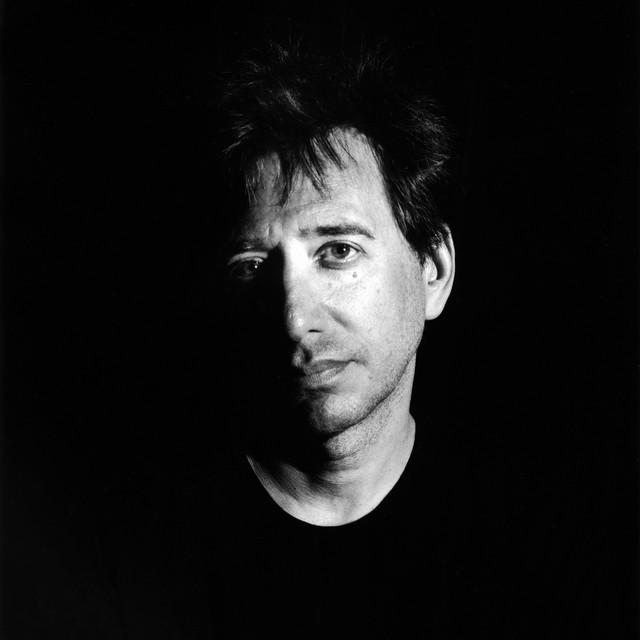
Barry Guy’s Spotify BioBritain's Barry Guy is a highly regarded bassist and composer known for his work in avant-garde jazz. Classically trained, Guy is both a skilled craftsman and gifted soloist, whose music straddles the line between free-form improvisation and contemporary classical composition. Along with teaching at London's Guildhall School of Music, Guy has issued a prolific number of albums including 1972's Ode with the London Jazz Composers Orchestra, 1984's Supersession with longtime associate Evan Parker, and 2016's The Blue Shroud.
Born in London in 1947, Guy first came to prominence in the '60s as a member of pianist Howard Riley's trio alongside drummer Tony Oxley, appearing on albums like 1967's Discussions, 1969's Angle, and 1971's Flight. In the early '70s, Guy formed the innovative London Jazz Composers Orchestra, a collection of like-minded artists that included such luminaries of the British avant-garde jazz scene as Evan Parker, Paul Lytton, Derek Bailey, Paul Rutherford, Karl Jenkins,… and many more. The group debuted with a recording of Guy's long-form composition Ode in 1972. Also during this period, he appeared on albums with Riley, John Stevens, Bob Downes, and others.
Guy's second album with the London Jazz Composers Orchestra, Stringer, appeared in 1984. Harmos followed in 1989. The '80s also found him working regularly with fellow LJCO members saxophonist Parker and drummer Lytton. Together they released such albums as Pisa 1980: Improvisor's Symposium and 1986's Atlanta.
The '90s were a prolific decade for the bassist, who appeared on numerous albums with the London Jazz Composers Orchestra, including 1990's Double Trouble, 1991's Theoria, 1993's Portraits, and 1995's Double Trouble Two. He also delivered a handful of well-received solo efforts: 1991's Fizzles, 1993's After the Rain, 1995's Sensology (with Paul Plimley), and 1997's Gudira. His contributions to other artists' albums also increased, with appearances on albums by Cecil Taylor, Bill Dixon, Mario Schiano, and others.
Guy's output continued to increase over the next several years, showcasing more collaborations with Parker and Riley, as well as with pianist Marilyn Crispell, saxophonist Mats Gustafsson, pianist Sten Sandell, and others. In 2006, he reconvened the London Jazz Composers Orchestra for Dance for Human Folks. Also that year, he released the solo album Folio, followed a year later by Zafiro. In 2010, he paired with trumpeter Peter Evans on Scenes in the House of Music. Two years later, he joined Ian Whitcomb for Songs Without Words and in 2014 he collaborated with Fred Frith for Backscatter Bright Blue. In 2016, Guy appeared on several albums including Deep Memory with Crispell, as well as his own The Blue Shroud, featuring his Blue Shroud Band. He then paired with trumpeter Peter Evans for 2018's Syllogistic Moments. ~ Matt Collar, Rovi
Viberate is a music analytics platform built for A&Rs, artist managers, labels, booking agents, marketers, and artists.
It helps music professionals track artist growth, analyze audience data, monitor playlist activity, compare artists, follow song performance, and identify opportunities across the music market.
Public artist pages provide a free preview of selected artist data. Paid plans provide access to deeper analytics, historical data, charts, comparisons, playlist tools, exports, alerts, reports, and additional professional features.
Yes. Public Viberate artist pages provide selected artist analytics and music data for free.
Viberate also offers a 7-day free trial of the full platform. A credit card is required to start the trial. The trial includes access to the complete product so users can test deeper artist analytics, historical views, playlist insights, comparisons, charts, exports, alerts, and reporting features before choosing a paid plan.
Viberate provides artist analytics across streaming, playlists, social media, video, radio airplay, songs, and audience markets.
Users can analyze Spotify performance, Spotify and Apple Music playlists, YouTube activity, TikTok and Instagram growth, radio spins, song performance, audience locations, demographics, rankings, and overall artist momentum.
Artist profiles also connect to music charts, similar artists, and comparison tools, helping users benchmark performance and evaluate artists in context.
Viberate updates key artist and track data daily.
For followed artists and tracks, selected data is refreshed multiple times per day. This helps teams monitor playlist changes, streaming movement, audience growth, releases, and campaign performance with more current data.
Update frequency can vary depending on the metric and data source.
Yes. Viberate lets users compare up to five artists side by side across streaming, social media, audience, and engagement metrics.
Users can compare fanbase growth, audience demographics, locations, Spotify performance, social metrics, and other artist data over selected time periods.
Artist comparison can be used for A&R scouting, benchmarking, booking decisions, campaign planning, and evaluating artists with similar audiences or market positions.