Gutbucket

Jazz
Jazz Fusion
Free Jazz
 Viberate Rank: 603443
 Viberate Rank: 603443
 Monthly ListenersFollowers
 Subscribers
 Followers
 Followers
 FansTop Spotify Songs
| Track | 7-Day Streams | |
|---|---|---|
1 | 9 | |
2 | 7 | |
3 | 5 | |
4 | 4 | |
5 | 4 |
Top YouTube VideosMonthly ListenersFeatured in Playlists| Playlist | Followers | |
|---|---|---|
1 |  JAZZCORE° O.S.D | 1.70K |
2 |  JAZZ METAL° O.S.D | 1.49K |
3 |  Stoner / Sludge Jesper Olsson | 1.38K |
Audience| City | Monthly Listeners | |
|---|---|---|
1 |  | 4 |
2 | | 4 |
3 |  | 4 |
4 | | 3 |
See full performance history, audience data, playlist activity, rankings, comparisons, and more in Viberate music analytics. Start with a free trial, then continue with a paid plan.
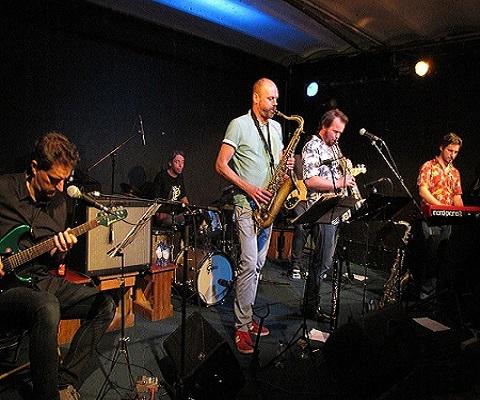
Gutbucket’s Spotify BioThanks to the engaging harmolodics of Ornette Coleman and the intense rhythms of Afro-Cuban music, Ken Thomson discovered new exciting ways to express jazz improvisation in his group Gutbucket. Gutbucket, consisting of Thomson (sax), Ty Citerman (guitar), Eric Rockwin (bass), and Paul Chuffo (drums), celebrated the release of their debut CD, Insomniacs Dream (Gut Records) -- available at www.gutweb.com -- in 2000. Devoted to soft melodies as much as high-energy rhythms, Gutbucket coursed through the playful circular movement and rapid-fire banter of "Insects," the sweet and laid-back Latin rhythms and melodies of "Don't Fall on Dirty Mary," the quiet dreamy spaces of "Ornette's Computer People," and the slow bluesy shuffle and screaming antics of "Rock 'n' Roll."
Gutbucket formed in 1999 when three of its members decided to leave their former band, the nine-piece soul-jazz group called Ex Caminos. All three graduated from Columbia University in fields ranging from music theory and… history (Thomson) to psychology (Citerman) to English literature (Chuffo), and they were looking for someone to join them in a tighter-knit band. That's when a friend of theirs introduced them to bassist Eric Rockwin, who had just graduated with a degree in music from N.Y.U. The band debuted to a packed house at Baby Jupiter in April 1999 in New York City. A live broadcast over WFMU two months later solidified a following for the group, which later performed at the Knitting Factory, Wetlands, CB's 313 Gallery, and the Bell Atlantic Jazz Festival and CMJ Music Marathon in New York City. During this period, Gutbucket continued to explore their eclectic interests in music, which ranged from jazz and hip-hop to Afro-Cuban music, '70s soul, indie rock, and 20th century classical music.
In 2003, Dry Humping the American Dream was released and, along with their ever-increasing flair for stellar live performances, led to more invitations to play festivals in the United States, Europe, and North Africa. Sludge Test, issued in 2006, proved to be the final album with Chuffo in the drummer's chair. He was replaced by Adam Gold in 2007. In 2009, the quartet signed to Cuneiform Records and released A Modest Proposal, their label debut. Meanwhile, Gutbucket wrote and performed multiple film scores and collaborated with dance troupes and even string quartets -- most notably New York's Ethel. While still retaining their pointed focus on rock as an integral force to employ inside the formal aesthetics of jazz, the quartet also explored the work of its individuals as composers on 2011's Flock. ~ Robert Hicks & Thom Jurek, Rovi
Viberate is a music analytics platform built for A&Rs, artist managers, labels, booking agents, marketers, and artists.
It helps music professionals track artist growth, analyze audience data, monitor playlist activity, compare artists, follow song performance, and identify opportunities across the music market.
Public artist pages provide a free preview of selected artist data. Paid plans provide access to deeper analytics, historical data, charts, comparisons, playlist tools, exports, alerts, reports, and additional professional features.
Yes. Public Viberate artist pages provide selected artist analytics and music data for free.
Viberate also offers a 7-day free trial of the full platform. A credit card is required to start the trial. The trial includes access to the complete product so users can test deeper artist analytics, historical views, playlist insights, comparisons, charts, exports, alerts, and reporting features before choosing a paid plan.
Viberate provides artist analytics across streaming, playlists, social media, video, radio airplay, songs, and audience markets.
Users can analyze Spotify performance, Spotify and Apple Music playlists, YouTube activity, TikTok and Instagram growth, radio spins, song performance, audience locations, demographics, rankings, and overall artist momentum.
Artist profiles also connect to music charts, similar artists, and comparison tools, helping users benchmark performance and evaluate artists in context.
Viberate updates key artist and track data daily.
For followed artists and tracks, selected data is refreshed multiple times per day. This helps teams monitor playlist changes, streaming movement, audience growth, releases, and campaign performance with more current data.
Update frequency can vary depending on the metric and data source.
Yes. Viberate lets users compare up to five artists side by side across streaming, social media, audience, and engagement metrics.
Users can compare fanbase growth, audience demographics, locations, Spotify performance, social metrics, and other artist data over selected time periods.
Artist comparison can be used for A&R scouting, benchmarking, booking decisions, campaign planning, and evaluating artists with similar audiences or market positions.