Guru

Jazz
Jazz Fusion
Contemporary Hip Hop
 Viberate Rank: 24862
 Viberate Rank: 24862
 Monthly ListenersFollowers
 Subscribers
 Followers
 Followers
 FansTop Spotify Songs
| Track | 7-Day Streams | |
|---|---|---|
1 | 135.60K | |
2 | 88.07K | |
3 | 61.24K | |
4 | 44.25K | |
5 | 43.60K |
Top YouTube VideosMonthly ListenersFeatured in Playlists| Playlist | Followers | |
|---|---|---|
1 |  I Love My '90s Hip-Hop Spotify | 9.39M |
2 |  Jazz Rap Spotify | 1.60M |
3 |  Kitchen Swagger Spotify | 1.14M |
4 |  I Love My Neo-Soul Spotify | 614.71K |
5 |  Acid Jazz Spotify | 396.00K |
Audience| City | Monthly Listeners | |
|---|---|---|
1 |  | 23.17K |
2 |  | 13.32K |
3 | | 12.67K |
4 |  | 12.31K |
5 |  | 11.72K |
See full performance history, audience data, playlist activity, rankings, comparisons, and more in Viberate music analytics. Start with a free trial, then continue with a paid plan.
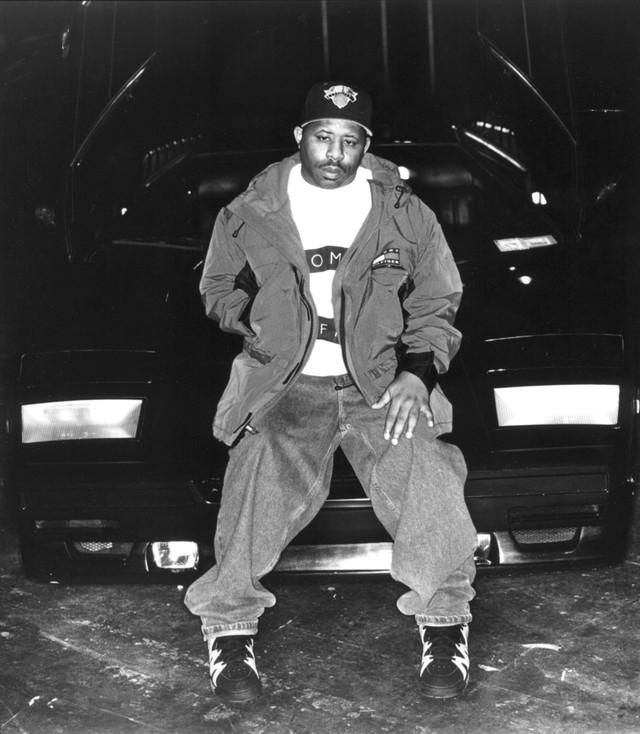
Guru’s Spotify BioRapper/composer Guru (real name Keith Elam) first rose to prominence as the "lyrical half" of the hip-hop duo Gang Starr, one of the first outfits that attempted to fuse jazz with rap. After three albums by Gang Starr hit record store shelves (1989's No More Mr. Nice Guy, 1991's Step in the Arena, and 1992's Daily Operation), Guru launched his own solo career, issuing Jazzmatazz, Vol. 1 in 1993. The album featured guest appearances by the likes of Roy Ayers, Donald Byrd, and N'Dea Davenport of the Brand New Heavies, and was followed up two years later by a sophomore solo outing, Jazzmatazz, Vol. 2: The New Reality, which again featured a variety of special guests (including Ramsey Lewis, Branford Marsalis, and members of Jamiroquai).
Despite his solo career, Guru remained true to Gang Starr as well, continuing to contribute to further albums such as 1994's Hard to Earn and 1998's Moment of Truth. In 2000, five years after his second solo outing appeared, Streetsoul (the third in the… Jazzmatazz series) was issued, again featuring a stellar cast of supporting characters: Herbie Hancock, Isaac Hayes, the Roots, Erykah Badu, and Macy Gray. Wasting little time, Guru returned directly to the recording studio, issuing a follow-up one year later, Baldhead Slick & da Click.
It took four years for the next Guru release, Version 7.0: The Street Scriptures, to come out, the first on his new label, 7 Grand Records, with beats by Solar (who became a vital force on 7 Grand's subsequent releases). The MC used the same producer for his next installment of Jazzmatazz, Vol. 4, which, as always, included a number of guest vocalists and instrumentalists and was released in the summer of 2007, along with the "raw" companion disc Guru's Jazzmatazz - The Timebomb: Back to the Future Mixtape. Guru 8.0: Lost and Found, the rapper's fourth full-length release on 7 Grand, followed in 2009. In addition to the aforementioned artists, Guru collaborated with some of rap music's best-known producers, including fellow Gang Starr member DJ Premier, Pete Rock, Alchemist, Ayatollah, and DJ Spinna, as well as Ice-T, Naughty by Nature's Treach, Killah Priest, and Ed O.G. After battling cancer, Guru suffered a heart attack on February 28, 2010 and fell into a coma from which he later emerged; however, he died on April 19, 2010 at the age of 43. ~ Greg Prato, Rovi
Viberate is a music analytics platform built for A&Rs, artist managers, labels, booking agents, marketers, and artists.
It helps music professionals track artist growth, analyze audience data, monitor playlist activity, compare artists, follow song performance, and identify opportunities across the music market.
Public artist pages provide a free preview of selected artist data. Paid plans provide access to deeper analytics, historical data, charts, comparisons, playlist tools, exports, alerts, reports, and additional professional features.
Yes. Public Viberate artist pages provide selected artist analytics and music data for free.
Viberate also offers a 7-day free trial of the full platform. A credit card is required to start the trial. The trial includes access to the complete product so users can test deeper artist analytics, historical views, playlist insights, comparisons, charts, exports, alerts, and reporting features before choosing a paid plan.
Viberate provides artist analytics across streaming, playlists, social media, video, radio airplay, songs, and audience markets.
Users can analyze Spotify performance, Spotify and Apple Music playlists, YouTube activity, TikTok and Instagram growth, radio spins, song performance, audience locations, demographics, rankings, and overall artist momentum.
Artist profiles also connect to music charts, similar artists, and comparison tools, helping users benchmark performance and evaluate artists in context.
Viberate updates key artist and track data daily.
For followed artists and tracks, selected data is refreshed multiple times per day. This helps teams monitor playlist changes, streaming movement, audience growth, releases, and campaign performance with more current data.
Update frequency can vary depending on the metric and data source.
Yes. Viberate lets users compare up to five artists side by side across streaming, social media, audience, and engagement metrics.
Users can compare fanbase growth, audience demographics, locations, Spotify performance, social metrics, and other artist data over selected time periods.
Artist comparison can be used for A&R scouting, benchmarking, booking decisions, campaign planning, and evaluating artists with similar audiences or market positions.