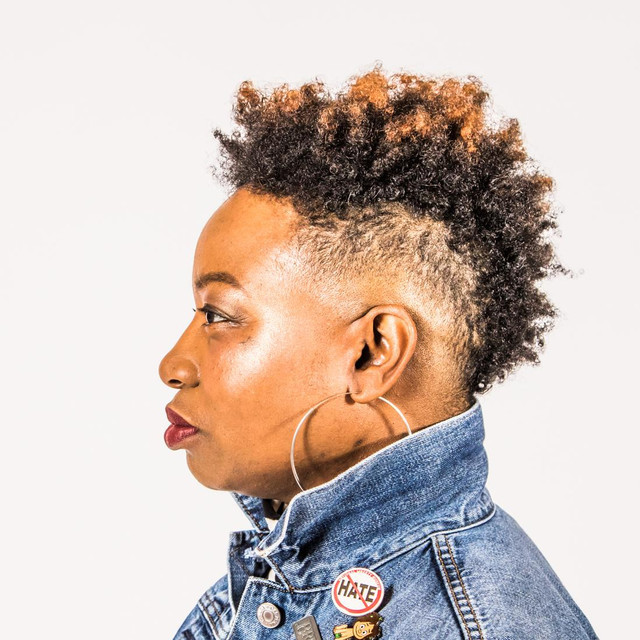
Bahamadia

Hip Hop
Alternative Hip Hop
Contemporary Hip Hop
 Viberate Rank: 58920
 Viberate Rank: 58920
 Monthly ListenersFollowers
 Subscribers
 Followers
 Followers
 FansTop Spotify Songs
| Track | 7-Day Streams | |
|---|---|---|
1 | 92.66K | |
2 | 81.15K | |
3 | 13.47K | |
4 | 11.07K | |
5 | 8.22K |
Top YouTube VideosMonthly ListenersFeatured in Playlists| Playlist | Followers | |
|---|---|---|
1 |  I Love My '90s Hip-Hop Spotify | 9.39M |
2 |  I Love My Underground Classics Spotify | 658.84K |
3 |  Door Knockers Spotify | 417.18K |
4 |  audífonos con cable Spotify | 414.99K |
5 | Ignatious Pop 1 | 98.73K |
Audience| City | Monthly Listeners | |
|---|---|---|
1 |  | 7.78K |
2 |  | 5.90K |
3 |  | 4.89K |
4 | | 4.61K |
5 |  | 4.59K |
See full performance history, audience data, playlist activity, rankings, comparisons, and more in Viberate music analytics. Start with a free trial, then continue with a paid plan.
Bahamadia’s Spotify BioBahamadia rose to prominence on the hip-hop scene as the female protégée of Gang Starr's Guru, and lent her smooth-flowing raps to a variety of projects during the late '90s, including several electronica and acid jazz artists. Born Antonia Reed in Philadelphia, Bahamadia started out DJing at local house parties in the early to mid-'80s, and soon stepped out front to prove her skill on the mic as well. She remained a presence on the Philly hip-hop scene, but didn't make her first recordings until hooking up with producer/radio personality DJ Ran, who helmed her independent 1993 single "Funk Vibe." "Funk Vibe" caught the attention of Gang Starr MC Guru, who took an interest in Bahamadia's career and helped her get a record deal with Chrysalis. Her first singles, 1994's "Total Wreck" and 1995's "Uknowhowwedu," were well-received in the underground for their jazzy flavor and laid-back raps. She also appeared on the second volume of Guru's acclaimed Jazzmatazz project. The full-length LP… Kollage followed in 1996, and featured production by both Guru and DJ Premier of Gang Starr, as well as fellow Philly natives the Roots.
Unfortunately, Chrysalis folded a year later, and Bahamadia chose to wait out her contract before resuming her solo career. In the meantime, she made a string of musically adventurous guest appearances that solidified her underground reputation: the Roots (Illadelph Halflife's "Push up Ya Lighter"), Sweetback (Sade's backing band), drum'n'bass auteur Roni Size (the title track of the landmark New Forms), Towa Tei, acid jazzers the Brand New Heavies, the Herbaliser, trip-hoppers Morcheeba ("Good Girl Down"), Rah Digga, Slum Village, and Talib Kweli's Reflection Eternal (their collaboration, "Chaos," appeared on the seminal Rawkus compilation Soundbombing, Vol. 2). She also hosted a hip-hop radio show in Philadelphia from 1997-1999. In 2000, she signed with the L.A.-based indie Goodvibe and released the chilled-out seven-track EP BB Queen (as in "beautiful black"), which received excellent reviews. ~ Steve Huey, Rovi
Viberate is a music analytics platform built for A&Rs, artist managers, labels, booking agents, marketers, and artists.
It helps music professionals track artist growth, analyze audience data, monitor playlist activity, compare artists, follow song performance, and identify opportunities across the music market.
Public artist pages provide a free preview of selected artist data. Paid plans provide access to deeper analytics, historical data, charts, comparisons, playlist tools, exports, alerts, reports, and additional professional features.
Yes. Public Viberate artist pages provide selected artist analytics and music data for free.
Viberate also offers a 7-day free trial of the full platform. A credit card is required to start the trial. The trial includes access to the complete product so users can test deeper artist analytics, historical views, playlist insights, comparisons, charts, exports, alerts, and reporting features before choosing a paid plan.
Viberate provides artist analytics across streaming, playlists, social media, video, radio airplay, songs, and audience markets.
Users can analyze Spotify performance, Spotify and Apple Music playlists, YouTube activity, TikTok and Instagram growth, radio spins, song performance, audience locations, demographics, rankings, and overall artist momentum.
Artist profiles also connect to music charts, similar artists, and comparison tools, helping users benchmark performance and evaluate artists in context.
Viberate updates key artist and track data daily.
For followed artists and tracks, selected data is refreshed multiple times per day. This helps teams monitor playlist changes, streaming movement, audience growth, releases, and campaign performance with more current data.
Update frequency can vary depending on the metric and data source.
Yes. Viberate lets users compare up to five artists side by side across streaming, social media, audience, and engagement metrics.
Users can compare fanbase growth, audience demographics, locations, Spotify performance, social metrics, and other artist data over selected time periods.
Artist comparison can be used for A&R scouting, benchmarking, booking decisions, campaign planning, and evaluating artists with similar audiences or market positions.