Günter Sommer

Jazz
Smooth Jazz
Free Jazz
 Viberate Rank: 845606
 Viberate Rank: 845606
 Monthly ListenersFollowers
 Subscribers
 Followers
 Followers
 FansTop Spotify Songs
| Track | 7-Day Streams | |
|---|---|---|
1 | 3 | |
2 | 3 | |
3 | 2 | |
4 | 2 | |
5 | 1 |
Top YouTube VideosMonthly ListenersFeatured in PlaylistsAudience| City | Monthly Listeners | |
|---|---|---|
1 | | 6 |
See full performance history, audience data, playlist activity, rankings, comparisons, and more in Viberate music analytics. Start with a free trial, then continue with a paid plan.
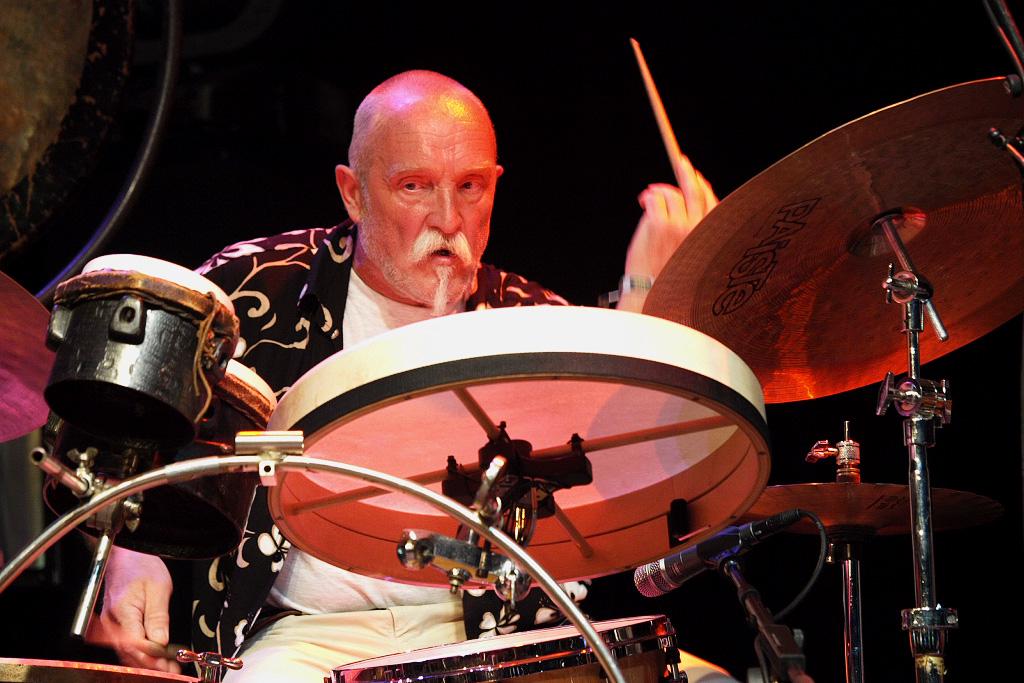
Günter Sommer’s Spotify BioA highly regarded German drummer and percussionist, Günter Sommer aka Günter "Baby" Sommer is known for his extensive work in the field of avant-garde music and European free jazz. From the late '60s onward, Sommer developed a strong reputation as an inventive, forward-thinking performer, working with such luminaries as Wadada Leo Smith, Ulrich Gumpert, Peter Brötzmann, and others. He also issued his own expansive solo percussion albums like 1979's Hörmusik and trio efforts like 2011's Melting Game. Since the mid-'90s, he has also balanced his time between performing and teaching, working on the faculty of Dresden's Academy of Music Carl Maria von Weber.
Born in Dresden, Germany in 1943, Sommer became interested in music at a young age and eventually earned his degree studying at Dresden's Carl Maria Von Weber Academy of Music, where he graduated in 1966. During this period, he also found work playing with Klaus Lenz and vocalist Manfred Krug. From there, he moved into avant-garde and… free jazz playing with saxophonist Friedhelm Schönfeld's trio, as well as stints with Ulrich Gumpert's jazz-rock outfit SOK. Also during the '70s, he contributed to Ernst-Ludwig Petrowsky' Synopsis trio and Zentralquartett, and was a member of Gumpert's workshop band. As a leader, he debuted in 1979 with the solo percussion album Hörmusik. That same year, he also issued Touch the Earth, a trio album featuring trumpeter Wadada Leo Smith and bassist Peter Kowald.
Sommer returned to his solo percussion work in 1983 with Hörmusik Zwei. He began working often with saxophonist Peter Brötzmann, appearing on albums like 1981's Family and 1982's Pica Pica. He also reunited with Wadada Leo Smith, contributing to the trumpeter's 1985 album, If You Want the Kernels, You Have to Break the Shells. There were also well-regarded sessions with Cecil Taylor, Irene Schweizer, and Jazz Orchester der DDR. In 1988, he delivered his third solo effort, Hörmusik III: Sächsische Schatulle. Also during the '80s, Sommer expanded his reach, collaborating with writers like Nobel Prize-winning author Günter Grass. Since then, he has similarly collaborated on projects with Christa Wolf, Christoph Hein, and actor Friedrich-Wilhelm Junge.
In 1992, he showcased his long-running trio with bassist Didier Levallet and reed specialist Sylvain Kassap on Bib, a live album recorded during the Workshop Freie Musik in Berlin. The trio album Merseburger Begegnung, featuring clarinetist Theo Jörgensmann and organist Hans-Günther Wauer, followed two years later. There were other dates with Mario Schiano, Conrad Bauer, Cecil Taylor, and others. Beginning in 1995, Sommer has also taught as a member of the faculty at his alma mater, the Academy of Music Carl Maria von Weber in Dresden.
Since the 2000s, Sommer has remained quite active, regularly returning to his solo percussion projects and continuing his ongoing work with longtime associates like Wadada Leo Smith, Conrad Bauer, and Barre Phillips. In 2007, he paired with trumpeter Smith for the duo album Wisdom in Time. Two years later, he joined Ulrich Gumpert for Donnernde Leben, and returned to his trio work with 2011's Melting Game. In 2014, he delivered his own Dedications: Hörmusik IV. He then collaborated with pianist Uli Johannes Kieckbusch on 2017's Schwebende Riefen Bebende Tiefen. The following year, he paired with trumpeter Till Brönner for the adventurous duo session Baby's Party. ~ Matt Collar, Rovi
Viberate is a music analytics platform built for A&Rs, artist managers, labels, booking agents, marketers, and artists.
It helps music professionals track artist growth, analyze audience data, monitor playlist activity, compare artists, follow song performance, and identify opportunities across the music market.
Public artist pages provide a free preview of selected artist data. Paid plans provide access to deeper analytics, historical data, charts, comparisons, playlist tools, exports, alerts, reports, and additional professional features.
Yes. Public Viberate artist pages provide selected artist analytics and music data for free.
Viberate also offers a 7-day free trial of the full platform. A credit card is required to start the trial. The trial includes access to the complete product so users can test deeper artist analytics, historical views, playlist insights, comparisons, charts, exports, alerts, and reporting features before choosing a paid plan.
Viberate provides artist analytics across streaming, playlists, social media, video, radio airplay, songs, and audience markets.
Users can analyze Spotify performance, Spotify and Apple Music playlists, YouTube activity, TikTok and Instagram growth, radio spins, song performance, audience locations, demographics, rankings, and overall artist momentum.
Artist profiles also connect to music charts, similar artists, and comparison tools, helping users benchmark performance and evaluate artists in context.
Viberate updates key artist and track data daily.
For followed artists and tracks, selected data is refreshed multiple times per day. This helps teams monitor playlist changes, streaming movement, audience growth, releases, and campaign performance with more current data.
Update frequency can vary depending on the metric and data source.
Yes. Viberate lets users compare up to five artists side by side across streaming, social media, audience, and engagement metrics.
Users can compare fanbase growth, audience demographics, locations, Spotify performance, social metrics, and other artist data over selected time periods.
Artist comparison can be used for A&R scouting, benchmarking, booking decisions, campaign planning, and evaluating artists with similar audiences or market positions.