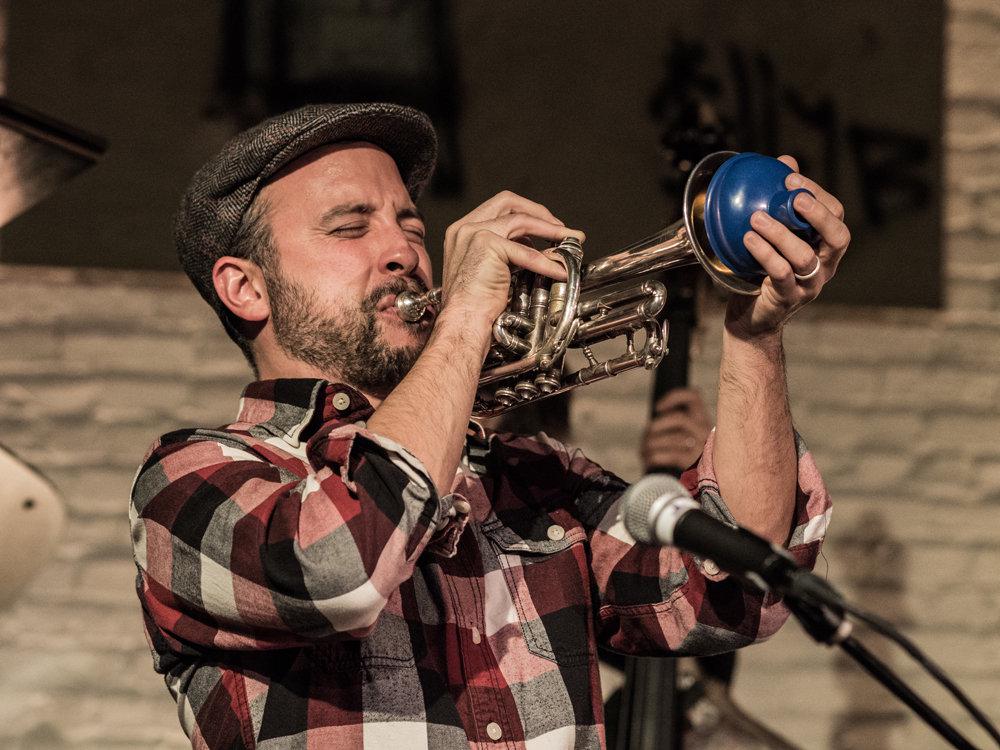
Taylor Ho Bynum

Jazz
Avant-garde Jazz
Big band Jazz
Free Jazz
 Viberate Rank: 749614
 Viberate Rank: 749614
 Monthly ListenersFollowers
 Subscribers
 Followers
 Followers
 FansTop Spotify Songs
| Track | 7-Day Streams | |
|---|---|---|
1 | 25 | |
2 | 19 | |
3 | 9 | |
4 | 4 | |
5 | 4 |
Top YouTube VideosMonthly ListenersFeatured in Playlists| Playlist | Followers | |
|---|---|---|
1 |  The Sound of Free Jazz The Sounds of Spotify | 10.46K |
2 |  The Sound of Avant-Garde Jazz The Sounds of Spotify | 4.05K |
3 |  jjaazzzz pgoonghang | 1.14K |
4 | No Ads For A While (Longer Than 45 Minutes Tracks) Ulysses' Classical | 157 |
5 |  Avant-Garde Jazz mfrommage | 39 |
Audience| City | Monthly Listeners | |
|---|---|---|
1 | | 5 |
2 |  | 4 |
3 | | 4 |
4 |  | 4 |
5 |  | 3 |
See full performance history, audience data, playlist activity, rankings, comparisons, and more in Viberate music analytics. Start with a free trial, then continue with a paid plan.
Taylor Ho Bynum’s Spotify BioTaylor Ho Bynum is a Baltimore-born cornetist whose wide-ranging musical interests include free jazz, modern composition, and interdisciplinary projects with dancers and filmmakers. He is also an educator who has led the Northeastern University jazz ensembles. After working with trombonist Bill Lowe at Northeastern while in high school, Bynum studied with Anthony Braxton at Wesleyan University, where he graduated in 1998. In 1999, he appeared on two Braxton albums, as well as And Only Life My Lush Lament, a duo album with Eric Rosenthal. Two years later, Bynum played on Trio Ex Nihilo with Curt Newton and Jeff Song, and he recorded with Alan Silva's Sound Visions Orchestra. In 2002, Bynum performed on Marriage of Heaven and Earth by the Fully Celebrated Orchestra, as well as albums of duets with Rosenthal and Braxton. He also formed the SpiderMonkey Strings, an ensemble consisting of cornet, string quartet, and electric guitar. Also that fall, Bynum returned to Wesleyan University to… pursue a master's degree in music composition. He still, however, continued to perform with the Fully Celebrated Orchestra and other groups in Boston and New York.
In 2007, Bynum debuted his Sextet with the album The Middle Picture. Two years later, he collaborated with the SpiderMonkey Strings and vocalist Kyoko Kitamura on Madeleine Dreams. He then returned to his sextet, bringing on board guitarists Mary Halvorson and Evan O'Reilly for 2009's Asphalt Flowers Forking Paths. In 2010, the cornetist joined saxophonist Rodrigo Amado, bassist John Hébert, and drummer Gerald Cleaver for the adventurous Searching for Adam. He then paired with bassoonist Sara Schoenbeck and guitarist Joe Morris for 2011's Apparent Distance. Two years later, he debuted his 7-Tette with Navigation (Possibility Abstracts XII & XIII). The trio effort Book of Three, featuring Hébert and Cleaver, appeared in 2014. In 2016, Bynum delivered Enter the Plustet, which showcased a 15-member ensemble made up of various members of his Sextet and 7-tette, including trumpeter Nate Wooley, guitarist Mary Halvorson, saxophonist Matt Bauder, and others. ~ Charlie Wilmoth, Rovi
Viberate is a music analytics platform built for A&Rs, artist managers, labels, booking agents, marketers, and artists.
It helps music professionals track artist growth, analyze audience data, monitor playlist activity, compare artists, follow song performance, and identify opportunities across the music market.
Public artist pages provide a free preview of selected artist data. Paid plans provide access to deeper analytics, historical data, charts, comparisons, playlist tools, exports, alerts, reports, and additional professional features.
Yes. Public Viberate artist pages provide selected artist analytics and music data for free.
Viberate also offers a 7-day free trial of the full platform. A credit card is required to start the trial. The trial includes access to the complete product so users can test deeper artist analytics, historical views, playlist insights, comparisons, charts, exports, alerts, and reporting features before choosing a paid plan.
Viberate provides artist analytics across streaming, playlists, social media, video, radio airplay, songs, and audience markets.
Users can analyze Spotify performance, Spotify and Apple Music playlists, YouTube activity, TikTok and Instagram growth, radio spins, song performance, audience locations, demographics, rankings, and overall artist momentum.
Artist profiles also connect to music charts, similar artists, and comparison tools, helping users benchmark performance and evaluate artists in context.
Viberate updates key artist and track data daily.
For followed artists and tracks, selected data is refreshed multiple times per day. This helps teams monitor playlist changes, streaming movement, audience growth, releases, and campaign performance with more current data.
Update frequency can vary depending on the metric and data source.
Yes. Viberate lets users compare up to five artists side by side across streaming, social media, audience, and engagement metrics.
Users can compare fanbase growth, audience demographics, locations, Spotify performance, social metrics, and other artist data over selected time periods.
Artist comparison can be used for A&R scouting, benchmarking, booking decisions, campaign planning, and evaluating artists with similar audiences or market positions.